An Oxford business rarely has one kind of customer. A guesthouse off the Iffley Road hosts conference delegates in March and coach parties in August; a tutoring company works to the rhythm of Michaelmas, Hilary and Trinity terms; a toolmaker in Cowley answers to purchasing staff who read specifications line by line. Web design Oxford owners commission has to serve all of these without becoming a maze.
This guide from Talha Aslan and team follows the order in which those decisions actually arrive. Every section ends with something you can apply this week: a question for your shortlist of studios, a check on your current site or a line for your brief.
01What Oxford's Economy Expects From a Website
For web design Oxford clients, the starting point is that a website has to work for a very young audience and for highly specialised buyers at the same time. The ONS puts the median age of residents at 31.7 in mid 2025, nearly nine years below the figure for England, and the 2021 Census found that 26.5 per cent of adults were full time students.
The city council counts around 4,950 businesses employing some 128,000 people, and estimates about 7 million day and staying visitors a year. Add BMW Group's MINI plant in Cowley and a steady flow of university spinouts, and you have four readers with almost nothing in common:
- The visitor: standing near the Sheldonian with a phone, wants opening times, distance and a booking in under a minute.
- The student or academic: often reads English as a second language and needs term dates, rules and fees policy spelled out plainly.
- The industrial buyer: looks for tolerances, certificates and a named engineer before sending a drawing.
- The investor or recruit: wants to understand the science, the team and the stage of the company without jargon.
Before talking to any studio, write down which of these four pays your bills and which only visits. The answer decides the homepage, the menu order and the first call to action.
02Who Searches in Oxford, and When
For web design Oxford planning, the key fact is that search demand moves with the university year and the tourist season more than with ordinary months, so the calendar should shape your content plan. A few patterns are worth planning around:
- Before Michaelmas term: new students and visiting researchers look for rooms in Headington, bike repairs, bank help, language courses and removals in late September and early October.
- Summer and graduation weeks: families and tour groups search for places to stay, guided walks, restaurants near Radcliffe Square and parking options such as Park and Ride.
- Everyday local needs: "plumber Summertown", "physio Jericho", "nail salon Cowley Road" or simply "near me", where the map results answer first.
- Technical procurement: engineers type a capability or standard, for example "precision sheet metal Oxfordshire", rather than a neighbourhood.
- Science hiring: candidates search a company name together with words like careers, lab or postdoc, and judge the site in seconds.
Sketch these as a twelve month grid with the weeks your enquiries peak. Then check whether your current site has a page ready for each peak at least a month before it starts; most do not, and that gap is where lost enquiries go.
03Working With a Studio Based in Istanbul
Choosing a studio outside the UK works when the process is written, visible and timed around your working day. Our team works in Istanbul. Turkish clocks never change and sit at UTC+3, so from the last Sunday in March our day runs two hours ahead of an Oxford office, and after the clocks go back in October the lead grows to three.
That gap is small in practice. A call at ten in your morning is early afternoon for us, and notes reach you the same day. Distance only becomes a problem when decisions live in someone's memory, so test every candidate, local or remote, with the same questions:
- Will every call end with written notes listing decisions, open questions and who owns each one?
- Can we see the work in progress on a protected preview address whenever we like?
- Who writes or edits copy in British English, including spellings such as organisation and colour?
- How do you handle content that has to change each term without calling you?
- What is excluded from the scope, in writing, before we sign?
Ask for answers by e-mail rather than on the phone. Written replies show how a studio will document your project once the excitement of the first meeting has passed.
04Owning the Domain, Hosting and Every Login
Your company should hold every key to the website, so that leaving any supplier, including us, is a matter of changing passwords rather than negotiating. Small Oxford firms, college spinouts and family guesthouses often find their domain registered to a former contractor or a student who has since graduated.
- Domain: hold the .co.uk or .com in a registrar login opened by your firm, and send renewal reminders to a mailbox that outlives any single employee or intern.
- Hosting: sign the server contract yourself, pick a British or European data centre and store copies of the site off that machine.
- Source and content: collect the full source files, a record of which CMS release they run on and a short deployment note anyone technical could follow.
- Google accounts: your firm is listed as primary owner of the profile, Search Console and analytics property; outside helpers get delegated access that you can revoke in one click.
- Booking and payment tools: open these subscriptions in your own name, so records of guests, learners and buyers never sit in a supplier's account.
For spinouts, add one more check: confirm that nothing on the site, from images to software licences, still belongs to the university or a research group. A single spreadsheet listing each asset, its owner and its renewal date settles all of this at handover.
05The Project, From First Call to Live Site
A predictable project moves through a fixed sequence in which you approve each stage before the next begins. For an Oxford client the whole sequence runs online:
- Discovery: a video call about your main readers, your seasonal peaks and the five searches that matter most, followed by a written summary.
- Scope: a list of page templates, languages, booking or enrolment features, integrations and revision rounds, with exclusions stated.
- Content inventory: who writes each page, which photos exist and what must be photographed in Oxford, for example your rooms, workshop or lab.
- Design with real text: two or three key templates designed around your actual copy, reviewed on your own phone.
- Build on a preview address: the site develops on a password protected link you can open at any time.
- Launch and training: redirects, consent, tracking and forms are tested together, then we hand over logins and show your team how to edit.
Nobody needs to travel. If your plans take you to Istanbul, we are glad to meet at our office in Ataşehir, but the written record of each stage is the same either way, and that record is what protects your budget.
06Local Search From Summertown to Blackbird Leys
In web design Oxford work, local visibility depends first on an accurate Google Business Profile and then on a small number of honest area pages. Dozens of pages that only swap the place name are doorway pages in Google's eyes and weaken the whole domain.
Google's guidelines say the business name on the profile must match the name you use in the real world, with no added keywords. A firm that travels to clients, say a window cleaner or an electrician, may keep its address private and mark a service area. Beyond the profile:
- Know where the city stops: Oxford City Council covers the city's 24 wards; Kidlington sits in Cherwell, Botley in the Vale of White Horse, so one clear coverage page can explain where you travel.
- Write area pages only with substance: a builder could justify a page on Victorian terraces in Jericho and Grandpont, describing the work those houses actually need.
- Keep your listing data consistent: spell the trading name, street and telephone number identically in the footer, on Google, on Yell and in any guild or association directory.
- Collect reviews steadily: request feedback when a stay or job ends, answer each review in a calm tone and do not pay or discount for ratings.
Our SEO service can take over profile care, area content and technical checks. Even without help, open your profile once a month; suggested edits from the public can change your hours or category quietly.
07English First, Turkish or German Where It Pays
English carries almost every Oxford website, and a second language earns its cost only when a real group of customers decides faster in it. Your inbox is the evidence: count the messages from the last six months that arrived in a language other than English.
Two situations come up. A Turkish speaking business, for example a construction firm, an accountant or an import company, may find that community customers prefer Turkish for quotes, while landlords, banks and the council need English. A supplier or startup with buyers or investors in Germany, Austria or Switzerland may need German pages, because DACH purchasing teams often shortlist in their own language.
- Separate URLs: Turkish pages under a Turkish folder, German pages under a German one, so search engines can index each.
- Paired hreflang tags: the English page names its Turkish and German twins and itself, and each twin does the same in return.
- Human writers: someone fluent adapts the text for that audience; raw machine output reads badly to the very people you want to win.
- Phase it: begin with the homepage, the main service pages and the contact route; blog posts follow later, if at all.
Decide who maintains each version before it goes live. An outdated second version, still showing last year's term dates, damages trust more than having none.
08Fast Pages for Phones on Cornmarket Street
Speed decides whether a visitor in Oxford's busy centre books with you or with the next result, so treat performance as a design requirement. Google's Core Web Vitals score real visits, and a page passes when three in four of them meet each threshold:
- Largest contentful paint (LCP): the moment the biggest picture or text block becomes visible, which should come within 2.5 seconds.
- Interaction to next paint (INP): the pause between pressing a button and seeing the result, which should stay under 200 milliseconds.
- Cumulative layout shift (CLS): a measure of elements sliding around after they appear, with 0.1 as the upper limit.
Oxford sites tend to carry heavy material: college view photography, room galleries, lab images and recruitment videos. Serve images in WebP or AVIF at the size each screen needs, reserve their dimensions so text does not shift and load video only when someone presses play. A server in Britain or nearby on the continent keeps the first response short.
Security belongs in the same checklist: HTTPS everywhere, timely updates and backups stored away from the server and restored once as a test. Put two of your existing pages through our mobile friendly test now; the saved report becomes the benchmark the replacement must beat.
09Site Structures for Oxford's Main Sectors
Oxford's leading sectors each read a website differently, so a single template buries what each reader came for. Most briefs fall into one of four shapes:
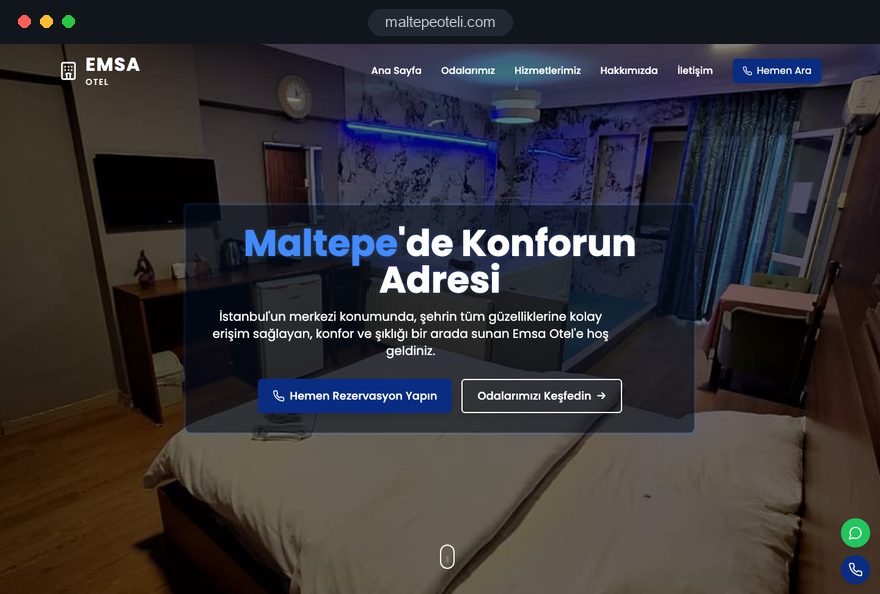
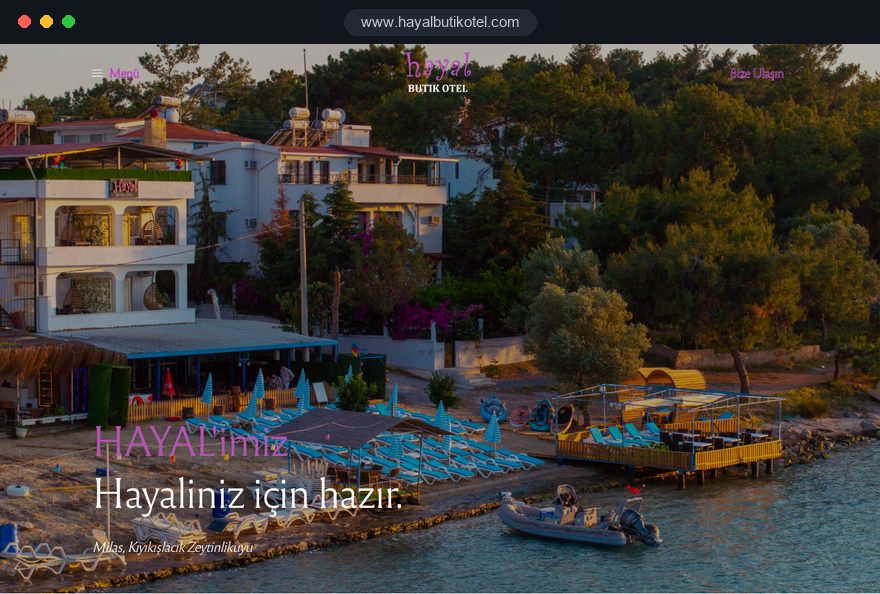
- Guesthouses, tours and visitor services: rooms or tours with real photos, walking times from Gloucester Green coach station and the railway station, cancellation terms and a short booking flow; our hotel website page sets out the full structure.
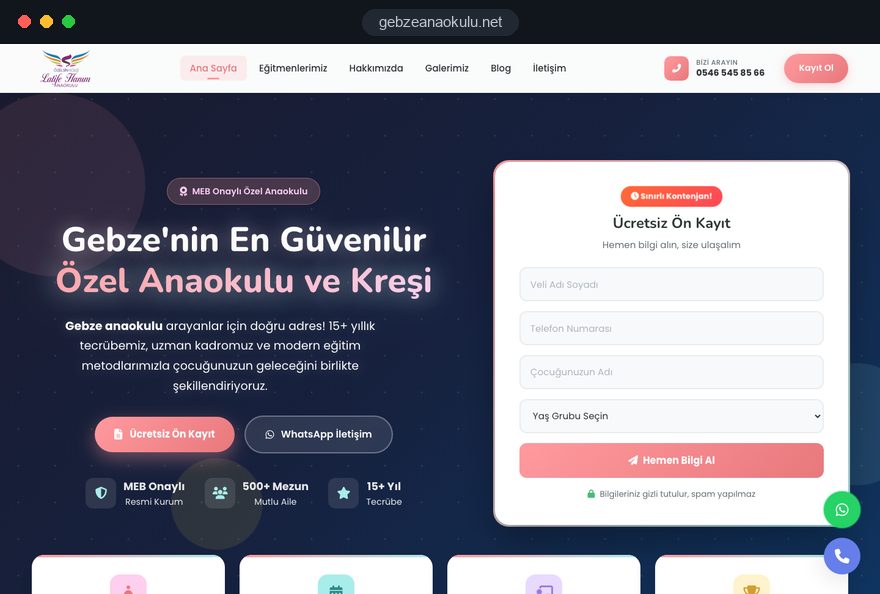
- Language schools and tutors: course levels, start dates tied to terms, a placement test, accommodation help and enrolment that explains data use; the course centre website page shows how these pages connect.
- Automotive and engineering suppliers: one page per process, certificates with expiry dates, machine lists and a secure drawing upload; see the manufacturer website page.
- Spinouts and science companies: a one sentence statement of the problem solved, the founding team, publications and patents, careers and a separate investor contact.
Whatever the structure, proof must be your own. A spinout should cite the paper behind the product and a supplier should name the standard it is certified to, with dates. Stock photos of laboratories or smiling students persuade nobody in a city that sees the real thing daily.
10UK Legal Basics for an Oxford Website
A few legal building blocks apply to almost every Oxford business website, and each is simple to build in at the start. Treat what follows as a map rather than advice, and let a solicitor sign off the finished texts.
- Privacy notice: enquiry forms, enrolment and analytics all handle personal data, so UK GDPR and the Data Protection Act 2018 call for a plain explanation of what you collect, why and for how long.
- PECR consent: ICO guidance treats statistics and marketing cookies as optional, which means they stay off until a visitor agrees, and saying no is offered just as prominently.
- Trading disclosures: a limited company publishes its registered name and number, its registered office and whether it is registered in England and Wales, Scotland or Northern Ireland.
- Selling courses or goods online: under the Consumer Contracts Regulations 2013 consumers usually have 14 days to cancel, and your order pages and receipts need to say how.
- Disabled users: the Equality Act 2010 places a reasonable adjustments duty on service providers; on a website that translates into strong contrast, full keyboard use and form fields with visible labels.
Language schools and student accommodation providers should also check the rules of any accreditation body they belong to. Our build covers the technical half: tracking scripts that wait for the visitor's decision, short forms and the disclosures placed in the footer.
11Relaunching an Older Site Without Losing Traffic
Plenty of Oxford sites have gathered valuable links over the years from college pages, conference listings and local press, and a relaunch keeps that value only if every old address leads somewhere sensible. Work through it in order:
- Inventory: merge addresses from Search Console, past analytics, the current XML sitemap and a full crawl, flagging any page that still draws visitors or backlinks.
- Pairing: give every flagged address a destination on the new site in one spreadsheet, starting with the pages that earn the most visits.
- Protect the preview with a password: Google cannot see a noindex on a page that robots.txt blocks, so a blocked preview can still appear in results.
- Direct redirects: each old page answers with one permanent 301 to its partner; chains and blanket redirects to the front page waste the value.
- Aftercare: send Google the fresh sitemap, read the indexing and 404 reports each week for four weeks and correct directory entries, and ask colleges or partners that link to you to update the address.
Time the switch away from your busiest weeks; a guesthouse should not relaunch in July and a tutoring firm should avoid the fortnight before term. When a rebrand also changes the domain, the website redesign page lists the extra steps.
12Six Mistakes Common on Oxford Business Sites
Weak Oxford sites usually fail on small, fixable details rather than on their look. These six come up often, each with a better alternative:
- Dreaming spires as the hero image: it says Oxford, not you. Open with your rooms, your classroom, your machines or your team.
- Term dates hidden in a PDF: students cannot read it on a phone and search engines index it poorly. Publish dates as a page and update it each year.
- "Oxford and surrounding areas": nobody knows whether you cover Abingdon, Witney or Bicester. Name the places you really serve on one page.
- A booking form that demands an account: visitors give up. Let them book as guests and offer an account afterwards.
- Science explained only in jargon: investors and recruits leave confused. Lead with one plain sentence, then link the technical detail.
- A cookie banner with only an accept button: continuing to browse is not consent under PECR. Show accept and reject equally and fire tags only after a choice.
Ask each studio on your shortlist to point out which of these it finds on your current site. A careful answer is a good sign of how carefully it will build.
13What Drives the Cost of the Project
Budget is set by effort, not geography: a Headington clinic site needs the same hours as one in any other town. Comparing web design Oxford quotes only works if each studio prices these items separately:
- Distinct layouts: a bedroom listing, a course profile, a machining capability and a lab news item are four separate designs.
- Material on hand: signed off copy and current photography go in quickly; anything still to be drafted or photographed adds work.
- Booking, enrolment or shop features: calendars, payments and confirmation flows add design and testing time.
- Second or third language: adaptation, proofreading and separate testing for every version.
- Integrations: channel managers, CRMs, applicant tracking for hiring or inventory feeds.
- History: a predecessor site with hundreds of indexed addresses means a longer redirect sheet.
The cheapest hour is the one nobody has to spend waiting: have texts approved, photos chosen and a single decision maker named before kick off. If a spinout needs a customer portal or product logic, our software team can scope it as a separate phase so the public site is not held up.
14The First Ninety Days and Your Next Step
Launch day is the start of the measurement, and the following quarter works well split into three short phases:
- Weeks one to four: submit a test enquiry through every form, tap each phone number, make a dummy booking and see that analytics logs them only when consent was given.
- Weeks five to eight: read the Search Console queries, find pages with many impressions and few clicks and rewrite their titles and first sentences.
- Weeks nine to twelve: add answers to the questions guests, parents and buyers keep asking, and publish the next term's or season's dates early.
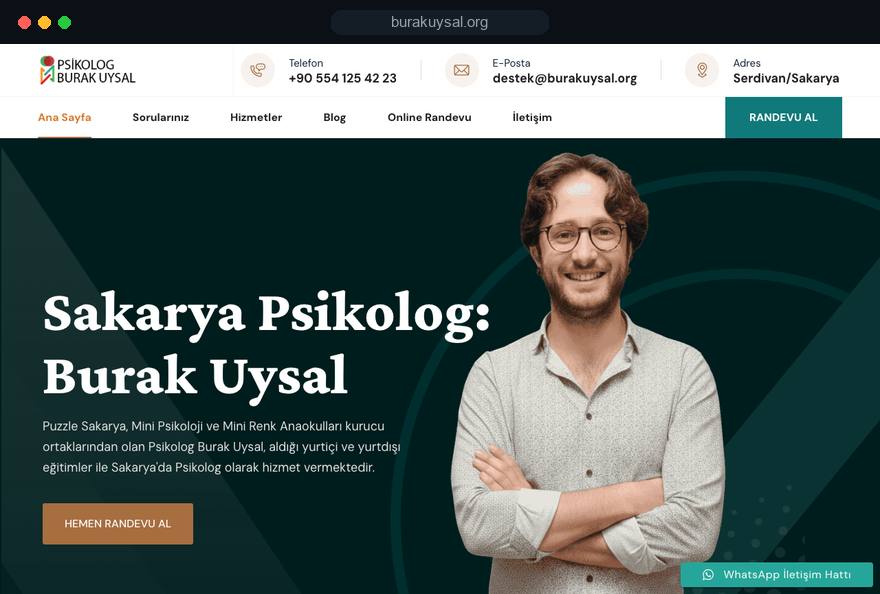
A web design Oxford project in one language with an agreed page list usually matches one of the fixed packages listed under web design packages and prices; bilingual builds, booking systems and spinout sites receive a written quote after a short call. All our completed projects are in Türkiye, and you can browse them on the references page.
When you want to move, read how our web design service runs, then send us your reader list, your busiest weeks and five key searches through the contact form. Good web design Oxford businesses can rely on is measured in the enquiries and bookings of those first ninety days, and that is what we plan for from the first call.