London buyers compare quickly and drop a website the moment it hides what they need. This guide is for owners of London firms, from a practice near Old Street to a building company in Bexley, who are planning a new site or replacing one that has stopped earning its keep.
Good web design London projects are decided less by colours than by a handful of choices about audience, areas, rules and ownership. We, Talha Aslan and team, have set those choices out in the order they come up, and every section closes with something you can act on: a test, a question for any agency or a decision worth putting in writing.
01What a Website Has to Do in London's Economy
In London your website competes against more alternatives per search than almost anywhere else in the UK, so its first job is to earn a place on a shortlist, not to impress. The ONS puts Greater London's population at 9,122,909 at mid 2025 and the region's 2023 output at about 617.9 billion pounds, the highest GDP per head of any ITL1 region.
Spending power is high, and so is the number of competitors one tap away. Three forces shape what that means for a business site:
- Finance and professional services: the City of London Corporation counts 614,500 people working in the Square Mile, which holds one in five financial services jobs in Great Britain; firms serving that world are judged on precision and visible company details.
- Trade through Heathrow: the airport handled a record 83.9 million passengers in 2024, and importers, wholesalers and logistics firms receive enquiries from buyers who have never set foot in London.
- Visitors: VisitBritain counted 20,949 thousand inbound overnight visits to London in 2024, so hospitality, tours and beauty businesses are found by people who do not know the streets.
Write down which of these groups pays your bills and rank them. In web design London briefs, that ranking, not a template, should decide the navigation, the homepage and what you measure.
02How Londoners Search: Boroughs, Postcodes and Near Me
Londoners rarely search for the city on its own; they search for a borough, a neighbourhood, a postcode district or simply "near me". The capital is made up of 32 boroughs plus the City of London, and many residents identify more with Walthamstow or Clapham than with the city as a whole.
- Neighbourhood plus service: "osteopath Wimbledon", "kitchen fitter Chiswick" or "accountant Shoreditch". These searches show the map results first, so your Business Profile and the matching service page have to work together.
- Postcode districts: people planning a renovation type "loft conversion SE22" or "electrician N16", especially when a borough boundary runs through their street.
- Commuter needs: office workers in Canary Wharf or around Liverpool Street look for lunch, gyms and repairs near the station, usually on their phone between meetings.
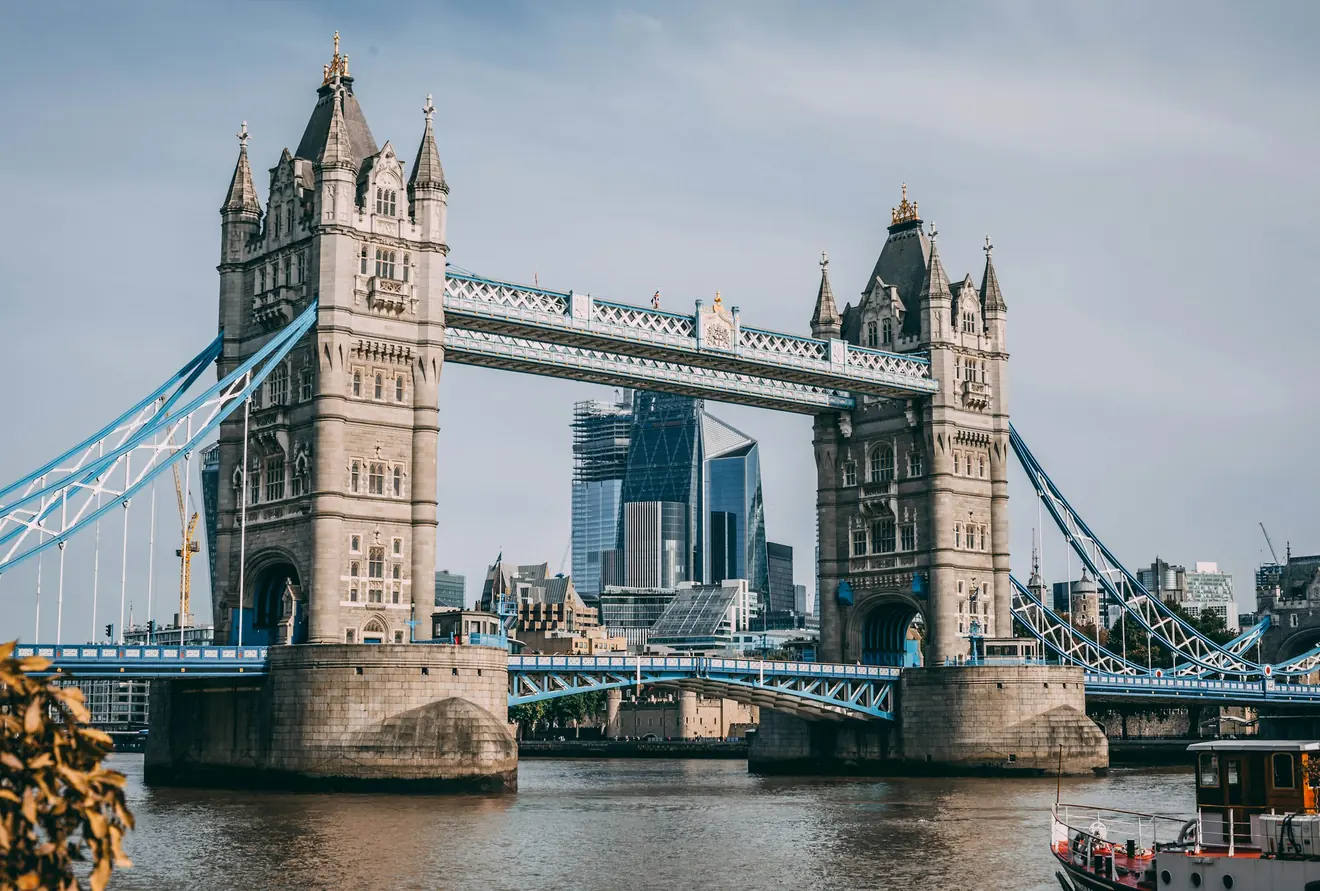
- Visitor searches: tourists add a landmark, such as "brunch near Tower Bridge" or "hair salon near Oxford Street".
Spend ten minutes on your phone in a private window. Type the five searches that bring you the most valuable work, note which competitor and which kind of page ranks for each, and list the page types your site does not yet have.
That list becomes the brief. Typing web design London into Google, by contrast, mostly tells you who advertises; the next section covers how to judge a partner.
03Working With a Partner Outside the UK
A studio outside the country can serve a London firm well when the process is written down and visible, and badly when it relies on goodwill. Our team works from Istanbul with no office, agent or staff in the United Kingdom, so we expect clients to test us harder than a studio down the road. The same tests apply to anyone on your shortlist.
Ask every candidate these questions and request the answers in writing:
- Who joins our video calls, and do we receive a written note of each decision within a day?
- Does the scope list every page, form, integration and revision round, and say clearly what is excluded?
- Can we open the work in progress on a password protected preview at any time?
- Who writes the British English copy, and who checks spellings such as optimise, colour and organisation?
- Who covers our project when our main contact is away?
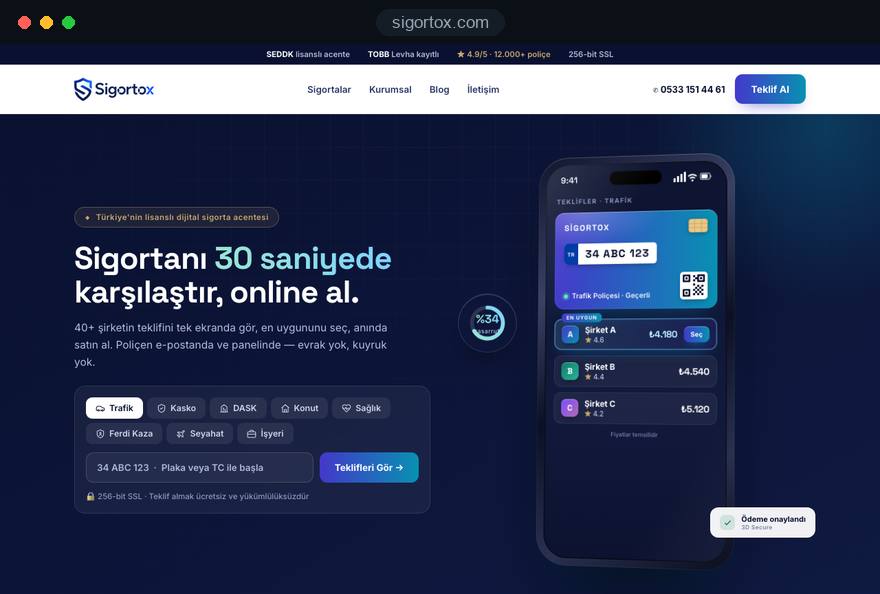
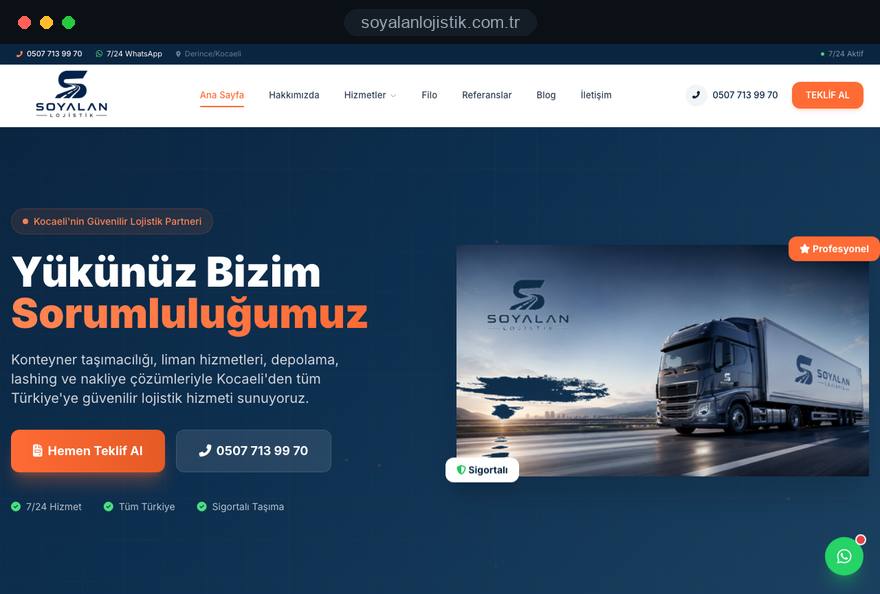
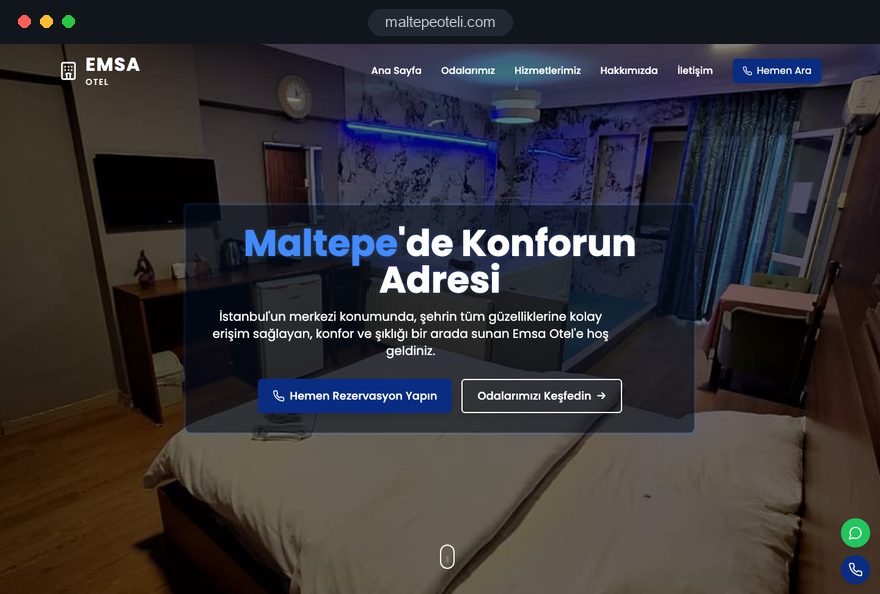
Then check live sites rather than mockups. Our work so far is in Türkiye and listed with live addresses on our references page; we have not yet delivered a project in the United Kingdom, so open those sites on your phone, send a test enquiry and judge them as strictly as any studio in Clerkenwell. Compare the scope documents side by side as well, because a vague scope costs more later than any gap between two quotes.
04Who Owns the Domain, Hosting, Code and Accounts
Every asset the site depends on should sit in your company's name from the first day, because London firms change suppliers, partners and staff often. A .co.uk domain registered to a former employee's personal inbox is one of the most common and most avoidable headaches.
- Domain: .co.uk or .uk if your customers are mainly British, .com if you trade internationally; registered to your limited company through a registrar where you hold the login, with auto renewal on and a shared mailbox as contact.
- Hosting: a contract in the company's name and your own access to the control panel and to DNS, the settings that point your domain to the web server and to email.
- Code and licences: written usage rights, the source code handed over, and fonts, themes and photos licensed to the business rather than to the agency.
- Google accounts: Search Console, GA4 and the Business Profile owned by a company account, with any agency added as a user you can remove.
- Two administrators: at least two people inside the firm with full rights everywhere.
Under the UK GDPR, providers that handle personal data on your behalf, such as your host or booking tool, act as processors and need a written contract with you. Keep those contracts together with an access register that lists each account, its owner and its renewal date.
05The Project in Six Online Steps
A web design London project with us runs through six stages, each closed by your written approval and tracked in our CRM. Istanbul stays on UTC+3 all year, so it is two hours ahead of London during British Summer Time and three hours ahead under GMT; we book calls between late morning and mid afternoon London time.
- Discovery call: we agree the audiences, the boroughs or regions you serve, the languages and the enquiries that count as success.
- Written scope: page list, forms, integrations, who supplies the company details and privacy notice, revision rounds and dates.
- Structure and content: a page map and draft copy in British English, reviewed by you before any design starts.
- Design on a live preview: mobile layouts first, then desktop, all on a protected address you can share with partners.
- Build and checks: forms, consent tool, speed and redirects tested on real phones and browsers.
- Launch and handover: a recorded training session, account handover and a short aftercare period.
Nothing here requires travel. If you happen to be in Istanbul, our Ataşehir office is open for a meeting, but every decision can be made from your desk in London. What the work includes is set out on our web design service page.
06Local SEO Across London's Boroughs
Local visibility in London comes from an accurate Google Business Profile, honest area pages and consistent details across the web; it does not come from cloning a page for every borough. Google's guidelines say the business name must match the real world name without added keywords, and a tradesperson who works from home can hide the address and list a service area instead.
- Profile: the correct primary category, opening hours, real photos of work and team, and the boroughs you serve, such as Lewisham, Greenwich and Bromley.
- Area sections: one useful page per genuine service area, with typical jobs there, parking or access notes and the postcodes covered, instead of thirty near identical pages.
- Consistent details: the same name, address and phone number on the site, the profile and directories such as Yell.
- Reviews: a polite request by email or text after each finished job, with a direct link, and never anything offered in return.
Suppose you trade from a shop in Stoke Newington and also cover Hackney and Islington: the shop page carries the address and opening hours, while the other two areas get honest service sections. When you want this handled month by month, our SEO service covers profile work, content and reporting.
07English First, Then Turkish or German When It Pays
English in British spelling is the backbone of any London site, and a second language earns its place only when a defined group of customers or buyers will read it. Turkish pages suit firms whose clients include London's Turkish speaking community; German pages help when you sell to buyers in Germany, Austria or Switzerland.
Before adding a language, check three things:
- Demand: do enquiries, calls or searches already arrive in that language, and who will answer them?
- Content: will the pages be written for that reader, with their own examples, rather than run through a translation plugin?
- Maintenance: who updates services, staff and opening hours in every version when something changes?
A Turkish version of an accountant's site in Haringey, for example, works when it explains self assessment and Companies House filings in plain Turkish, not when it mirrors every English page word for word.
Each version lives in its own folder and links to the others with hreflang, the tag that tells Google which language and region a page serves. The annotations must be reciprocal: every version references the others and itself. You can draft the tags with our hreflang generator; a visible language switch in the header is enough, and visitors should never be redirected automatically by location.
08Speed, Hosting and Security for London Visitors
A London site has to load fast on a phone over a crowded mobile connection, often on a station platform or in a queue, so speed belongs in the design rather than in a later fix. Google's Core Web Vitals set targets at the 75th percentile of visits: LCP, the time until the main content appears, of 2.5 seconds or less; INP, how quickly the page reacts to a tap, of 200 milliseconds or less; and CLS, how much the layout jumps, of 0.1 or less.
- Hosting region: a server in the UK or nearby in Europe keeps response times short for London visitors and keeps data protection questions simpler.
- Images: modern formats, correct sizes and lazy loading further down the page; a renovation gallery is usually the heaviest part of a site.
- Scripts: remove chat widgets, sliders and trackers nobody uses, and load the rest only after consent where it is required.
- Security: HTTPS everywhere, updates applied promptly, two factor login for administrators and daily backups stored away from the server.
Check your current site with our mobile friendly test and the field data in Search Console, which reflects real visitors rather than a lab run. Repeat the check after every major change, because one new tracking script can undo months of careful work.
09Sector Examples From London's Economy
Each of London's sectors needs different pages and flows, so the structure should follow how your customers make decisions. A few examples of how web design London work differs by trade:
- Accountants and consultancies near the City: one page per service, such as company formation, payroll or self assessment, saying who it suits, what the client provides and how the first meeting works; our consultancy website guide shows a fitting structure.
- Builders and renovators in the outer boroughs: project pages with location, scope and photos taken in the same light before and after, plus a quote form that asks for a postcode and photos.
- Importers and wholesalers around Park Royal or near Heathrow: product ranges, minimum order details, a trade account request and delivery areas.
- Restaurants, cafés and salons on busy high streets: the menu or treatment list as text rather than a PDF, opening hours, a map and tap to call.
- Clinics and therapists: practitioner profiles with qualifications, clear online booking and a privacy notice that covers health information.
If your firm also serves the Midlands, look at how our page on web design in Birmingham frames a regional market before deciding whether one site with regional sections or two separate sites serves you better.
10UK Rules Every London Site Should Cover
A London business website has a short list of legal basics, and building them in from the start costs far less than retrofitting them. What follows is general information rather than legal advice; have the final texts checked by a solicitor.
- Company details: GOV.UK guidance says a limited company's website must show its registered number, registered office address, where it is registered and the fact that it is a limited company.
- Privacy: if the site collects personal data through forms, bookings or analytics, you need a privacy notice under the UK GDPR and the Data Protection Act 2018, which the ICO oversees.
- Cookies: under PECR you explain non essential cookies and get consent before setting them; cookies strictly necessary for a service the visitor asked for, such as a basket, are exempt.
- Marketing email: the ICO's PECR guidance says marketing emails to individuals need specific consent, with a limited soft opt in for existing customers who were given an easy way to opt out.
- Online sales: the Consumer Contracts Regulations 2013 usually give consumers 14 days to cancel a distance purchase; for goods the period starts on delivery.
Accessibility belongs on the list too. The Equality Act 2010 expects service providers to make reasonable adjustments for disabled people, so readable contrast, keyboard access and labelled form fields are sensible defaults. For shops, our e-commerce service builds the cancellation information into the checkout itself.
11Relaunching Without Losing Rankings
A redesign keeps its search visibility when every old address that earns traffic or links is sent to its closest new equivalent with a permanent 301 redirect. Enquiries often drop after a relaunch for one plain reason: service pages moved and nobody mapped them.
- Export: list every URL from the old sitemap, Search Console and analytics, including PDFs and blog posts.
- Map: pair each old address with the most relevant new page in a spreadsheet, and send retired pages to their nearest topic rather than to the homepage.
- Keep what works: pages that bring calls, such as "boiler repair Ealing", keep their topic, main heading and key paragraphs.
- Test before launch: run the redirects on the preview, then check for chains and loops.
- Watch after launch: submit the new sitemap and review indexing and 404 reports in Search Console every week for the first two months.
Make sure no staging setting travels to the live site; a leftover noindex tag is a classic reason a site disappears from results. Remember too that a page blocked in robots.txt cannot have its noindex read, so pages you want out of the index must stay crawlable and carry noindex.
12Common Mistakes on London Business Websites
Most weak London sites fail in predictable ways, and each mistake has a straightforward alternative.
- Thirty borough pages with swapped names: search engines treat them as doorway pages; write a few honest sections for the areas you really serve.
- Price lists and menus only as PDFs: they load slowly on phones and are hard to read; publish them as normal text pages.
- Missing company details: a footer without registered number and office looks evasive to City clients; show them as GOV.UK guidance requires.
- A cookie banner that tracks before anyone clicks: configure the consent tool so analytics waits for an explicit yes.
- American spelling and generic stock skylines: "color" and a Manhattan photo signal a template; write in British English and use your own photography.
- A contact form as the only route: busy Londoners want to call, book or message; offer tap to call and a booking link next to the form.
Check your current site against this list before you brief anyone. The way an agency reacts to it also tells you how carefully it thinks about your customers rather than its own portfolio.
13What Drives the Budget
The cost of a London website depends on scope, content and integrations, not on the postcode; our prices are the same in every country. These are the factors that move it:
- Number of templates: distinct page types such as service, project, team and area pages matter more than the raw page count.
- Languages: each extra version needs its own writing, review and upkeep.
- Content work: whether you supply copy and photos or need them written and sourced for you.
- Integrations: booking systems, CRMs, accounting tools, payment providers and stock feeds.
- Online shop: product count, variants, delivery rules and the cancellation flow.
What does not move it: being in Mayfair rather than Barking, or the headcount of your company. A useful web design London quote names each item separately, so you can drop or postpone parts and compare offers on equal terms.
Ask every agency for that line by line structure. It shows where the money goes, exposes vague items such as "SEO setup" without a description, and makes it obvious when two quotes cover different work.
14The First 90 Days and Your Next Step
The first three months after launch decide whether the site becomes a steady source of work, so plan them before going live.
- Weeks 1 and 2: check forms, call tracking and consent daily, and fix anything broken straight away.
- Month 1: complete the Business Profile, ask recent clients for reviews and confirm that Search Console has indexed the key pages.
- Month 2: read which searches bring impressions, for example a borough plus your service, and strengthen those pages.
- Month 3: compare enquiries with the targets in the scope and choose the next step: a new language, more area sections or a campaign.
If you are weighing up web design London options now, start with three notes: your ranked audiences, your five most valuable searches and the boroughs you serve. Compare our fixed packages in the pricing section, then send those notes through the contact form; after a short video call we reply with a written scope and quote.