A website for a Gaziantep company rarely has one kind of visitor. In one week it may be opened by a wholesaler in Basra comparing rug suppliers, a category buyer in Ohio checking certificates before a container order, and a food traveler standing near the old copper market looking for lunch. Each reads another language and wants different proof. Good web design in Gaziantep sends each of them to the right page without making the others wait.
Talha Aslan and team wrote this guide for Gaziantep manufacturers and food businesses, and for importers abroad who build sites around a Gaziantep brand. The sections follow the order in which decisions are actually made, and each one ends with something you can check or ask.
01What Gaziantep's Export Economy Asks of a Website
In Gaziantep, the main job of a website is to prove production capacity to a buyer who will never walk through the factory. According to the Ministry of Trade's 2023 figures by province of production, Gaziantep alone generated 3.6% of Turkey's exports, against 2.0% for neighboring Hatay and 1.6% for Adana. As the export hub of the southeast, you are compared with mills in India or China, not with the workshop down the road.
That comparison sets the questions the site must answer before anyone writes to you:
- Capacity: Looms or lines, monthly output and warehouse space, stated as precisely as you are willing to share.
- Range: Collections and sizes for carpets, pack sizes and shelf life for food, product codes for plastics and packaging.
- Logistics: Minimum order quantity, container loading, port of shipment or border crossing, and typical lead times.
- Documents: Quality certificates, lab reports and geographical indication details as downloadable files, not as photos of framed papers.
Where a figure is commercially sensitive, write "available on request" next to a short form; the buyer still gets a next step, and competitors get nothing.
02Who Searches for Gaziantep, and in Which Language
Searches connected to Gaziantep come from three groups, and each group needs its own landing page. A homepage that tries to greet all three usually satisfies none of them.
- Trade buyers: Queries such as "machine made rug manufacturer Turkey", "pistachio kernels bulk supplier" or the Arabic name of a product. The city is often missing from the query; the collection page and the quote form do the work.
- Local customers: Searches like a boiler service in Şehitkamil or a dentist near İbrahimli, typed in Turkish on a phone. They need a map, opening hours and a call button.
- Food travelers: Visitors drawn by Gaziantep's UNESCO gastronomy title, often searching in English or Arabic from a hotel room for katmer, beyran or a baklava shop that ships.
Seasons reshape the demand. The pistachio harvest and the new crop bring bulk nut enquiries, the weeks before religious holidays bring baklava orders, and the months before the big carpet fairs bring catalog requests. Put these windows in your content calendar and update the relevant pages a few weeks ahead.
A quick exercise: search your main product in Turkish, English and Arabic in a private browser window and note which page types rank on the first page.
03Hiring a Web Team You Will Only Meet on Screen
Every web design Gaziantep project we take on runs entirely online, so judge any agency by how clearly it documents its process rather than by where it sits. Exporters already trade with Baghdad and London this way, through calls, shared files and signed confirmations.
Put these questions to every agency you talk to, and ask for the answers in writing:
- Arabic experience: Have you launched a right to left site before, and how do you test mirrored menus, forms and tables?
- Image volume: How do you handle thousands of product photos without slowing the site, and who does the bulk import?
- Approval chain: If the export manager, the owner and the quality lead all sign off, where are their comments collected?
- Live proof: Which of your live sites sell products or collect quote requests, so I can test them on my own phone?
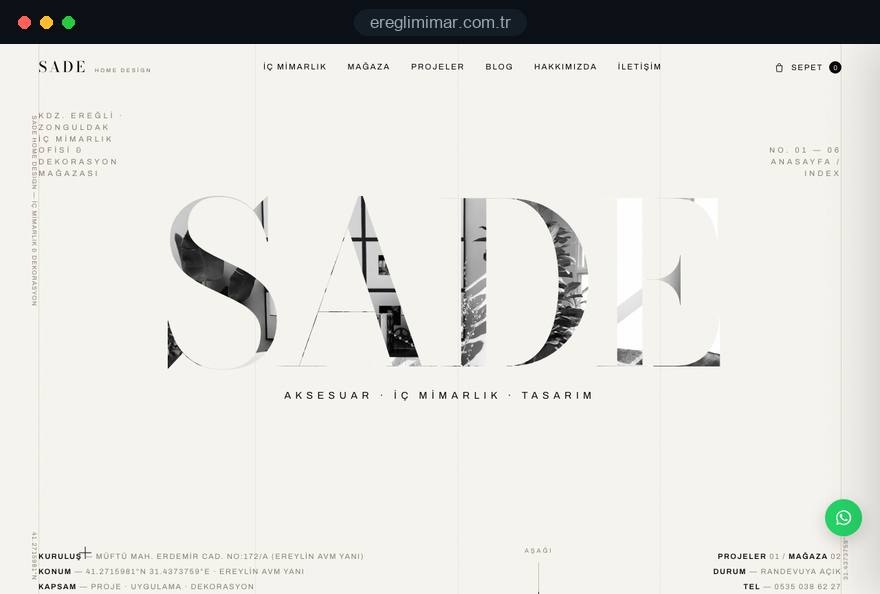
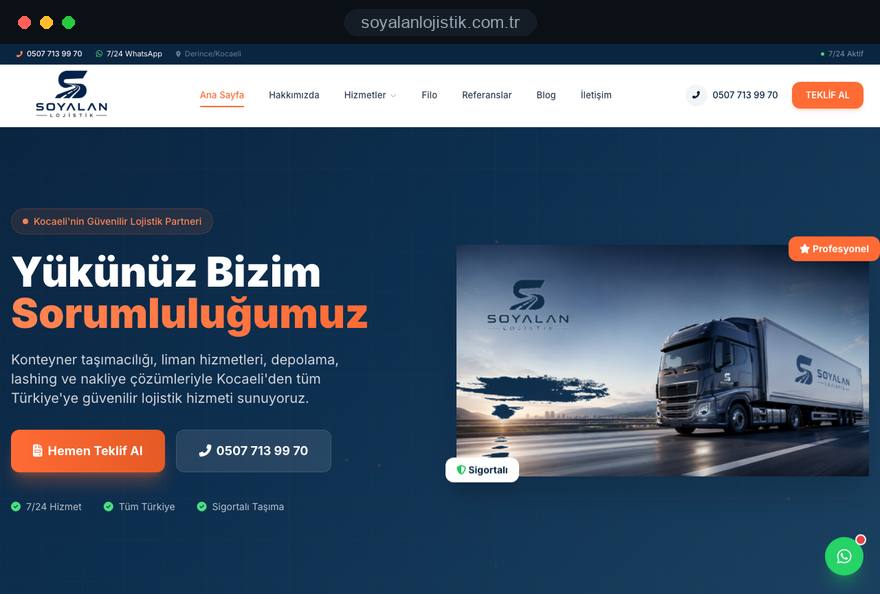
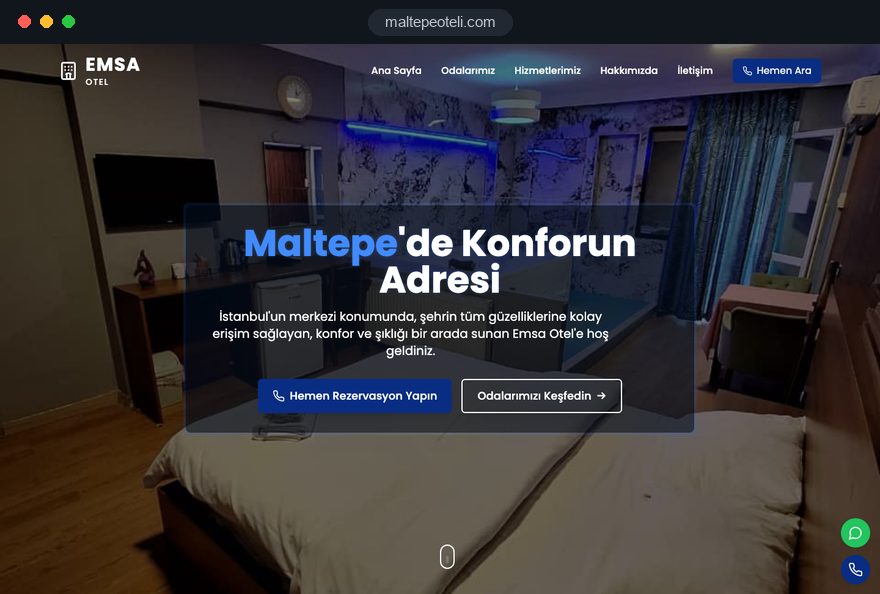
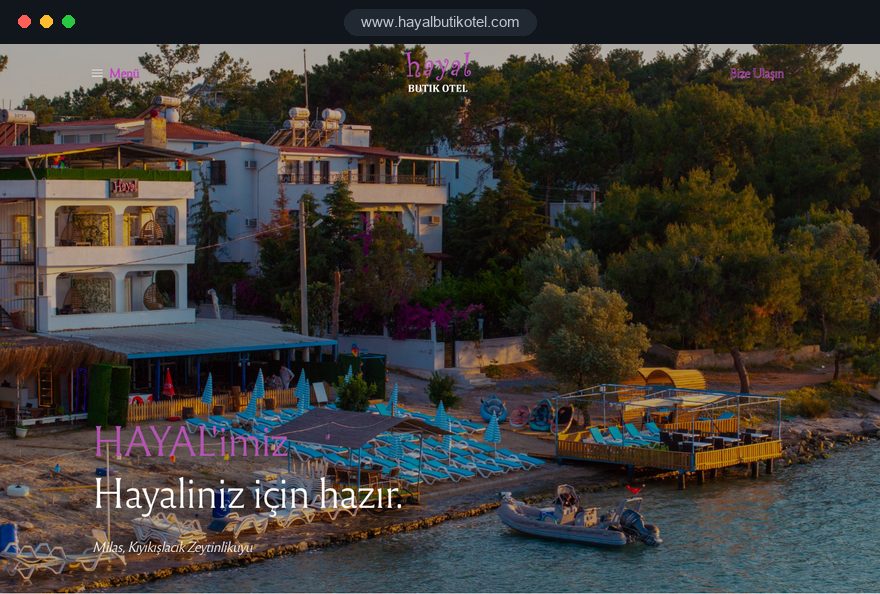
Do not accept screenshots; filling in a real form tells you more than any slide deck. Our live work is listed with addresses on the references page; none of it is in Gaziantep, but you can see how we present products and gather enquiries.
04Who Should Own the Domain, Hosting, Code and Accounts
Every asset tied to the website should be registered to your company, and that rule belongs in the quote, not in a later email. Family firms are common in Gaziantep, and we often find a domain or ad account still linked to a relative who started the business years ago or to a former employee's personal address.
On handover day, check each item yourself:
- Domain: The registrant field shows your legal company name. If you plan country domains for target markets, keep them in the same registrar account.
- Hosting: You hold administrator access to the server panel, and the location and frequency of backups are written down.
- Code and data: The full product catalog or design archive can be exported on request, together with the database and files.
- Analytics and ads: Search Console, GA4 and any ad account sit under a company login, with the agency added only as a user.
- Business Profile: Google Business Profiles for the plant, the sales office or the shop list your company as primary owner.
Paid themes, fonts and plugins deserve one more question: whose name is on the license? An agency held license can stop updates the day you part ways.
05The Online Project, One Step at a Time
Speed in a remote project comes from a fixed order of steps and a named approver at the end of each one. With a Gaziantep exporter or an importer abroad, our sequence usually looks like this:
- Market call: On video we hear which countries you sell to, whether your buyers are wholesalers or retailers, and the question they ask most often.
- Written scope: Page list, language versions, number of products or designs and the schedule go into the quote; work starts when you approve it.
- Material collection: Product data arrives as a spreadsheet, photos through a shared folder and certificates as PDF files, with gaps tracked on one list.
- Design approval: The English layout and the Arabic right to left layout are reviewed separately in the browser, with comments pinned to the page.
- Build and test: Forms, filters and language switching are tested on several phones, including devices and browsers common among buyers in Iraq and the Gulf.
- Launch and training: Your export team learns on video how to add a design or product from the panel.
Every step is visible in our CRM. If you prefer to meet in person, we can sit down at our office in Ataşehir, Istanbul, by appointment while you are in the city for a fair; that is entirely optional.
06Local SEO in Gaziantep: Districts, Maps and Profiles
Map visibility starts with a Google Business Profile whose details match your website exactly. Google's guidelines require the name to be your real world name, so adding phrases such as "oldest baklava in Antep" to the profile name risks suspension rather than ranking.
These are the local rules we apply in Gaziantep:
- Correct district: The city center is split between Şahinbey and Şehitkamil. Write the one your address belongs to, the same way on the site and the profile.
- Real place names: Neighborhoods and streets people actually use, such as İbrahimli, Karataş or Gazimuhtar Paşa Boulevard, belong naturally in directions and contact text.
- Industrial zone firms: A plant in the Başpınar organized industrial zone is found through product searches; the address builds trust, while product pages bring the traffic.
- Outer districts: A pistachio processor in Nizip or a manufacturer in İslahiye names its real location and does not open thin pages for districts it does not serve.
Pages that only swap a district name count as doorway pages for Google. A district page earns its place when it carries real local information, such as a branch, a delivery day or a team based there.
Service area businesses, for example air conditioning technicians or movers, may hide their address and define a service area instead. If you want product and local search planned together, see our SEO service.
07When Arabic, English or German Versions Pay Off
For Gaziantep firms a second language is a sales channel, and the export figures should decide which one comes first. The İpekyolu Development Agency's provincial profile shows 19.3% of exports going to Iraq, followed by the USA, Syria, the United Kingdom and Saudi Arabia.
- Arabic: First priority for carpet, food and plastics firms selling to Iraq, Syria and the Gulf. The city's large Arabic speaking population also makes it useful for local retail.
- English: Needed for importers and retail chains in the USA and the UK, and for trade fair contacts; technical specifications and certificates are usually read in English anyway.
- German: Worth adding for the most asked pages if you have distributors for home textiles or nuts in Germany, Austria or Switzerland.
Each language lives at its own address and is linked to the others with hreflang tags, which tell Google which page belongs to which language. Every version must reference itself and all the others; without these reciprocal links the tags can be ignored. You can generate the markup with our hreflang generator and compare it with your current site.
Arabic copy needs localization, not translation. A wholesaler in Iraq searches for rug sizes and color names in his own market's vocabulary, which a dictionary catalog does not match. We write Arabic text with a translator who knows that market and leave the final check to your sales team.
08Fast Loading Despite Heavy Pattern Images
The most common technical risk in web design for Gaziantep companies is the image weight that makes products look good and pages load slowly. A shop owner in Erbil may open your collection on a phone over a connection that is not always strong.
We measure speed with Google's Core Web Vitals rather than impressions. At the 75th percentile of visits, LCP, the time until the largest element appears, should be 2.5 seconds or less; INP, the delay before the page responds to a tap, 200 milliseconds or less; CLS, how much content shifts while loading, 0.1 or less.
- Modern formats: Pattern photos are served as WebP or AVIF, small on listing pages and large on product pages.
- Lazy loading: Images below the fold load as the visitor scrolls, while the main image on the first screen loads with priority.
- Fixed dimensions: Every image has a declared width and height, so buttons do not jump while the page loads.
- Zoom on demand: The high resolution image that shows the weave opens only when a buyer asks for it.
On security we set up automatic SSL renewal, backups stored away from the web server and spam protection on quote forms. SPF, DKIM and DMARC records keep your offers out of the buyer's junk folder.
Before our call, convert a few of your product photos with our image converter and compare the file sizes yourself.
09Site Structures for Carpet, Pistachio, Kebab and Haulage Firms
Each of Gaziantep's main sectors expects something different from its website, so one template stretched across all four rarely works. The structures below are recommendations based on how these trades operate, not client case studies.
- Machine made carpet producer: The main menu leads to collections, the design archive and sample requests. Each design page lists sizes, color variants, pile height and yarn type, and a sample button fills the form with the design code.
- Baklava and pistachio producer: An origin page explains that Antep Baklavası is registered as a protected geographical indication in the EU. Product pages show weight, shelf life, storage and shipping zones, with a separate path for wholesale buyers.
- Kebab house or restaurant: The menu appears with photos in at least two languages, and walking distance from the castle or the Zeugma Mosaic Museum, reservations and hours sit on the first screen.
- Cross border haulage firm: Routes through Karkamış toward Iraq, customs support and vehicle types are explained, and an Arabic quote form asks for cargo type and destination city.
How to build capacity and certificate pages for a plant is covered in depth on our website for manufacturers page. For plastics, packaging and machinery the rule is the same: every answer a buyer needs before ordering sits one click from the product page.
10KVKK, Cookie Consent and Selling Food Online
The legal layer of a site must reflect the data you actually collect and what you actually sell; borrowed texts naming another company are noticed by foreign buyers too. Settle these points before launch:
- Information notice: Article 10 of Turkey's KVKK, Law No. 6698, requires a notice explaining who processes personal data and why, at every point where you collect it, including sample and quote forms.
- Cookie consent: Visitors from the European Economic Area must give consent before non essential tracking starts, and Google requires consent mode for its measurement and ad personalization features for those users.
- Distance sales: Selling baklava or pistachios directly to Turkish consumers means presenting the preliminary information form, the distance sales contract and withdrawal right details during checkout.
- Perishable goods: How withdrawal rights apply to fresh desserts should be confirmed with your legal adviser before you publish anything about returns.
- Foreign markets: Food labeling and import rules differ by country, so a wholesale enquiry form is usually a safer first step than open retail sales abroad.
The legal content stays with you or your adviser; we place each text on the right page, next to the form it belongs to. If you plan online sales with payment, shipping and returns, the details are on our e-commerce service page.
11Redesigning Without Losing Search Traffic
The biggest loss in a redesign comes from deleting addresses that have brought visitors for years. In web design for Gaziantep exporters we often inherit old product pages built around former item codes that still collect links from distributors abroad; if those pages vanish without a match, that value disappears with them.
- Take inventory: List every current address, the pages that earn clicks in Search Console and the pages with external links.
- Map one to one: Match each old product or collection address with its closest equivalent on the new site, never sending everything to the homepage.
- Set permanent redirects: Use 301 redirects, which tell Google that a page has moved for good.
- Check language versions: If the old site had Arabic or English pages, make sure each one points to its new equivalent in the same language.
- Watch the first weeks: Follow the not found report in Search Console after launch and fix anything that slipped through.
Blocking the staging site in robots.txt is not enough on its own. Google cannot read a noindex tag on a page blocked by robots.txt; a page you want kept out of the index must be crawlable and carry noindex. Password protection for the staging environment is the safer option.
Compare your old and new address lists with our redirect mapping tool to catch missing matches before launch.
12Common Mistakes on Gaziantep Company Websites
Most recurring problems in web design for Gaziantep firms come not from visual design but from ignoring how buyers decide. These six appear most often, each with a better alternative:
- Burying the catalog in one PDF: Instead of a heavy catalog file, give every design or product its own page and offer the PDF only as a download.
- Leaving Arabic to automatic translation: Instead of relying on browser translation, build a separate Arabic version designed right to left and written in market vocabulary.
- Sending every enquiry to one WhatsApp number: Instead of mixing wholesale, retail and freight messages, ask for the enquiry type in the form and route each type to the right person.
- Never showing the plant: Instead of stock imagery, publish real photos of the production line, warehouse and team; for a distant buyer this is the strongest evidence you have.
- Claiming origin without proof: Instead of vague "famous Antep" wording, state the registration and which products it covers.
- Ignoring holiday rush capacity: Instead of leaving old delivery times online when orders peak, update the shipping cutoff date on the first screen.
13What Drives the Scope and Cost of the Project
Scope, not city, decides what a project costs; our prices for web design in Gaziantep are the same as for a shop in Istanbul or an importer in Chicago. These decisions shape the quote most:
- Number of products or designs: A ten product showcase and a filterable archive of thousands of designs differ greatly in data preparation and technical structure.
- Number and direction of languages: Every extra language needs adapted copy, and Arabic adds a separate right to left design approval.
- Wholesale login area: Showing price lists only to signed in dealers is a larger software task than a simple quote form.
- Integrations: Links to ERP, stock, shipping or payment systems widen the scope.
- Content production: Whether plant photography, product shots and copywriting come from you or from us changes both effort and schedule.
A sensible way to keep the first phase lean is to launch with the collections that sell most and one extra language, then add the rest later. To plan several languages properly from day one, look at the structure on our multilingual website page.
14The First 90 Days and Your Next Step
A web design project for a Gaziantep company does not end at launch; the first 90 days show which markets actually send enquiries. We plan that period like this:
- Month one: Search Console and GA4 are monitored, sample and quote forms are tracked as conversions, and technical errors are closed.
- Month two: We compare which countries view which collections and strengthen the copy and images of the most visited product pages.
- Month three: Based on where enquiries come from, we decide on a new language page, a QR landing page for a trade fair stand or an ad campaign.
Before you decide, answer three questions in writing: in which country is your main buyer, how many products or designs will the site carry, and which language comes first.
We set scope and price in a written quote tailored to your request; reach us through the quote form. After a video call in English or Turkish we send a written scope and quote, and nothing moves forward without your approval.