This guide is written for Chicago owners and managers who are about to brief a new website: a freight broker near O'Hare, a remodeler working the North Shore, a CPA practice in the Loop, a caterer in Pilsen, an exhibitor preparing for a McCormick Place show. A web design Chicago project rarely fails on colors or fonts. It fails on choices nobody wrote down early enough, such as which buyer comes first, which suburbs count as home turf and who controls the accounts.
We, Talha Aslan and team, have ordered those choices the way they surface during a build. Each section ends with something concrete: a test you can run on your current site, a question to put to any agency, or a decision worth recording in the scope.
01What a Chicago Website Has to Prove First
A Chicago company website has one main task: to show, within the first screen, what you do, for whom and across which part of a very large metro. The Census Bureau's Vintage 2024 estimate counted 2,721,308 residents in the city alone, and the next largest Midwest cities, Columbus and Indianapolis, each stay below one million. Buyers here have plenty of alternatives, so vague positioning costs calls.
The economy around you shapes the proof a visitor expects. Three drivers stand out on the page above this guide, and each asks for something different:
- Freight and air cargo: O'Hare ranked second in the world for aircraft movements in 2024, so shippers judge carriers and forwarders on lanes, equipment and response time.
- Conventions: McCormick Place hosts shows such as the National Restaurant Association Show, which makes booth pages and meeting requests a recurring need.
- Visitors: Choose Chicago counted 55.3 million visitors in 2024, so hospitality sites must answer hours, location and booking on a phone.
Write one sentence that finishes "A visitor should leave our site knowing that we..." and test every homepage draft against it. If the sentence needs the word "and" three times, the site is trying to do too many jobs at once.
02How Chicagoland Customers Phrase Their Searches
People in Chicago search with a place name attached, and the place they type tells you how far they are willing to travel. A homeowner in Rogers Park types "electrician Edgewater" rather than "electrician Chicago", while a purchasing manager in Elk Grove Village types a category such as "contract packaging Illinois" and never adds a neighborhood.
Sort your valuable searches into these groups before anyone drafts a sitemap:
- Neighborhood searches: "pediatric dentist Andersonville", "tailor Gold Coast", "bakery Bridgeport"; they trigger map results and reward a Business Profile with accurate hours.
- Suburban searches: "roof repair Oak Park", "family lawyer Skokie", "HVAC Aurora"; they need a clear list of the towns you cover.
- Industrial and trade searches: "cold storage Bensenville", "customs broker O'Hare", "CNC machining Elk Grove"; buyers compare service pages, certifications and capacity.
- Visitor searches: "deep dish near me" or "architecture boat tour" typed downtown, often minutes before a decision.
Spend twenty minutes typing your top five searches on a phone in private mode and note which result types appear: map pack, directories, competitor service pages. That snapshot tells you which pages your site needs, and it is the first thing a serious web design Chicago proposal should reflect.
03Working With an Istanbul Team on Central Time
Hiring a studio outside the United States works when every agreement is written and every draft is visible, not when it depends on trust alone. Our team works from Istanbul, which stays on UTC+3 all year; Chicago is 8 hours behind Istanbul during daylight saving time and 9 hours behind in winter.
In practice a call at 8 in the morning in Chicago lands in our late afternoon, and comments you leave before dinner are usually worked on before your next workday starts. That rhythm only helps if the process is disciplined, so ask any remote partner, ours included, for the following:
- A written scope that lists pages, languages, integrations and revision rounds, plus what is excluded.
- A password protected preview you can open at any hour, not only during scheduled presentations.
- A named person who answers questions, and a stated response window for urgent problems after launch.
- Clarity on who writes the American English copy and who checks licenses, addresses and phone numbers.
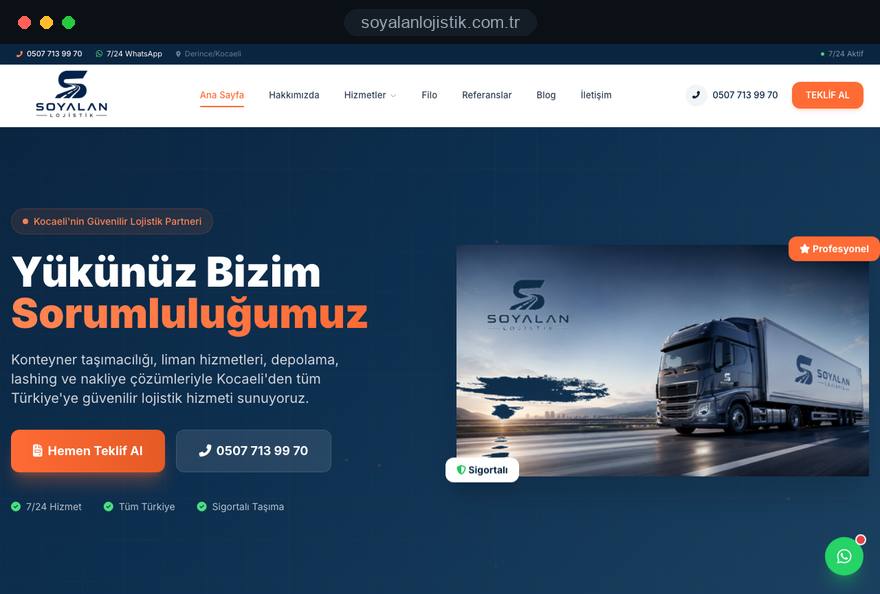
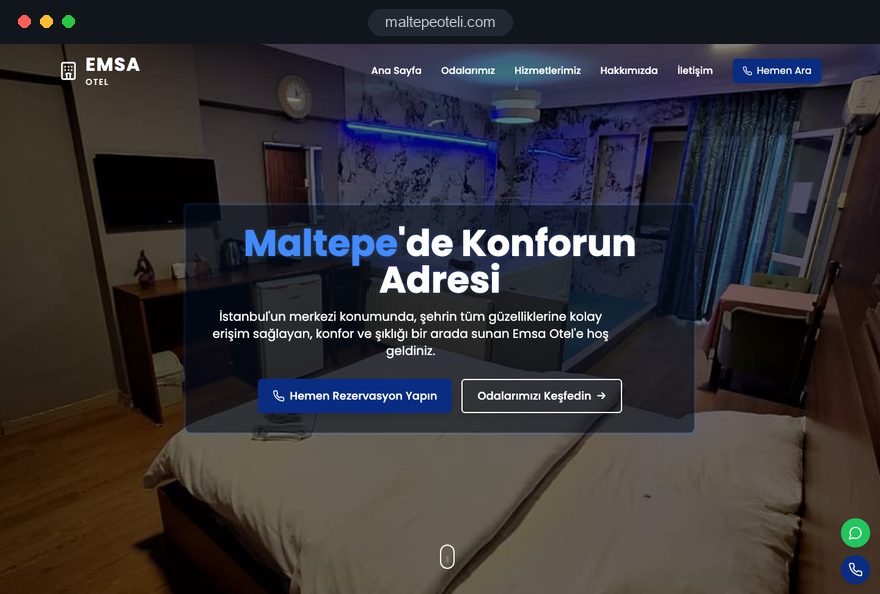
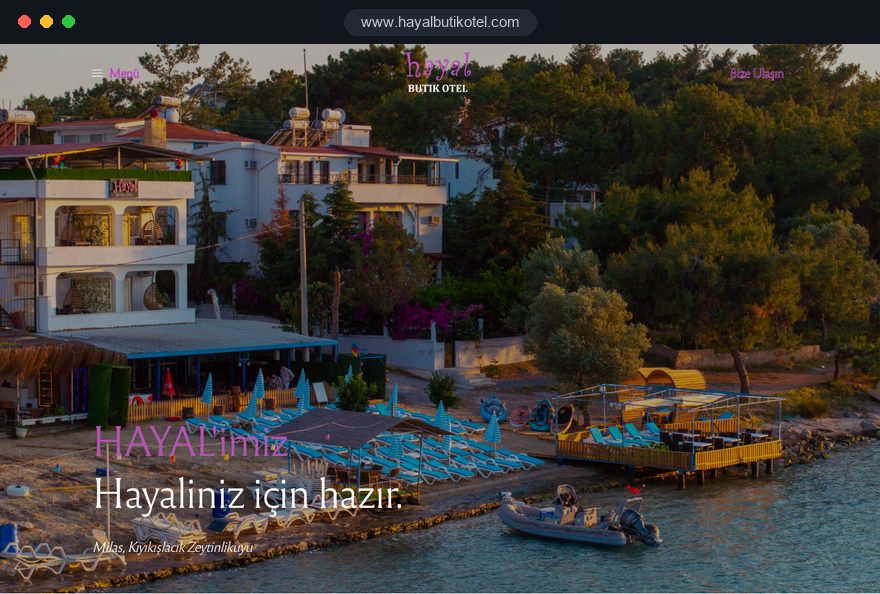
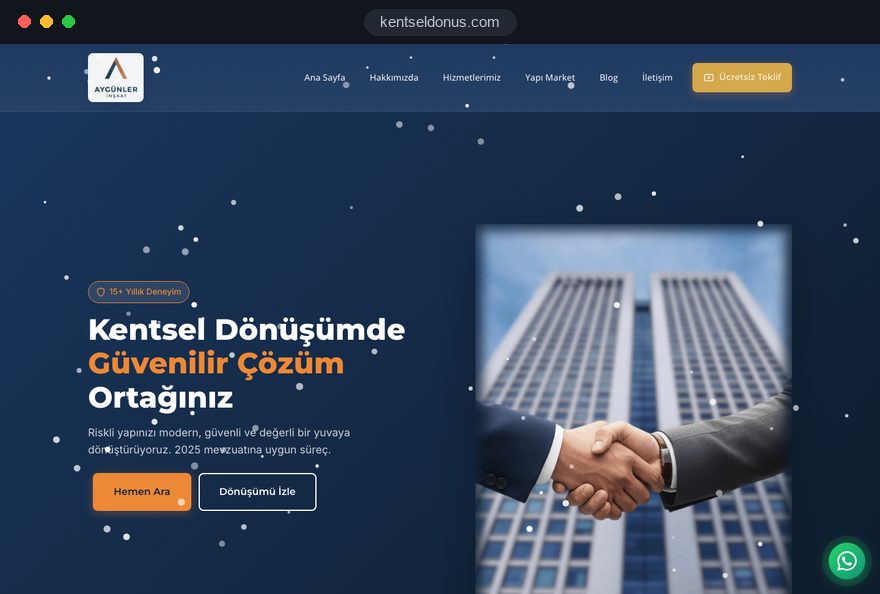
Judge live sites instead of mockups. Everything we have built so far is in Türkiye, from a logistics company to hotels and a dental clinic, and you can open each project on our references page. We have no completed project in the United States yet, and we say so in the first call.
04Domain, Hosting and Logins Registered to You
Every asset that keeps your website running should sit in your company's name, because a site you cannot move is a liability rather than an asset. This matters most when a relationship with an agency ends badly or a former employee holds the only password.
Use this checklist before the build starts:
- Domain: register the .com, or a fitting alternative, at a registrar under your company's legal name with an email address the company controls, and switch on auto renewal.
- Hosting region: for an audience in Illinois a data center in the central or eastern United States keeps response times short; the account should be yours or transferable on request.
- Code and content: ask for a complete export of files and database at handover and again after major changes.
- Accounts: Google Business Profile, Search Console, Analytics and any ad account belong to your company, with the agency added as a user, never as the sole owner.
Keep a one page access sheet listing each service, the owner email and who has admin rights. Review it once a year and remove people who have left. With us the first year of hosting is included, and moving to another provider later remains your decision, with files handed over in full.
05The Build in Seven Online Steps
A clear sequence keeps a remote project calm, and each step ends with a written approval so nothing is decided by accident. This is how a Chicago project runs with us from first call to launch:
- Discovery call: on video, in your morning, we cover customers, service area, competitors and the one action the site must drive.
- Written scope: page list, languages, integrations, copy responsibilities and timeline, approved before design begins.
- Structure: a sitemap and simple wireframes that show what sits above the fold on a phone.
- Design: the homepage and one inner page first; once you approve the direction, the remaining templates follow.
- Build on a preview: you watch progress in our CRM and test forms, calls and booking links yourself.
- Prelaunch checks: speed, accessibility basics, redirects, analytics events and spelling, each ticked off on a shared list.
- Launch and handover: a recorded training session on editing pages, plus the full access sheet.
Everything above happens online; no step requires a trip. If you happen to visit Türkiye, we are glad to meet at our office in Ataşehir, Istanbul, but it is entirely optional. Ask any agency to show you this sequence in writing before you sign; vague phases are where delays begin.
06Local Search From the Loop to the Suburbs
Local visibility in Chicago depends on three things working together: an accurate Google Business Profile, a site that names your real service area, and reviews that mention real work. Get one wrong and the others lose strength.
Start with the profile. Google's guidelines require the business name to match the name you use in the real world, without added keywords, so "Lakeshore Plumbing" stays exactly that, never "Lakeshore Plumbing Chicago Emergency Plumber". Service area businesses, such as a mobile mechanic in Bucktown, may hide their address and list the areas they serve instead.
On the site, describe coverage honestly. A contractor who works mostly in Evanston, Wilmette and Glenview should say so and show projects from those towns, rather than publishing forty nearly identical pages for every suburb in Cook County. Search engines treat such doorway pages as low quality, and visitors notice the copy and paste immediately.
- Keep name, address, phone and hours identical on the site, the Business Profile, Yelp and the Better Business Bureau.
- Ask satisfied customers for a review that mentions the job and the neighborhood, without scripting their words.
- Answer every review, positive or critical, in a calm and specific tone.
- Add photos of real work each month; stock images do nothing for local trust.
This groundwork belongs in any web design Chicago scope; our search engine optimization service covers it if you prefer to hand it over.
07English First, and When Other Languages Earn a Place
Your Chicago site should be built in American English first, with every other language justified by real customers rather than added for decoration. A second language doubles the copy to maintain, so it has to bring work.
Three situations usually justify it. A large share of your callers prefer Spanish, which is common for home services and clinics in neighborhoods such as Pilsen or Little Village. Your owners, suppliers or a part of your clientele speak Turkish, for example an importer sourcing building materials or textiles from Türkiye. Or you sell to German speaking companies, many of which run their Midwest operations from the Chicago area, and their headquarters want product details in German.
When you add a language, do it properly:
- Give each language its own pages and URLs instead of an automatic translation widget.
- Write for the reader of that language; Turkish speaking customers ask different questions than American procurement teams.
- Use hreflang annotations so Google shows the right version; each version must reference the others and itself.
- Keep phone numbers, service details and opening hours in sync across all versions.
Our hreflang generator produces the tags once your URL structure is fixed. If a second language cannot be maintained, a single strong English site beats two half finished ones.
08Speed and Security for Phones on the Go
Most first visits to a Chicago business site come from a phone, often on a train platform or in a parked truck, so speed is a sales issue rather than a technical detail. Google's Core Web Vitals give clear targets at the 75th percentile of visits.
- LCP, largest contentful paint: how fast the main content appears; aim for 2.5 seconds or less.
- INP, interaction to next paint: how quickly the page reacts to a tap; aim for 200 milliseconds or less.
- CLS, cumulative layout shift: how much the layout jumps while loading; aim for 0.1 or less.
The usual causes of slow sites are oversized photos from a project gallery, autoplay video on the homepage, and a stack of plugins for chat, reviews and popups. We compress images to modern formats, load video only on request and keep third party scripts to what you actually use.
Security belongs in the same conversation. Insist on HTTPS everywhere, automatic backups stored apart from the server, updates applied on a schedule and spam protection on every form, since quote forms attract bots quickly. Ask who receives the alert when something breaks at 2 in the morning Central Time. Before any redesign, run your current site through our mobile friendly test so you know the starting point.
09Freight, Trade Show and Visitor Sites in Practice
Chicago's strongest sectors produce recurring website patterns, and planning for yours saves weeks of rework. Here are four that fit the city's economy, each with what the site must contain.
A carrier or forwarder near O'Hare or along Interstate 55 needs pages per service, such as LTL, drayage, warehousing or customs, with equipment, states covered and a short quote form that reaches dispatch. Our logistics company website page details that structure.
An exhibitor at McCormick Place benefits from a dedicated page live two weeks before the show: booth number, the products on display, a meeting request form and a printed QR code that leads to it. After the show the same address becomes a follow up page. The landing page approach explains how to build it around one goal.
- Event and exhibition services: booth builders, AV rental and staffing firms need galleries by show and venue, plus fast inquiry paths for tight deadlines.
- Restaurants and tour operators: current menus as text rather than PDFs, hours that change with the season, and booking or ticket links that work on a small screen.
- Professional firms: accountants and attorneys around LaSalle Street need practice area pages, credentials and a calm consultation request.
For firms that also serve the East Coast, our New York web design page covers that market's differences.
10US Rules a Chicago Site Should Respect
The United States has no single federal privacy law for websites, so a Chicago business deals with a mix of federal rules and state laws depending on what it does. Treat what follows as orientation, not legal advice, and have your setup reviewed by an attorney.
- Accessibility: the Justice Department's guidance says ADA Title III covers businesses open to the public and that inaccessible websites can limit access to goods and services; building to WCAG principles reduces that risk.
- Commercial email: under the FTC's compliance guide for the CAN SPAM Act, marketing emails need a working opt out, a valid physical postal address, and opt outs honored within 10 business days; business to business email is not exempt.
- California customers: the CCPA applies to for profit businesses doing business in California that meet at least one threshold, such as buying, selling or sharing personal information of 100,000 or more California residents or households.
- Children: COPPA applies to sites directed at children under 13 and to general sites that knowingly collect personal information from them.
- Online sales tax: Illinois applies a threshold to remote retailers, and since January 1, 2026 only sales to Illinois buyers count toward it; confirm your position with a CPA.
Whatever applies, publish a privacy policy that describes what your forms, analytics and chat tools actually collect. Rules for biometric data, health information or financial services go further, and those questions belong with a lawyer before launch.
11Relaunching Without Losing Search Traffic
A redesign keeps its rankings when every old address that earns visits is redirected to its closest new match. Losses after a relaunch almost always come from forgotten URLs, not from the new layout.
- Inventory: export indexed pages from Search Console and crawl the old site; mark pages that bring calls, quote requests or links from other sites.
- Mapping: pair each old URL with one new URL on the same topic; a page about warehouse services in Joliet should never redirect to the homepage.
- Permanent redirects: set 301 redirects so search engines treat the move as final and carry over most of the old signals.
- Preview audit: check titles, canonical tags, structured data and the robots file before switching, and make sure the live site is not left blocked.
- Monitoring: submit the new sitemap and watch coverage and 404 reports in Search Console for at least a month.
One technical point catches many teams: a page blocked in robots.txt cannot have its noindex tag read by Google, so a page you want out of the index must stay crawlable and carry noindex. Our website redesign page walks through the full checklist.
12Mistakes Common on Chicago Business Sites
The costly mistakes on Chicago websites are usually decisions, not design flaws, and each has a straightforward alternative:
- "Serving all of Chicagoland": a phrase that covers seven counties persuades nobody; name the neighborhoods and suburbs where you actually work and show a project from each.
- Trade show pages built the night before: a rushed page with no meeting form wastes printed QR codes; publish it two weeks ahead and test it on several phones.
- Menus and price lists as PDFs: they load slowly and read badly on a phone; publish them as text pages that search engines can read.
- Quote forms with twelve fields: long forms lose shippers and homeowners alike; ask for the four details you need to reply and collect the rest by phone.
- Seasonal hours never updated: lakefront and patio businesses change hours between summer and winter; update the site and the Business Profile on the same day.
- A translation plugin instead of real pages: machine output in Spanish or Turkish damages trust; write a smaller, accurate section or skip it.
Pick the two mistakes that apply to you and fix them first. In most web design Chicago briefs, those fixes matter more than a new color palette.
13What Shapes the Budget
The price of a website follows its scope and complexity, not the city, so a Chicago company pays the same as anyone else for the same work. Our fixed packages and what each includes are in the pricing section of our web design page; larger builds are quoted in writing.
These factors move a quote the most:
- Unique templates: fifteen service pages built on one template cost far less than fifteen custom layouts.
- Languages: each extra language adds writing, review, hreflang work and ongoing upkeep.
- Integrations: dispatch systems, booking tools, CRMs or a dealer portal each need setup, testing and documentation.
- Online store logic: product count, variants, shipping zones and state sales tax shape the effort more than design does.
- Content readiness: if photos and copy are ready, the timeline shortens; if we write and source them, the scope grows.
Ask every agency to separate required items from optional ones in its quote. That way you can approve extras one at a time and keep your web design Chicago budget predictable.
14The First 90 Days and How to Start
The three months after launch decide whether the site becomes a steady source of leads, so plan them like a small project with checkpoints.
- Days 1 to 30: confirm that forms, call clicks and analytics events record correctly, fix any 404 errors and ask ten recent customers for a review.
- Days 31 to 60: study which searches bring impressions in Search Console and improve the two service pages closest to page one with photos, answers and examples.
- Days 61 to 90: compare leads by page and by area, then decide whether a second language, a trade show page or paid search deserves the next investment.
A web design Chicago project with us begins with a short video call in your morning. Send a few lines through our contact form about what you sell, where your customers are and which languages you need; we reply with questions, then a written scope and quote. You decide once everything is on paper, and nothing starts before you approve it.