Most people who open a Kastamonu business website have never been to the province. A furniture maker in Istanbul checks a sawmill before ordering beech panels, an importer in Rotterdam wants proof that a jar of siyez bulgur really comes from Kastamonu, and a hiking club in Munich compares guesthouses near Valla Canyon months before the trip.
This guide is written by Talha Aslan and team for Kastamonu business owners and for their partners abroad who help commission a site. Decisions appear in the order they come up, each with something to check, ask or prepare.
01Three Economies, One Website: What the Site Must Carry
A Kastamonu website usually has to speak for forestry, regional food or nature tourism, and sometimes for two of them at once. In TÜİK's provincial accounts for 2024, output per person in Kastamonu came to 12,035 dollars, compared with roughly 11,300 in Karabük and 9,800 in Sinop. According to the provincial agriculture and forestry directorate, forest covers 73% of the land.
The Kastamonu organised industrial zone alone employs about 2,500 people in wood products, furniture, food and textiles. Each of these sectors asks something different of a website:
- Wood and furniture firms: answer a trade buyer's technical questions without a phone call and capture quote requests with size and quantity attached.
- Food producers: prove origin, make a first order from a stranger feel safe, and explain shipping in plain terms.
- Lodges and tour operators: show access, season and road conditions before a guest commits to a long drive.
Before you brief anyone, write down which of these jobs matters most for your business. Family firms in Kastamonu often run two lines, for example a pastırma workshop and a guesthouse on the road to Ilgaz. In that case the first navigation decision is to separate the two audiences on the very first click.
02Who Searches for Kastamonu, and in Which Month
Searches connected to Kastamonu mostly come from outside the province and follow the calendar, so plan content around seasons. Four typical visitors arrive with different questions:
- Trade buyers: search all year with product terms such as kiln dried beech, treated pine or CNC machined panels, often without naming the province.
- The diaspora: families from Kastamonu living in Istanbul, Germany or the Netherlands order pastırma, pulled halva and siyez before holidays and winter.
- Nature visitors: look up the Küre Mountains and the canyons in spring and autumn, the coast at İnebolu, Abana and Cide in summer, and Mount Ilgaz once snow falls.
- Students and their families: around enrollment at Kastamonu University, demand rises for rooms, flats and services in the city center.
For each relevant group, write one line: which words bring them in, what the first screen must show, what they do next. That decides the menu order and the home page's opening sentence.
Timing rule: a season page goes live a few weeks before its searches climb. Update the Ilgaz winter page in autumn and the coastal page in late spring.
03Hiring a Team Outside the Province: Questions to Ask
We work with Kastamonu businesses entirely online, so the right partner is the one who writes the process down clearly, not the one with the nearest office.
Put these questions to every team you are considering and ask for written answers:
- Technical content: who turns species tables, geographical indication papers or room lists into finished pages, and who checks them?
- Photography: if a local shoot is needed, who writes the shot list, and how many images at which angles are expected?
- Approval: is the design reviewed live in a browser, and does coding wait for your sign off?
- Visibility: can you see the status of every task on one screen without having to ask?
- Live examples: which published sites close to your sector can you open on your phone and test, form included?
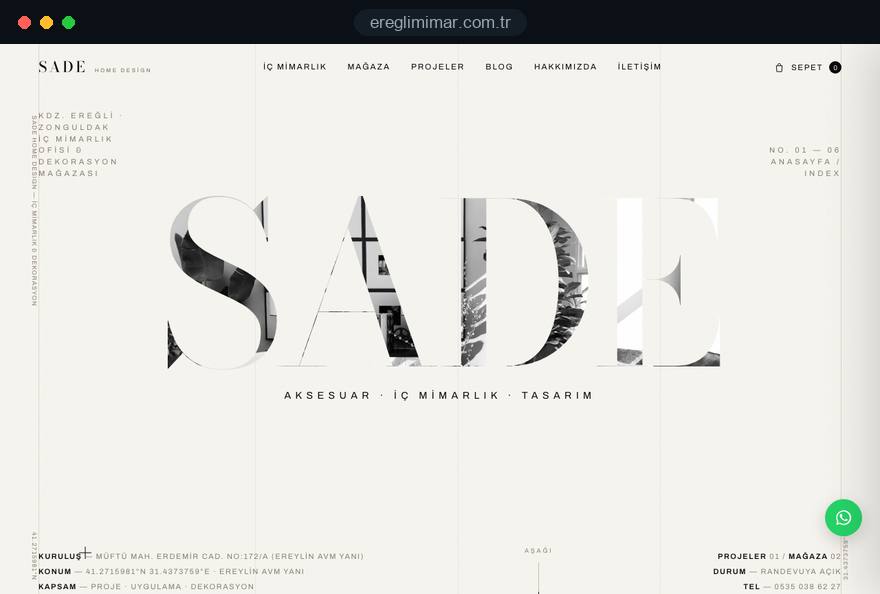
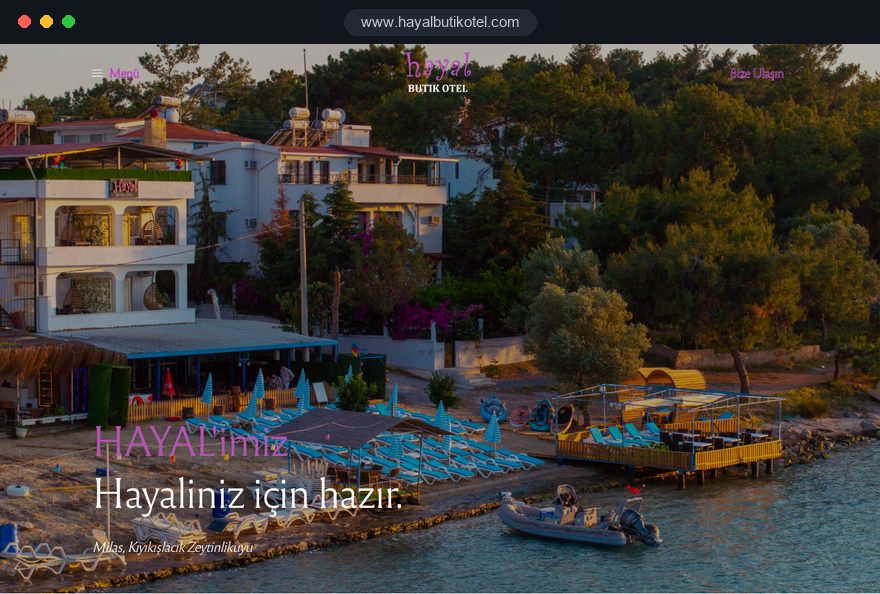
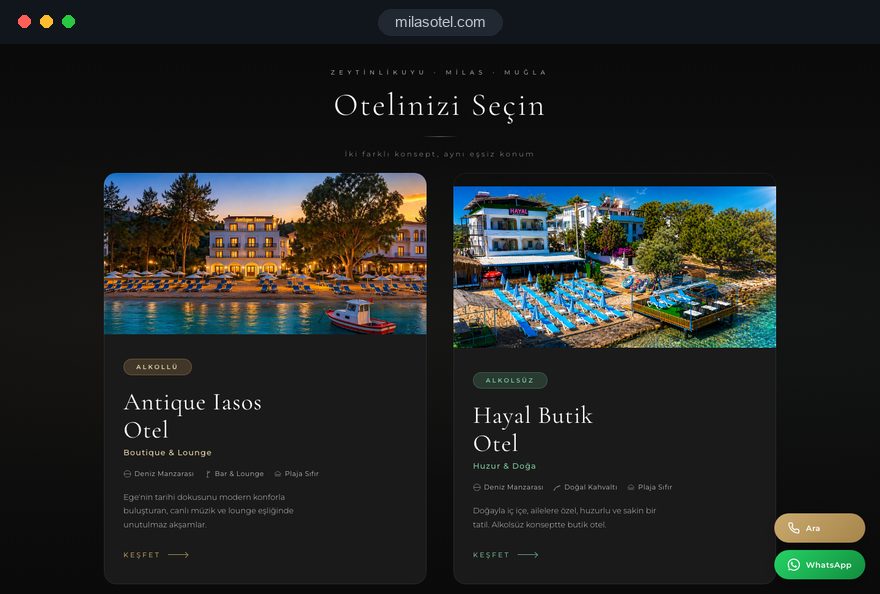
Do not settle for screenshots: a live site on your phone shows speed, form and care in minutes. Our published work is on the references page; none of it is in Kastamonu, and we say so openly.
One more check: does the quote explain what happens if your product list grows or a second language is added later? Ranges that grow with each harvest are common here.
04Domain, Hosting and Accounts in Your Own Name
The site and every account connected to it should belong to your business, and that rule belongs in the contract before work begins. In family firms, accounts tied to a nephew's personal mailbox can mean a lockout years later.
On handover day, go through this list together with your provider:
- Domain: the registrant is your company or cooperative, and renewal notices go to a business mailbox you control.
- Hosting: you hold administrator access to the panel, and the location and frequency of backups are written down.
- Code and database: a full copy can be handed over on request, and paid plugin licenses state whose name they are in.
- Payment and shipping: if there is a shop, your business signs the contracts with the payment provider and the courier.
- Analytics and maps: Search Console, GA4 and the Google Business Profile are created under your company account; the agency joins as an invited user.
Cooperatives and producer unions, whose boards change from term to term, should go one step further. Keep the access details somewhere the board can reach rather than on one person's phone,.
05From First Video Call to Launch in Six Steps
What makes an online project move is a clear order of steps and a record of who approved what at each one. For a Kastamonu business the sequence looks like this:
- Discovery call: we map how your product reaches the buyer and separate wholesale, retail and guest channels.
- Written scope: page list, languages, shop requirements and delivery date arrive in the quote; work starts once you approve it.
- Material collection: product sheets, certificates and existing photos go into a shared folder, and a shot list covers the gaps.
- Design approval: you review the design on a browser preview link and leave comments directly on the relevant section.
- Build and testing: forms, the order flow and every page are tested on several phones and on a throttled connection.
- Launch and training: a screen share session shows how to add products, mark items out of stock and update season pages.
You follow every step in our shared CRM. If you happen to be in Istanbul and prefer to talk across a table, a meeting at our office in Ataşehir can be arranged by appointment; tracking stays on the same screen.
Step three is the one that most often shifts the timeline. When the shot list arrives, block a single day: machinery and stock yard at the workshop, harvest in the field, rooms and views at the lodge.
06Local Search in Kastamonu: The Center and the Far Districts
Appearing on the map starts with your Business Profile and your website saying exactly the same thing about your name, address and phone number.
Google's guidelines require the profile name to match the name you use in the real world, with no added keywords. A listing like "Company Name Kastamonu Cheap Timber Wholesale" puts the profile at risk. A business that serves customers at their premises, such as a joiner who fits windows on site, can hide its street address and show a service area instead.
With twenty districts spread over a large province, district searches need their own plan:
- Real service areas only: Tosya, Taşköprü, Daday, Araç or Devrekani appear on the site only where you genuinely operate.
- No copy pages: pages where only the district name changes are what Google treats as doorway pages, and they add no value.
- District pages with substance: a guesthouse in İnebolu describes the walk to the beach; a lodge in Pınarbaşı explains the road to Ilıca Waterfall and the canyons.
- Product names over place names: searches like Taşköprü garlic or Tosya rice are better served by strong product pages than by district pages.
For coastal and mountain businesses, pin placement matters as much as the name. A guest who misses the right turn on a village road loses the first hour of the trip and may mention it in a review. Pin your entrance and describe the last stretch the same way on profile and site. Our SEO service covers product and local search together.
07English or German: Who Reads the Second Language
A second language makes sense for a Kastamonu business when orders or guests actually come from abroad; it is not a default.
The cases where a second language tends to pay its way:
- German: food producers shipping regional products to the diaspora and to importers in Germany, Austria or the Netherlands.
- English: guides and lodges hosting foreign groups for hikes or canyon walks in the Küre Mountains.
- English technical catalog: panel, timber and furniture makers that export or intend to.
A second language version is not a word for word translation. A buyer in Lyon or Leeds does not know what siyez is, what a geographical indication protects or why pulled halva ships in a carton; the text has to explain that up front. In a catalog, units, moisture and treatment classes follow the buyer's conventions.
Technically, each language lives at its own address and is marked with hreflang, the tag that tells Google which page serves which language; every version must reference itself and all the others. A visitor who switches language should land on the matching page, not on the home page. Our multilingual website page explains the setup in detail.
08Fast Pages for One Bar of Signal in a Canyon
The speed benchmark for a Kastamonu site is not fiber in the city center but a phone with one bar of signal on a canyon road.
We measure with Core Web Vitals, and three quarters of visits should stay within these limits: LCP, the time until the largest element on screen appears, at 2.5 seconds or less; INP, how quickly the page reacts to a tap, at 200 milliseconds or less; CLS, which measures content jumping around while loading, at 0.1 or less.
What we do for weak connections:
- Contact details as text: phone number, address and directions are real text, not baked into an image, so they show even on a half loaded page.
- Light images: landscape and product photos are served in modern formats and resized to the screen.
- Deferred maps: the embedded map loads only when the visitor scrolls to it, so it never holds up the first screen.
- Security: the SSL certificate renews automatically, backups are stored away from the server, and a restore is tested at least once.
For sites that take orders, your domain's mail identity is part of security too. Without SPF, DKIM and DMARC, the records that authenticate your sending server, order confirmations can end up in spam.
09Page Structures for Timber, Siyez and Guesthouses
Kastamonu's three main sectors need three different page logics; one template stretched across all of them leaves gaps in each. The examples below are not client case studies but general structures we recommend for the province's business types.
- Panel and timber producer: pages by species and product group, size and grade tables, drying and impregnation details, shipping terms and a quote form asking for dimensions and quantity. Firms that use a shared facility such as Kaswood for kiln drying and CNC work can state those services plainly. More on our website for manufacturers page.
- Siyez and garlic grower: a story page about the field and the farmer, geographical indication details, pack sizes and delivery times. The fact that siyez was the first Slow Food Presidium declared in Turkey is a trust signal that also means something to buyers abroad. More on our website for agricultural businesses page.
- Canyon and coastal stays: distance to Valla or Horma canyon, the beach or the Ilgaz slopes on the first screen, with road conditions and parking, then rooms and a WhatsApp button.
- Nature and heritage tours: dated tour pages with difficulty levels, kit lists and short notes on stops such as the old mansions of the city center and the Nasrullah Kadı Mosque.
When a product sells out, keep its page live and show the next harvest or production date. It keeps its search position and can collect a waiting list.
10KVKK, Cookies and Distance Selling of Regional Food
A site's legal setup follows the data it collects and the sales it makes; the texts must be ready before launch and must describe what really happens.
- Privacy notice: order and quote forms collect names, phone numbers and addresses, so the information duty in Article 10 of Turkey's KVKK (Law No. 6698) applies there; the notice should sit right next to the form.
- Cookie consent: the banner must describe the tracking actually installed; for a shop selling to the diaspora in the EU, non essential cookies stay off until the visitor agrees.
- Distance selling: before confirming the basket, the buyer must be able to read who the seller is, the total cost, delivery terms and the right of withdrawal, linked to the payment step.
- Perishable goods: for pastırma, cheese or halva with a limited shelf life, check how withdrawal rules apply with your legal adviser, using the regulation text itself.
- Geographical indication: confirm the conditions for using the mark and logo on packaging and online with the body that holds the registration.
The legal content is yours or your adviser's to decide; we place the texts on the right pages and connect them to the forms. If you ship food abroad, confirm labeling and import rules with your importer. Payment, shipping and returns are handled in our e-commerce service.
11Redesigning Without Losing Search Positions
The biggest risk in rebuilding an older site is changing addresses Google already knows without a plan. If the old product page ranks for siyez bulgur today, its counterpart on the new site has to catch the same visitor tomorrow.
The sequence we follow:
- Inventory: list every URL on the old site, the pages that bring visits in Search Console, and the pages that earn outside links.
- One to one mapping: each old product or room URL is matched to the new page that answers the same question; nothing is dumped onto the home page.
- Permanent redirects: the mapping is set up with 301 redirects, which tell search engines the move is not temporary.
- Monitoring after launch: crawl error reports are watched during the first weeks and missed URLs are fixed.
Blocking a staging site in robots.txt is a common habit, but on its own it is not enough. Google cannot read a noindex tag on a page blocked by robots.txt; to keep a page out of the index it has to be crawlable and carry noindex.
If your packaging carries QR codes pointing to old URLs, add them to the inventory;. You can compare old and new URL lists with our redirect mapping tool and spot gaps before launch.
12Six Mistakes Seen on Kastamonu Business Sites
Most recurring problems on Kastamonu business sites come not from design but from forgetting the buyer who lives far away. Here are six common ones, each with a better alternative:
- One gallery for the whole range: instead of putting every panel and timber product into one photo gallery, create pages by species and product group, each with a size table.
- Orders by phone only: instead of "call to order", add a short form or a simple shop asking for pack, quantity and address, so a buyer abroad can order in their own evening.
- Geographical indication as a logo only: instead of a badge alone, explain in text what the indication protects and in which district the product is grown.
- A winter site all summer: instead of an Ilgaz ski offer on the home page in July, use a first screen that changes with the season and dated season pages.
- No directions: instead of "easy to find", describe the route from the last village, winter road conditions and spots with no signal.
- Dark phone photos: instead of night shots of the workshop or the field, use daylight images taken from a shot list that show the product up close.
Most of these can be fixed without a large budget. If you see several on your site, ask which ones content edits can solve before a rebuild.
13The Scope Decisions That Shape Your Budget
What drives the cost of a web design project in Kastamonu is scope, not location; a garlic grower in Taşköprü chooses from the same packages as a firm in Istanbul. The main decisions that enlarge a quote are these:
- Product count and technical depth: a timber catalog with hundreds of size and grade combinations needs far more content work than a small presentation site.
- Shop setup: online sales with payment, shipping, stock and distance selling texts add a separate layer on top of a presentation site.
- Trade buyer area: a login or price request area for dealers and wholesalers requires extra development.
- Language versions: every added language means both adapted copy and technical setup.
- Photo and video: you organize the local shoot; we write the shot list and prepare the files for the web.
When planning, sort each item into now and later. A siyez producer, for example, can start with a small shop and add a German version once the first season's orders show where buyers are.
If you plan structured data for product pages, you can try it first with our structured data generator and bring a concrete example to the call.
14The First 90 Days After Launch and Your Next Step
Launch day is the start of measurement, not the end of the project; what you learn in the first three months shows where effort pays off. For a Kastamonu business we plan that period like this:
- Month one: review which queries show the site, count the order form, WhatsApp and the call button as separate conversions, and repair anything broken.
- Month two: add photos and answers to the product and room pages that attract interest, and simplify any step where visitors abandon the order form.
- Month three: prepare content for the coming season and publish the coastal, canyon or Ilgaz page before searches rise.
To decide, first answer this guide's questions for your own business: who your buyer is, in which month they arrive, which channel they order through and how many languages you need. Those answers define the scope for your Kastamonu business.
You can compare package contents and fixed prices on our pricing page. To talk through your products, buyers and season, request a short video call through our contact page; we follow up with a written page plan and quote.