A business website in Artvin rarely has one kind of visitor. On the same afternoon it may be opened by a buyer in Batumi checking a supplier across the Sarp crossing, a hiker in Europe comparing guesthouses in the Macahel valley, and a family abroad with roots in the Çoruh valley looking for someone to repair the old village house. Web design for Artvin starts with giving each of them a page that answers their own question, in a language they read.
In this guide, Talha Aslan and team walk through the decisions an Artvin business makes before and after launch, in the order they come up. Each section gives you something concrete to check yourself or to ask an agency.
01What a Website Has to Do in Artvin's Economy
In Artvin, a website mainly serves people and money arriving from outside the province, because the local economy leans on the Georgian border, energy projects on the Çoruh river and protected nature. In TÜİK's 2024 provincial GDP data, Artvin ranked 33rd of 81 provinces in GDP per capita, ahead of Rize and Trabzon and the highest in the Eastern Black Sea region.
TÜİK counted 167,531 residents in 2025, spread over nine districts in steep valleys. A site written only for neighbors leaves the most valuable doors closed. Before any design work, write down short answers to three questions:
- The outside visitor: Who arrives from Georgia, from other Turkish provinces or from further abroad, and what do they need to see before they write to you?
- The local customer: What must someone in Hopa, Arhavi or Borçka find within seconds: a phone number, an address, opening hours?
- The season: Which months carry your business, and how far ahead of them must the site be complete?
The answers shape the menu more than any style choice. A freight company crossing into Georgia needs "Routes" and "Required documents" in the main navigation, while a highland house near Şavşat needs a "Getting here" page that carries as much weight as the room pages.
02How People Search for Artvin Businesses
Most searches that should reach an Artvin business do not contain the word Artvin; they name a valley, a lake, a district or a need. Your pages have to recognize those names. Four kinds of intent show up again and again:
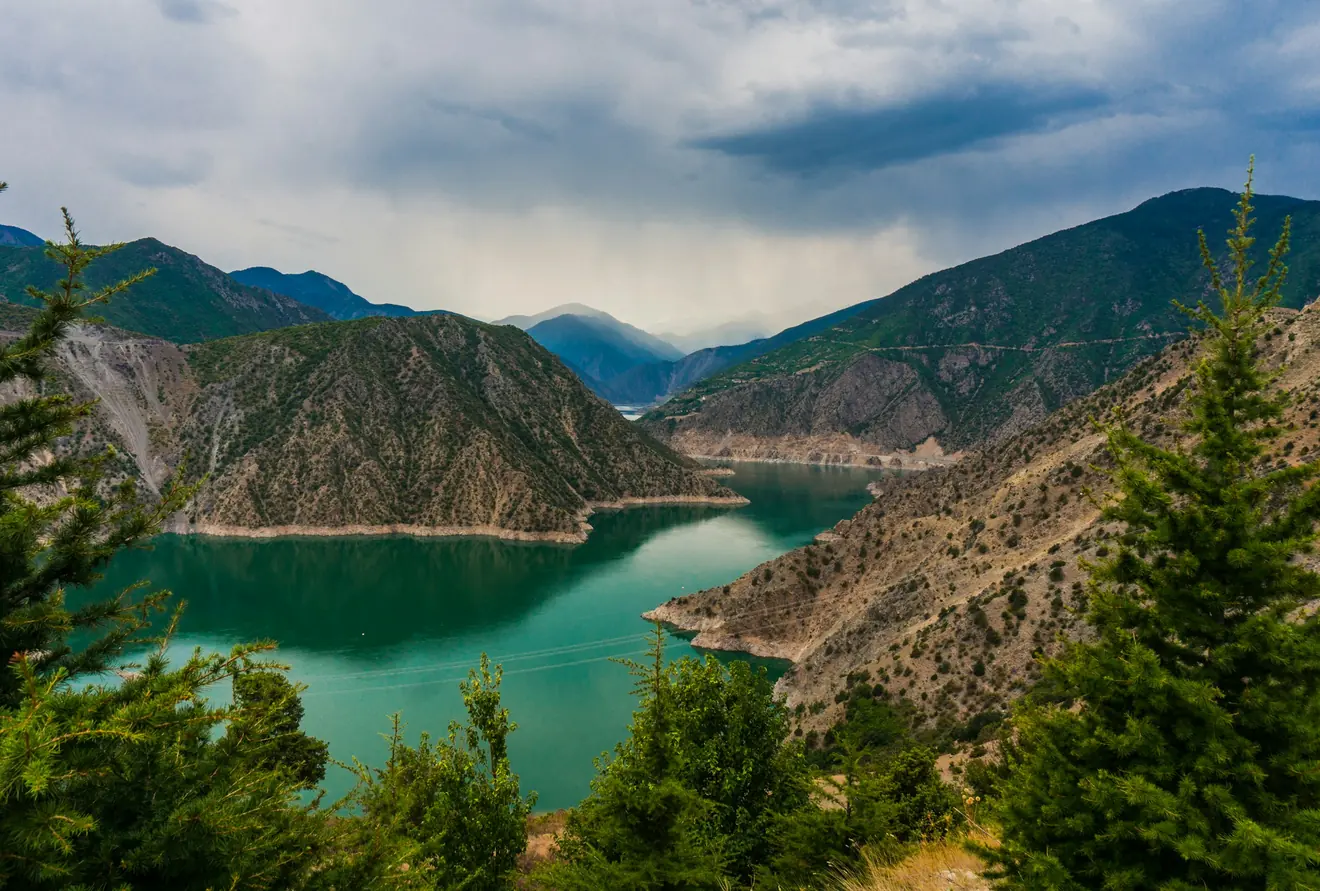
- Nature spots: Macahel, Karagöl, Kafkasör, the Deriner Reservoir; the searcher wants distance, road conditions and where to stay.
- Districts: Hopa, Arhavi, Borçka, Şavşat, Ardanuç, Murgul, Kemalpaşa, Yusufeli; the searcher wants a map pin, hours and a click to call button.
- Cross border: searches from Batumi or Tbilisi in Georgian or Russian; the searcher wants service scope, paperwork and a quick quote.
- Verification: someone who received your quote types your company name; they should find a current phone number and a tidy profile.
Seasons change the wording. Summer brings searches for highland festivals, hiking routes and cabins; in winter the same people plan next year, so a site showing next season's opening date and a request form collects visits that a "closed" notice wastes.
A practical habit: every quarter, export the query list from the Performance report in Google Search Console, the free tool that shows which searches display your pages. Tag each query by valley, lake or district. The gaps, places people search where you never appear, become your content plan.
03Choosing a Partner Outside the Province
For an Artvin business, the right web partner is defined by how well they handle distance, not by how close they are. We have no office or representative in Artvin; we work with businesses there fully online and say so in the first call. Ask every team you talk to these questions, and ask for the answers in writing:
- Photography: If nobody travels to shoot, how do they brief you; do you get a written shot list per page?
- Languages: Who translates the Georgian or Russian text, and does a native speaker review it before launch?
- Weak signal: Have they tested their live sites on a slow mobile connection, and can they show you?
- Approval: Is the design presented live in a browser, and is any code written before you approve it?
- Proof: Which live projects do they have in hospitality, logistics or food production?
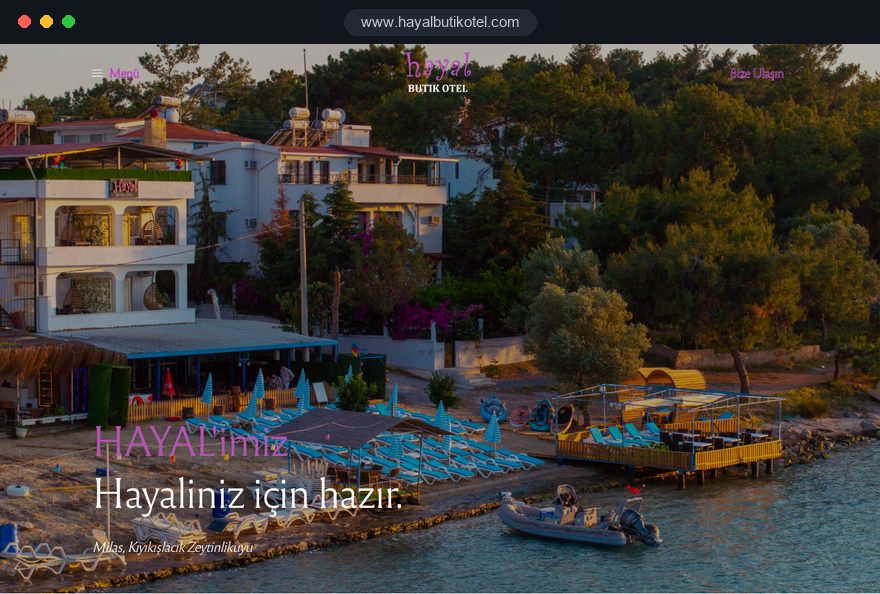
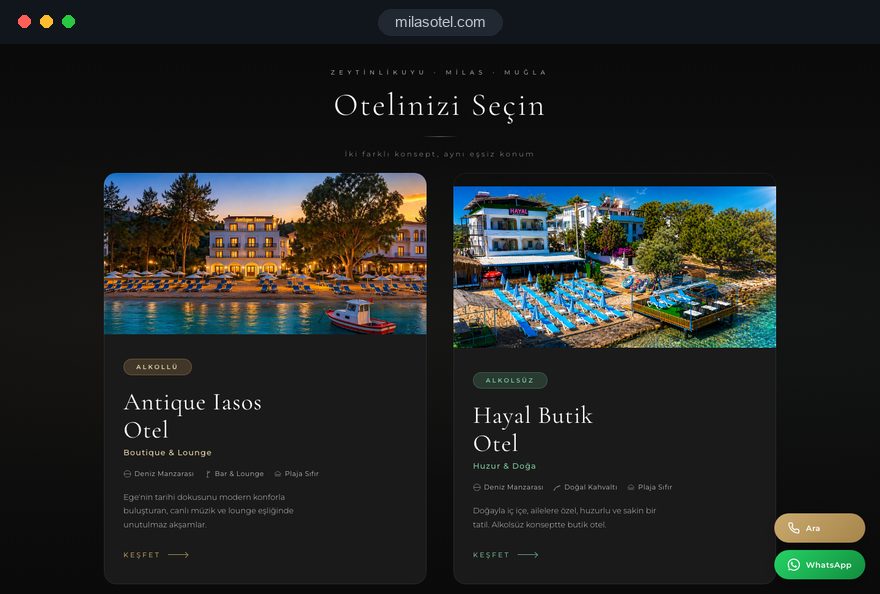
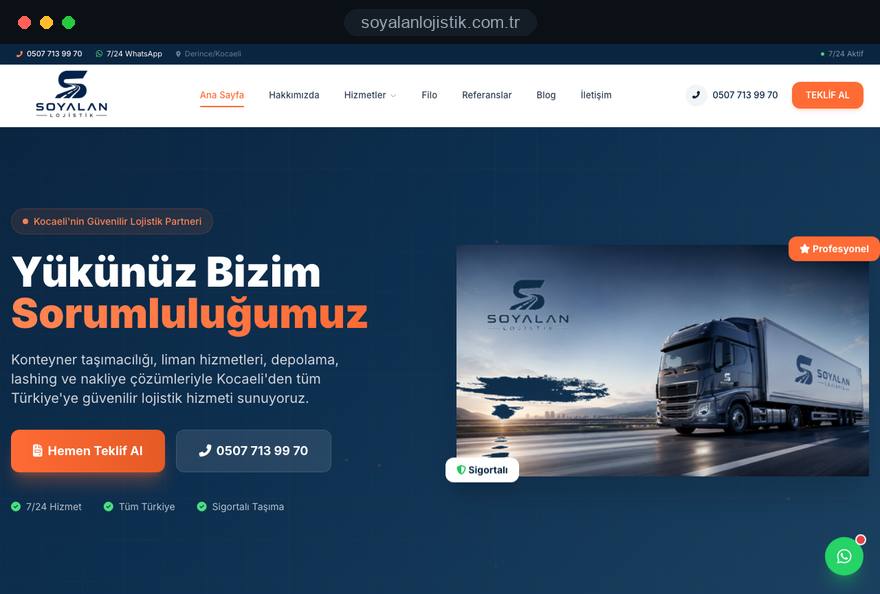
For the last question, insist on live addresses rather than screenshots, and open them on your own phone somewhere in the valley where reception drops. Our work is listed among our live client projects; none of them is in Artvin, but the boutique hotel and logistics sites are close to what guesthouses and forwarders there need.
04Who Owns the Domain, Hosting and Accounts
Every asset tied to the site should be registered to your business, and in a province where many businesses close for the winter, this matters even more. A domain renewal notice that lands in an unread inbox in January turns into an error page for the first guest in June.
On handover day, check that you hold the following:
- Domain: your business listed as registrant, with renewal notices going to an address someone reads all year.
- Hosting: administrator access to the control panel, plus a written note on where backups are stored and how often they run.
- Code and content: the files and database available to you on request, and clarity on whose name any paid plugin licenses are under.
- Measurement: Search Console and GA4 created under your own account, with the agency added only as a user.
- Messaging: a WhatsApp number that belongs to the business, not to an employee, so guest conversations stay when staff change.
Family businesses often have their accounts tied to a relative who studies or works in another city. Moving the recovery email and phone number to a line the business controls takes minutes and spares you a long recovery process later.
05The Project Process, Step by Step and Online
What makes an online project fast is a clear order of steps and a visible record of who approved what. Our process with Artvin businesses looks like this:
- Discovery call: on video, we hear about your business, your guests or buyers and your season, and we open your current site together.
- Written scope: the page list, languages, inquiry flow and timeline arrive in writing; work starts once you approve.
- Shot list: we prepare a list showing which photo goes on which page, at what time of day and from what angle.
- Design approval: you review the design live in your browser and leave comments directly on the element; nothing is coded without your sign off.
- Build and testing: the site is tested on different phones, on a slow connection and in every language version, forms included.
- Launch and training: after launch, a video session shows you how to update rooms, products or seasonal notes yourself.
You follow every step live in our CRM, so there is no need to call and ask where things stand. If you happen to be in Istanbul and would like to meet in person, we can sit down at our Ataşehir office by appointment; the project never depends on it.
Photography is usually the slowest step in Artvin: light leaves the deep valleys early and fog often covers the highlands, so we schedule the shoot first.
06Showing Up Correctly on Maps in Artvin
Map visibility starts with your Google Business Profile matching your website exactly: same name, same address, same phone. The name must be the real name on your sign; adding "cheap guesthouse Artvin" after it breaks Google's guidelines and puts the profile at risk.
Businesses that travel to customers, such as a plumber from Arhavi who works in surrounding villages, may hide their address and show a service area instead. In that case, list on your site only the districts you actually serve. When cleaning up a profile, go in this order:
- Compare the profile's name, address and phone with your site footer; even a one letter difference should be fixed.
- Pick the narrowest primary category that fits; "guest house" and "chalet" surface for different searches.
- If you moved to the new Yusufeli town center, search the map for a second listing at your old address and request its removal.
- If you are near Karagöl, say which one: Artvin has two lakes with that name, one in Borçka and one in Şavşat.
Do not publish nine near identical district pages that only swap the place name; search engines treat that pattern as low value duplication. If you genuinely have a branch, depot or property in a district, one page with its own photos and directions is enough.
07Georgian, Russian or English: Which Language When
In Artvin, a second language follows the direction your revenue comes from. According to figures announced by the Artvin governorship, 5,042,000 passengers and 740,000 vehicles crossed the Sarp border gate in 2025, and part of that traffic looks for services like yours on a phone, in its own language.
- Georgian: for traders, freight customers and shoppers from Batumi and the Adjara region; service, paperwork and contact pages are usually enough.
- Russian: widely used as a working language in transport links to the Caucasus and Central Asia; worth considering for logistics and wholesale.
- English: for international hikers heading to the Kaçkar mountains and Macahel, tour operators abroad and family members who grew up outside Turkey.
Georgian uses its own alphabet and Russian uses Cyrillic, so the fonts you choose must include both character sets; otherwise text breaks into empty boxes on some phones. Each language should live at its own address and be linked with hreflang tags, which tell Google which version suits which reader; every version must reference the others and itself, and Georgian uses the code "ka". You can generate the tags with our hreflang generator.
Avoid publishing machine translation as is; a native speaker should read every page before it goes live. Start with a handful of pages and grow the version only when inquiries arrive in that language. Our page on the multilingual website setup explains how the versions are structured.
08Speed, Hosting and Security in Mountain Valleys
Measure your site's speed on a roadside in the Çoruh valley where the signal fades, not on office fiber. Visitors often open pages from a bus, a car or a mountain road, and if the first screen does not appear within a few seconds, they go back to the results.
Google's Core Web Vitals turn that experience into numbers. A page counts as "good" when the 75th percentile of visits stays within these limits:
- LCP (largest contentful paint, how fast the main content loads): 2.5 seconds or less; heavy lake and valley photos are the usual reason sites miss it.
- INP (interaction to next paint, how quickly the page responds to a tap): 200 milliseconds or less; bulky gallery and map plugins slow it down.
- CLS (cumulative layout shift, how much the layout jumps): 0.1 or less; images without declared sizes push buttons around while loading.
Converting large landscape photos to WebP, serving them at the size of the screen, loading the first image with priority and opening the map only when tapped fixes most problems.
On security, three basics cover most risk: SSL certificates that renew automatically, plugins updated on a schedule and backups stored outside the server. The quiet winter months are when updates slip and intrusions go unnoticed, so plan maintenance around the off season, not only the busy one.
09Page Examples from Artvin's Main Sectors
The four most common types of business in Artvin each need a different page structure, and forcing one template on all of them buries the information that matters most. The examples below are not client case studies; they are page plans drawn from what these businesses need.
- Highland houses and cabins: for a house in Kafkasör or Macahel, a gallery per season, a winter access note, distances to the nearest fuel station and shop, and a short WhatsApp form asking for dates. Our page on cabin and bungalow websites details the structure.
- Freight and customs: for a company working through Sarp, route pages, vehicle types, a document checklist and a quote form that asks only for the essentials of the load; see our logistics company website page.
- Honey and regional food: for a producer selling honey from Macahel or Ardanuç, a story page covering the village where the hives stand, harvest month, lab analysis and shipping; the farm and food producer websites page shows how such a storefront is built.
- Shops in the new Yusufeli: the district center was rebuilt with 2,698 homes and 323 business premises as part of the dam project; businesses that moved need a lean site with current address, directions and hours.
10Legal Basics: KVKK, Cookies and Online Sales
If your site collects personal data, even through a simple inquiry form, Article 10 of KVKK, Turkey's Law No. 6698 on personal data protection, requires you to inform visitors about why and how you process it. Names, phone numbers and dates on a guesthouse form, or company and cargo details on a freight form, all fall under this.
- Information notice: link it right below the form; explain in plain words which data you keep, for what purpose and for how long.
- Foreign visitors: if you run forms in Georgian or Russian, add a summary of the notice in that language so people understand what they agree to.
- Cookies: the safe approach is to load analytics and advertising cookies only after consent; for users in the European Economic Area, Google requires consent mode for measurement and personalized advertising features.
- ID documents: if you ask guests for passport photos over WhatsApp, decide where they are stored and when they are deleted.
If you actively market to visitors in the EU, ask a legal advisor whether European data protection rules apply to you too.
Selling honey or local products with online payment brings additional duties: pre contract information, terms of sale, return conditions and seller details must all appear on the site. Finalize these texts with your accountant or a lawyer; when we set up e-commerce for a producer, we plan where these pages live and which consent boxes appear at checkout from the start.
11Redesigning Without Losing Search Rankings
The real risk in a redesign is not the new look; it is changing addresses that search engines already know without telling them. If a page that has ranked for "Karagöl guesthouse" for years moves to a new URL with no redirect, that visibility can disappear within weeks.
- Export every URL on the current site and mark the pages that receive traffic in Search Console.
- Map each old URL to its new equivalent; where none exists, redirect to the closest topic.
- Switch on permanent 301 redirects on launch day and test the old addresses one by one.
- Submit the new sitemap in Search Console and check the indexing report daily for the first two weeks.
Blocking a staging site in robots.txt is not enough to keep it out of the index; Google cannot read a noindex tag on a page it is not allowed to crawl. Password protection is the safer option.
Keep the content that earns visits: an old article on how to reach Macahel brings searches with it, so update and move it rather than delete it. For businesses in Yusufeli that changed address, combining the redesign with the address update aligns site, map profile and directory listings in one go. Our website redesign page covers the full sequence.
12Common Mistakes on Artvin Business Websites
Most mistakes on Artvin sites come from planning only for local customers. These are the ones that come up most, each with a better alternative:
- No directions: the highland house location just says "Şavşat"; instead, give coordinates, the condition of the last few kilometers and winter access on one page.
- Which Karagöl: a property is described as "near Karagöl" without saying which; state clearly whether it is the lake in Borçka or in Şavşat.
- Machine translation: the Georgian version is pasted from a translation tool; instead, publish fewer pages and have a native speaker read them.
- Oversized galleries: camera files go straight onto the site; instead, resize every image and convert it to a modern format.
- Old address: a business that left the old Yusufeli town still lists it; update the site, map profile and phone details on the same day.
- Silent off season: the site is switched off or turned into a "coming soon" page in winter; instead, keep the opening date and a request form live.
13What Drives the Budget
The cost of a website depends on scope, not on the city; a guesthouse in Artvin picks from the same packages as a company in Istanbul. When comparing quotes, check that each one defines the following items the same way:
- Number of languages: each Georgian, Russian or English version adds translation, setup and upkeep; the quote should state how many pages are translated.
- Inquiry or booking flow: a simple WhatsApp form and a system where guests pick dates and rooms are very different in scope.
- Online sales: a shop with payments, shipping and stock tracking is a separate project from a showcase site.
- Copywriting: whether you write the texts or the team prepares them changes both timeline and scope.
- Photography: your own photos versus a professional shoot decides much of the first impression.
Anything left vague in a quote comes back mid project as extra work. Ask for exclusions in writing too; a single line such as "Russian version not included" prevents a later argument.
14The First 90 Days and Your Next Step
The first three months after launch are when the assumptions behind your Artvin web design project meet real data. We suggest planning them like this:
- Days 1 to 30: check indexing errors in Search Console, confirm that forms and the WhatsApp button work in every language, and log where the first inquiries came from.
- Days 31 to 60: look at which valley, lake and district names bring you visitors; where a place is missing, add a section to an existing page.
- Days 61 to 90: compare inquiries per language version; if one language gets little interest, improve its existing pages before adding new ones.
Package scope and fixed prices are listed in our web design pricing section. To tell us about your business, the languages your guests or buyers speak and your season, use the contact form; after a short video call, we come back with a written scope and quote.