This guide is for Amasya companies that sell beyond Turkey and for foreign partners who rely on them: stone importers, tour operators, produce buyers and distributors. Most of these readers never visit the province before their first order or booking, so the website carries the weight a factory tour or a hotel inspection would normally carry.
We are Talha Aslan and team, and below we walk through the decisions that shape web design in Amasya in the order an owner usually faces them. Each section ends in something you can act on.
01The Jobs a Website Does in Amasya's Economy
In Amasya, a website mostly works for people who are far away, because the firms driving growth increasingly sell outside the province. TÜİK's 2024 provincial accounts put output per person at 10,552 dollars, up from 6,149 dollars in 2020 and second in the Central Black Sea region after Samsun. Neighboring Çorum and Tokat stayed below that level.
That growth rests on four quite different industries, and each one hands the website a different job:
- Natural stone: For a company exporting Amasya Beige marble, the site is the first page of an importer's technical evaluation.
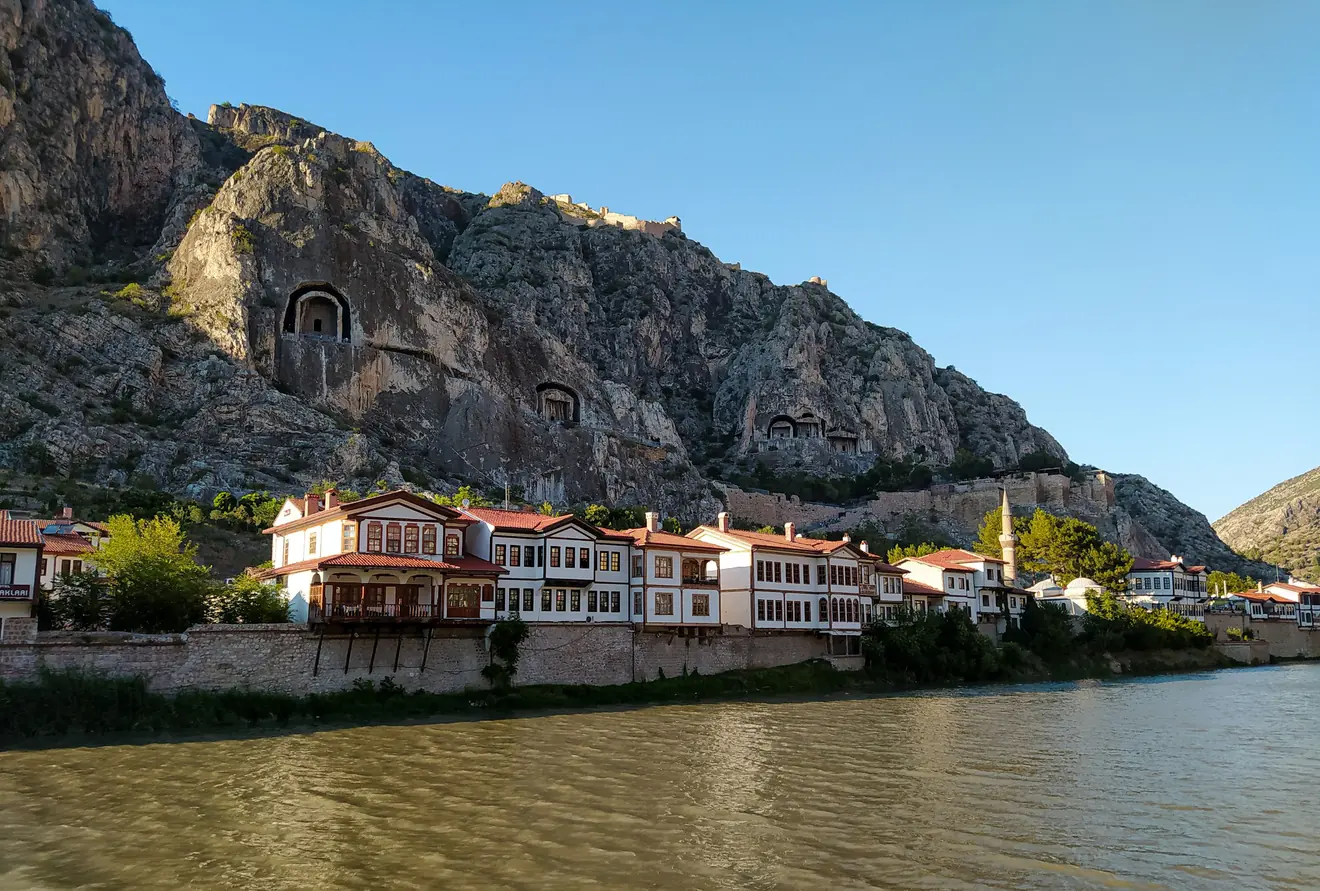
- Heritage travel: For a mansion hotel near the rock tombs, the site is where a traveler decides to book or keeps scrolling.
- Agriculture: For a misket apple grower, the site decides whether a wholesaler adds the farm to next season's supplier list.
- Industry: For a kitchen appliance maker in one of the four organized industrial zones, the site is a catalog dealers search by product code.
Some businesses carry two of these jobs at once, for example a quarry operator that also installs stone for local builders. In that case two clear entry points work far better than one homepage trying to please both. The first written decision in any web design Amasya project is which job comes first; menus and page order follow from it.
02Who Searches for Amasya Businesses, and When
Search demand around Amasya shifts with the season, the district and the reader's home country, so a site plan should start from that calendar rather than from a template. The same company can get very different questions in May and in October.
- Weekend and holiday travelers: They look for riverside stays, breakfast with a view of the Yeşilırmak or parking near the old town, usually on a phone while already on the road.
- Autumn produce buyers: As the apple harvest nears, wholesalers ask about varieties, crate types and cold storage release dates, often searching by product rather than by city.
- Stone importers abroad: They may never type the word Amasya; they search by the stone's trade name, color and finish.
- District customers: Someone in Merzifon or Suluova looks for a service in their own district first and only turns to the provincial center when nothing shows up.
Merzifon also has the province's airport, which matters for hotels and tour operators: arrival instructions from the airport belong on the site, not only in a confirmation e-mail.
To map this for your own business, group the last twelve months of calls and messages by month and write down the three most common questions for each. That list tells you which page needs to be strongest in which month.
03Choosing a Partner From Outside the Province
Our work with Amasya businesses and their partners runs entirely online, so the right partner is the one who documents the process clearly, not the one who is closest. In an online project, written scope, regular video calls and shared task tracking replace the reassurance of sitting in the same room.
Ask every agency you talk to these questions and request the answers in writing:
- Reader focus: Did they ask in the first call what an importer or a hotel guest looks at first, or did they jump straight to colors and templates?
- Scope: Which pages, languages and forms are included, and how are requests outside that scope handled?
- Approval point: Can you see and approve the design on a live preview before any code is written?
- Contact person: Who will you speak to throughout, and can that person explain the reasoning behind a technical decision?
- Evidence: Which live sites are close to your industry?
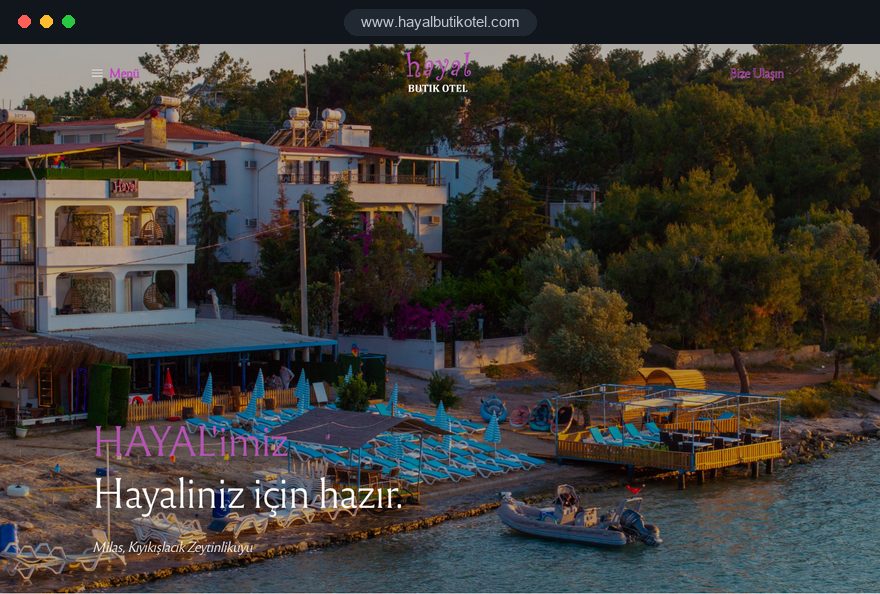
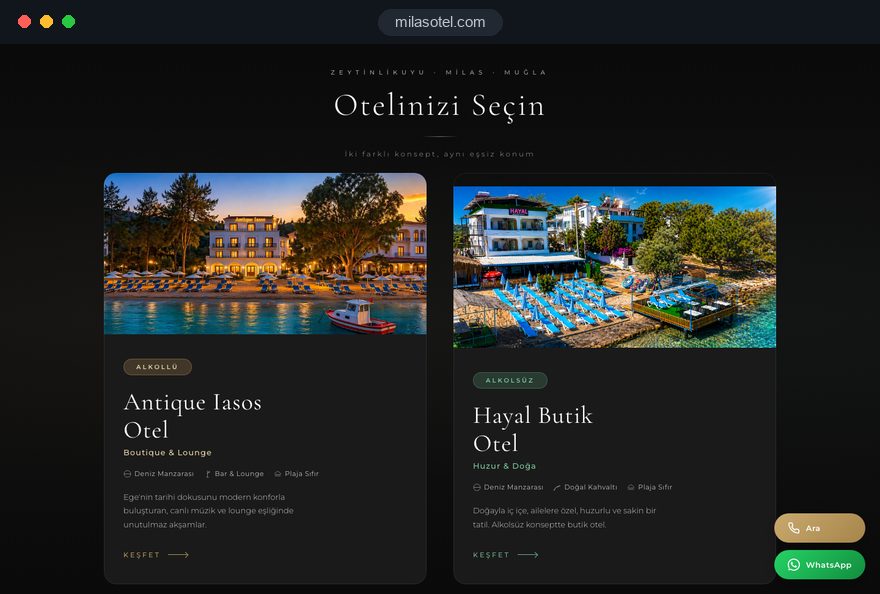
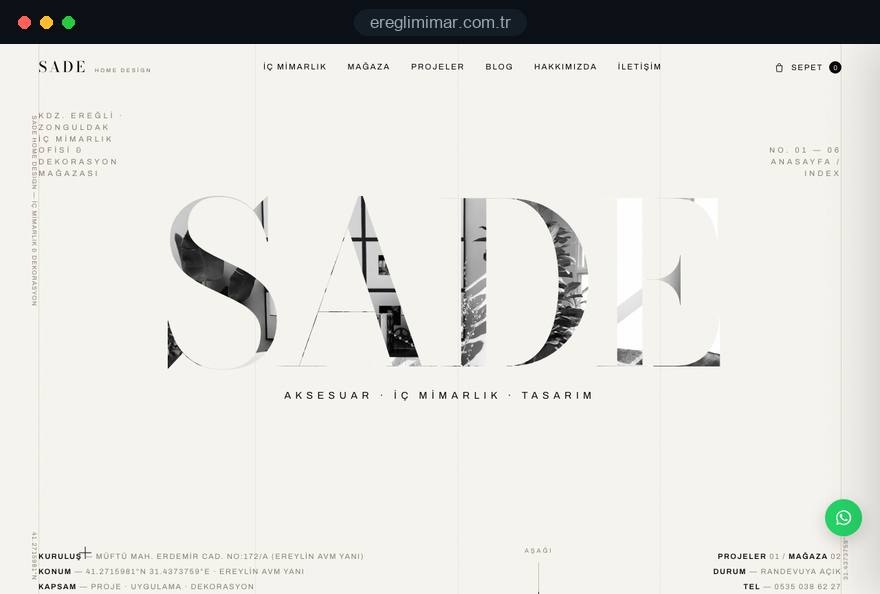
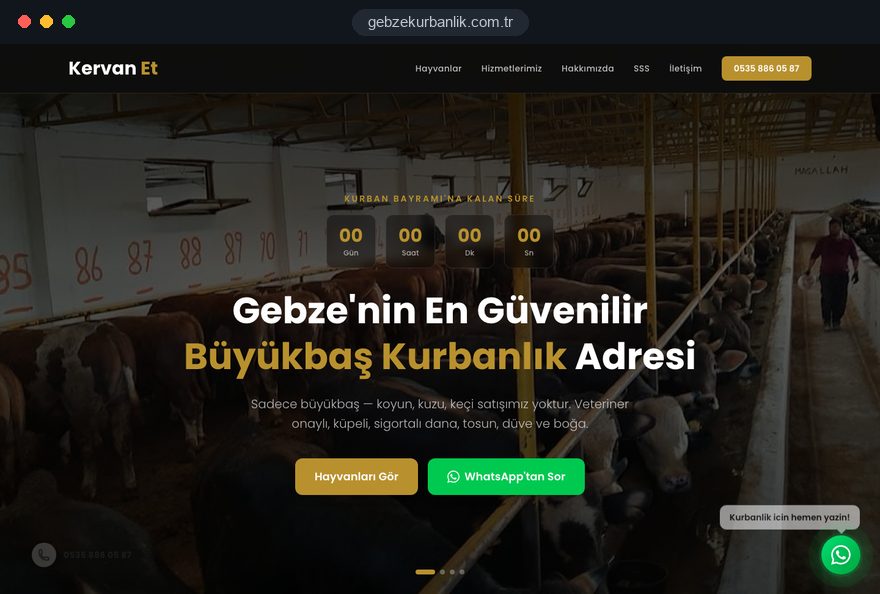
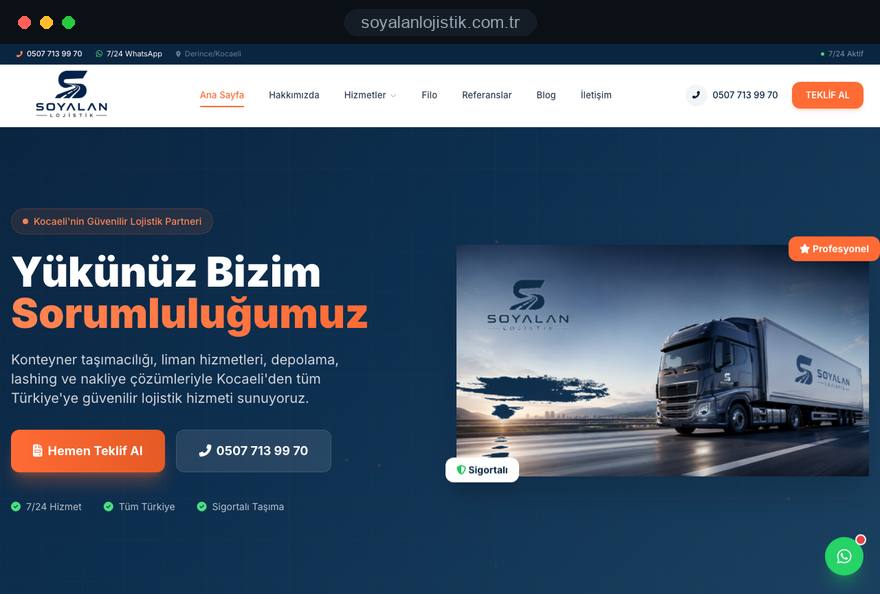
For that last point, ask for live addresses rather than screenshots. Open the site on your phone, fill in the form and see how quickly someone replies. Our live hotel, interior design, livestock and logistics work is on the references page.
The weak spot of remote projects is ambiguity. When decisions disappear into chat threads, distance becomes a real problem. Ask for a short written summary after every call, and the distance stops mattering.
04Domain, Hosting, Code and Accounts in Your Name
Your company should own the website and every account connected to it, and that rule belongs in the contract before work begins. In family businesses, which are common in the province, accounts were often opened years ago under a relative's personal address or by an employee who has since left.
On handover day, you should hold the following:
- Domain: Your company is listed as registrant, and renewal notices go to a shared company mailbox.
- Hosting: You have administrator access to the server panel and a written note of where backups are stored.
- Code and content: Site files, the database and the full resolution originals of stone and room photos can be handed over completely on request.
- Analytics: Search Console and GA4 are created under your company account, with the agency added only as a user.
- Business Profile: You are the primary owner of your Google Business Profile; an agency can be added as a manager.
For stone exporters, photo rights deserve their own line. A good slab photo ends up in catalogs and trade fair displays, so the usage rights should stay with your company in writing.
A simple test helps: one week after launch, try to log in to each account with your own password and without help from the agency. Any account you cannot open means ownership is not finished yet.
05The Online Project Process, Step by Step
A remote project produces fewer surprises than a face to face one when every step is written down and visible to both sides. Our process runs in this order:
- Discovery call: On a video call with screen sharing, in English or Turkish, we agree on reader types, target markets and the site's main job.
- Written scope: The quote lists pages, language versions, forms and delivery steps; work starts once you approve it.
- Material collection: Stone sample photos, room images, certificates and product lists go into a shared folder, and gaps are tracked on a checklist.
- Design approval: The homepage and one sample inner page appear on a live preview link, which you also test on your phone.
- Build and content: The approved design becomes code, copy goes in, and tasks and dates are visible in our CRM.
- Launch and training: On launch day we use the panel together, and you add a new product or room yourself.
The step that most often slows a project is the third one. If stone or room photos arrive late, the design gets approved with empty boxes and changes pile up later, so we suggest scheduling the photo shoot in the first week.
Every meeting can happen online. If you are in Istanbul at some point, we are glad to meet at our Ataşehir office by appointment, and tracking continues on the same screen afterward.
06Local SEO in Amasya: Districts and Business Profiles
Local SEO, the work that helps nearby searchers find you on maps and in results, starts in Amasya with the reality of each district. A mansion hotel in the center and a car service in Merzifon have completely different competitors and readers.
The basic rule for a Google Business Profile is that the business name matches the real name on your sign; adding keywords such as "Amasya hotel" to the name breaks Google's guidelines. Address, phone and opening hours should match the website exactly. Businesses that visit customers but do not receive them, such as a plumber in Suluova serving nearby villages, can hide their address and set a service area instead.
Real search examples make the logic concrete:
- A search for a dentist in Merzifon should land on a page with the Merzifon address, a map and a booking button.
- A traveler searching for a riverside mansion hotel in Amasya needs room photos with the view and walking times to the sights.
- A search for movers in Gümüşhacıköy justifies naming the district in titles only if you really work there.
- Product searches such as Amasya apples wholesale reward a strong product page more than any district page.
The approach to avoid is publishing near identical pages for every district you do not serve; search engines treat these doorway pages as low value. If you have no customers in Hamamözü or Göynücek, skip those pages; if you do, add a real job from that district. For a broader search plan, see our SEO services.
07English, Arabic or German: When a Language Pays Off
In web design Amasya projects, a second language pays for itself when your sales records already show buyers who read it; otherwise the Turkish site should do its job first. For Amasya businesses, the answer differs sharply by industry.
According to the Governorship's report, Amasya Beige stone was sold in 2018 to more than 45 countries, led by China, India, Bangladesh, Taiwan, Lebanon and Saudi Arabia. Most correspondence with importers in those markets runs in English. For buyers in Lebanon and Saudi Arabia, an Arabic version built with a proper right to left layout is a strong trust signal. For China, a short introduction page covering stone types and how to get in touch is often enough to start.
Hospitality works differently. The rock tombs and riverside houses draw foreign travelers, yet a mansion hotel usually does well to start with English room pages and add other languages only when booking data shows demand. Before deciding, answer three questions:
- Demand: How many separate enquiries or bookings did you receive in that language last year?
- Reply capacity: Can someone answer a message in that language the same day?
- Updates: Who carries a change on the Turkish page over to the other languages?
Each language needs its own address and hreflang tags, which tell Google which pages are language versions of each other; every version must reference itself and all the others. A version left in raw machine translation does more harm than no version at all. Our guide to multilingual websites covers the setup in detail.
08Heavy Stone Photos on a Fast Site
The common problem on Amasya stone and hotel sites is that large, high quality photos slow pages down; the fix is not smaller photos but smarter delivery. An importer wants close ups of the veining, and a guest wants the river view at full width.
Google's Core Web Vitals give a useful frame for that balance. LCP, the time until the largest element on the page appears, should be 2.5 seconds or less for 75 percent of visits. INP, how quickly the page responds to a tap, should be 200 milliseconds or less, and CLS, how much the layout shifts while loading, should be 0.1 or less.
- Layered images: A small preview in listings, a large image on click and a downloadable full resolution file for those who request it.
- Modern formats: Photos served as WebP or AVIF in several sizes matched to the screen.
- Fixed dimensions: Width and height defined for every image so text does not jump while a gallery loads.
- Security basics: SSL, updated software, regular backups and spam protection on every form.
Hosting should suit both Turkish visitors and the target markets. For a stone company whose importers sit in Asia, a content delivery network, a service that serves files from servers close to each visitor, makes a noticeable difference. Before our first call, you can run your current photos through our free image optimization tool and see how much weight they carry.
09Page Patterns for Amasya's Main Industries
For each of the province's main industries there is one page type that answers the buyer's first question, and starting there gives a new site its fastest return. The examples below are typical scenarios, not client case studies.
- Amasya Beige exporter: One page per stone type with daylight close ups and installation photos, finishes, blocks, slabs and cut to size options, technical values and the geographical indication record. The full structure is on our building materials website page.
- Riverside mansion hotel: Honest photos of each room's view, walking times to the Bayezid II complex and the rock tombs, and parking directions for guests arriving by car. See our hotel website page for room and enquiry flows.
- Misket apple grower: Varieties, sizes, harvest and storage periods, crate and packing options, lab documents and a short wholesale form, set up as on our website for farms and growers page.
- Industrial zone manufacturer: A catalog searchable by product code, downloadable drawings and manuals, and a separate dealer login.
- Livestock farm in Suluova: A sales page for the Eid al Adha season that goes live weeks ahead, with delivery terms in plain words.
To find your own starting page, list the last twenty questions customers asked and check which single page could answer most of them.
10KVKK, Cookies, GDPR and Online Sales
Any Amasya business website that collects even one name through a form must comply with Turkey's data protection law, KVKK (Law No. 6698), and that includes a small guesthouse. Article 10 requires an information notice explaining why data is processed, to whom it may be transferred and what rights the person has.
Here is what to check on your site:
- Forms: Quote, sample or booking forms link to the information notice and ask only for the fields you really need.
- Cookies: Analytics and advertising cookies stay off until the visitor consents, and declining is as easy as accepting.
- EU and UK visitors: If English or German pages target buyers in Europe, GDPR applies to that audience, cookie consent is required before non essential tracking, and Google's consent mode, which adjusts measurement to each visitor's choice, is needed for visitors in the European Economic Area.
- Online sales: If you sell apples, honey or gifts on the site, Turkish distance sales rules require pre contract information and the contract text, including the right of withdrawal, before payment.
The exact wording depends on your business, so we recommend settling the legal texts with a lawyer while the site makes sure they appear in the right place and stay readable.
11Redesigning Without Losing Rankings
When an older site is replaced, the real risk is not the design but the loss of addresses search engines already know. Many Amasya stone and hotel sites are dated yet still rank for specific searches, and that history should move to the new site intact.
A safe redesign follows this order:
- Inventory: List every URL on the current site and the pages that bring traffic in Search Console.
- Mapping: Assign each old URL a counterpart on the new site, and point pages without one to the closest content.
- Redirects: On launch day, move every old URL to its new home with a permanent 301 redirect.
- Monitoring: In the following weeks, watch Search Console's error reports and the status of your traffic pages.
The development version should stay out of search results, but keep in mind that Google cannot read a noindex tag on a page blocked in robots.txt. Pages meant to stay out of the index must remain crawlable and carry noindex, and the block must be removed from pages going live.
Protect the content that earned your rankings too. A stone description refined over years or the history of a mansion house should survive the new design without being cut down to fit a layout. A web design Amasya project that treats old content as a liability usually pays for it in lost enquiries.
12Six Common Mistakes on Amasya Business Sites
The mistakes that repeat on Amasya sites rarely come from a lack of knowledge; they come from building for one reader only. Use the six below, each with a better alternative, as a checklist before your next project.
- All stones in one gallery: Importers leave before finding the type they need; give every stone its own page with finishes and sizes gathered there.
- Postcard photography: Hotel sites show the city skyline instead of the rooms; photograph each room with the view from its own window.
- Late seasonal pages: Harvest or Eid pages go live when the season starts; publish them weeks ahead so search engines can find them.
- Machine translation: English or Arabic versions are left as automatic output; start with fewer pages and have each written by a fluent writer.
- Hidden contact options: The phone number sits in the footer as plain text; keep click to call and WhatsApp within reach on every mobile screen.
- Copied district pages: The same text appears for districts you do not serve; create pages only where you work, each with a real local example.
Go through this list on your current site and tick each item that applies. Every tick should become a line in the scope of the new site.
13What Drives Scope and Budget
Our prices do not depend on the city; an Amasya stone exporter chooses from the same packages as any other business. What shapes the budget is scope, not location.
In a web design Amasya project, these factors move scope the most:
- Pages and products: Ten stone types versus forty, or four rooms versus twelve, changes the content and photo work considerably.
- Language versions: Each language means writing, review and hreflang setup; Arabic also needs a right to left layout.
- Special modules: Sample request flows, dealer logins, booking engine connections or certificate archives add work.
- Online sales: Payment, shipping rules and contract texts take more setup than a presentation site.
- Material readiness: Ready photos and copy speed things up; if shooting and writing fall to us, scope grows.
Phasing is a sensible way to manage cost. A stone company can launch first in Turkish and English with its top selling types, then add Arabic and the full gallery in a second phase. Real enquiries from phase one then set the priorities for phase two.
14The First 90 Days and Your Next Step
Launch is not the finish line of a web design Amasya project; the first 90 days are when the site meets real readers and the first corrections happen.
- Month one: Confirm in Search Console that pages are indexed, align your Business Profile with the new site and test every form yourself.
- Month two: Sort enquiries by source, whether importer, traveler or local customer, and add the most frequent question to the matching page.
- Month three: Check which pages produce enquiries; if harvest, Eid or holiday season is approaching, update those pages now.
The first step in web design Amasya work is deciding which reader your business serves first. We set scope and price in a written quote tailored to your request; reach us through the quote form. If you also work with companies on the coast, our Samsun page covers the neighboring province.
When you are ready to describe your stone, rooms or produce on a video call, reach us through the contact page. After the call we send a written scope and quote.