In the District, a website is often read the way a proposal is read: slowly, by someone who has to justify a choice to a colleague, a board or a contracting office. The reader might be a program officer on Massachusetts Avenue, a membership director near Dupont Circle or a family choosing a hotel for a cherry blossom weekend. Each of them checks credibility before they look at design.
This guide follows the decisions a web design Washington DC project raises, in the order they usually come up, from the reader you write for to the first three months after launch. We, Talha Aslan and team, wrote it as working notes: each section gives you a criterion, a checklist or a question you can put to any studio, ours included.
01What the Capital's Economy Expects From a Site
A website in Washington has to prove competence to readers who are trained to doubt claims, because so much of the local economy runs on evaluation. The Census Bureau's Vintage 2024 estimate puts the District at 702,250 residents, yet BLS data show about 719,900 nonfarm jobs in August 2026 (preliminary). The city employs more people than live in it, many of them commuters from Virginia and Maryland.
Three employment blocks in the BLS figures explain what visitors look for:
- Government, about 208,100 jobs: vendors and advisers to agencies need capability pages that read like evidence, with dates, scope and a named contact.
- Professional and business services, about 160,500 jobs: law, policy, engineering and IT firms compete on the people behind the work, so bios and publications carry the sale.
- Education and health services, about 125,500 jobs: schools, tutors and clinics need calendars, eligibility and next steps that a parent or patient can follow on a phone.
Then add the visitors: Destination DC counted 27.2 million in 2024, 2.2 million of them from abroad. Before any design work, rank these audiences for your own organization and write the ranking into the brief; the homepage follows from that order.
02How Searches Look Inside and Around the Beltway
Search behavior in Washington splits into a few clear patterns, and each one points to a different page on your site. Residents attach neighborhoods, professionals search by specialty and acronym, and visitors search from the sidewalk a few blocks from where they want to go.
- Neighborhood searches: "physical therapist Capitol Hill", "dry cleaner Logan Circle", "Pilates Navy Yard"; map results dominate, so the Business Profile matters more than a blog post.
- Specialist searches: "FOIA attorney", "Section 508 testing firm", "association management company"; the reader compares service pages and credentials and rarely adds a place name.
- Regional searches: "HVAC Arlington", "orthodontist Bethesda", "IT support Tysons"; buyers expect a plain statement of which jurisdictions you cover.
- Visitor searches: "brunch near the Wharf" or "museum tour for kids", typed near the National Mall with a decision minutes away.
- Event searches: delegates attending a conference at the Walter E. Washington Convention Center look for dinner spots, meeting rooms and printing services nearby.
Before anyone drafts a sitemap, list your ten most valuable searches and assign each one to an existing or planned page. A search without a page is a gap in your web design Washington DC brief; a page without a search needs another reason to exist.
03Working With an Istanbul Studio on Eastern Time
A studio abroad can serve a D.C. organization well when decisions are recorded in writing and drafts stay open for review at any hour. Our team works from Istanbul, which keeps UTC+3 all year. Washington follows Eastern Time, so Istanbul is 7 hours ahead during daylight saving time and 8 hours ahead in winter.
A call at 8:30 in your morning reaches us in mid afternoon, and feedback you send after a late meeting on K Street is usually being worked on when you open your inbox. That rhythm suits organizations whose approvals pass through committees, because the preview can circulate while we build. Ask any remote partner to commit to these points:
- A scope document that names every page, language, form and integration, and lists what is excluded.
- A preview link your board chair or general counsel can open without creating an account.
- One accountable contact and a written response window for urgent issues after launch.
- A clear split of who drafts copy, who checks facts such as license numbers and who signs off.
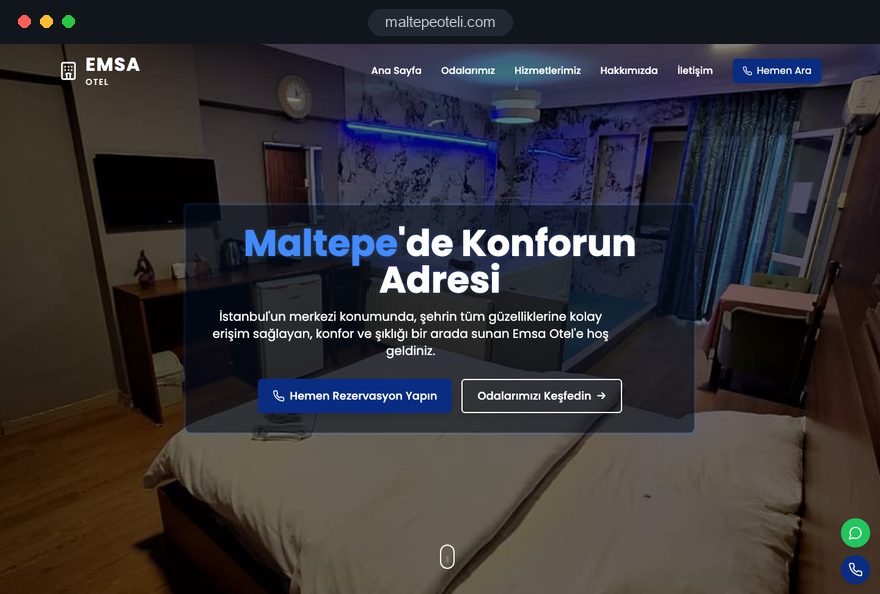
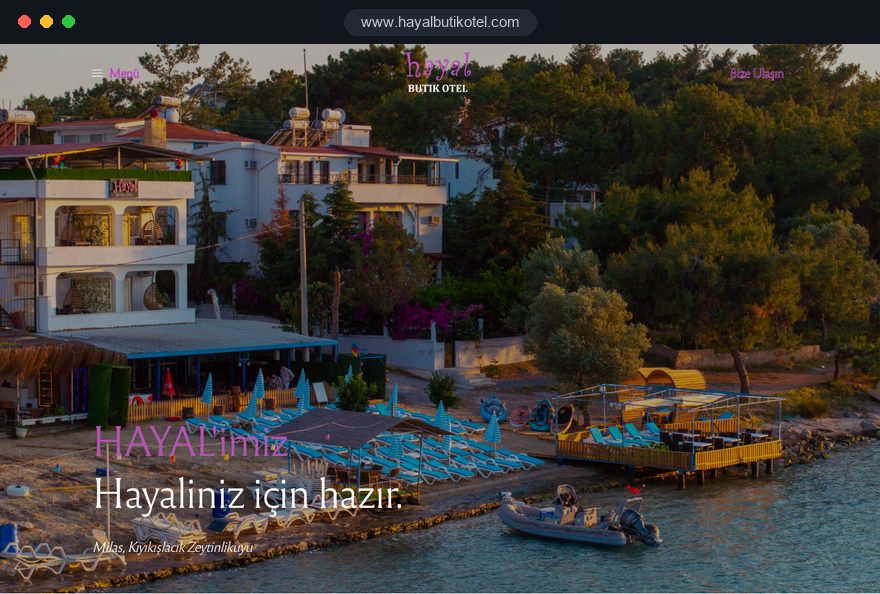
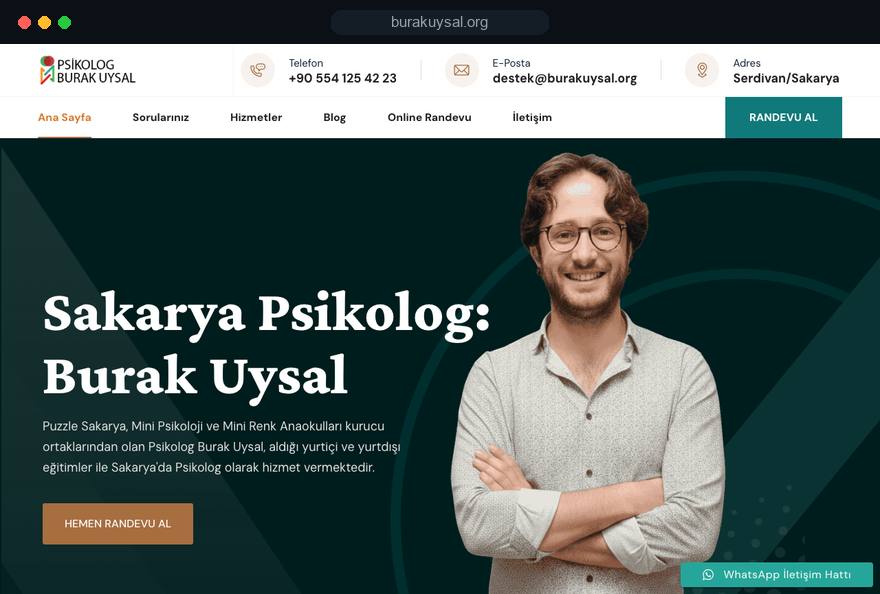
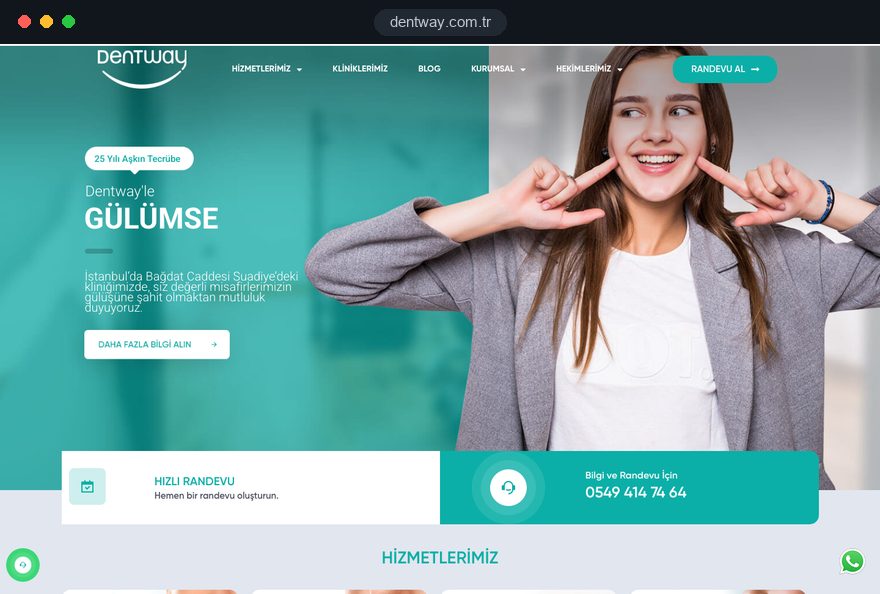
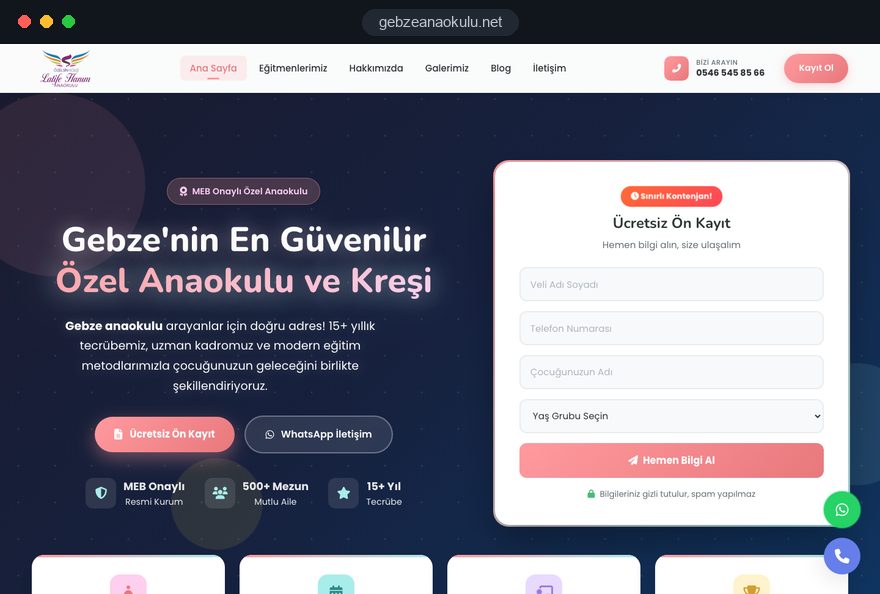
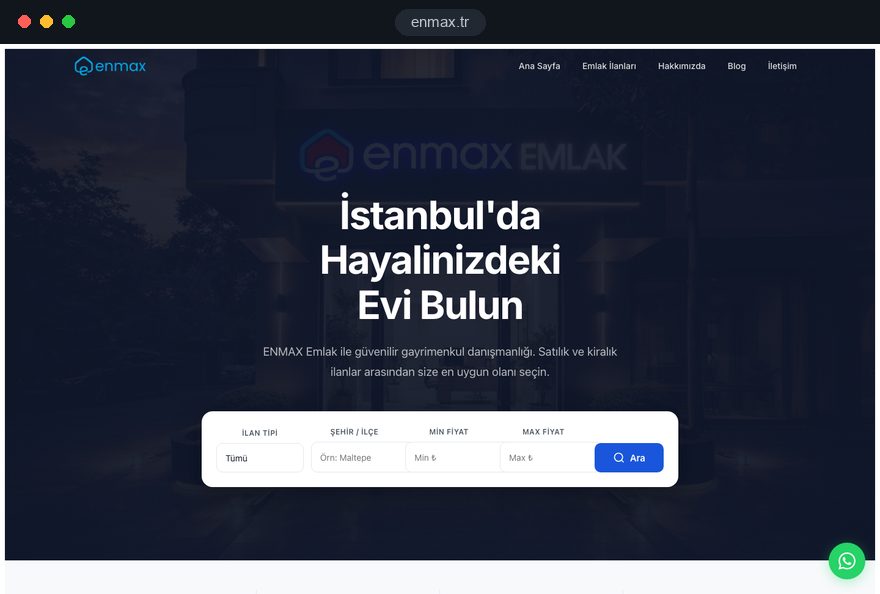
Look at finished sites rather than slides. Our live work is all in Türkiye, with hotels, a counseling practice, a dental clinic and a preschool among them, and you can open each one on our references page. We have no completed project in the United States, and we say so in the first conversation.
04Domain, Hosting and Accounts Your Organization Controls
Ownership should be settled before the first wireframe, because nonprofits and firms in Washington change staff, boards and vendors often enough that a single person holding a password becomes a real risk. Everything that keeps the site online belongs to the organization, not to an employee or an agency.
- Domain: a .com or, for a nonprofit, a .org registered in the organization's legal name, tied to a shared role inbox rather than a personal address, with auto renewal turned on.
- Hosting: a data center on the East Coast keeps response times short for readers in the District, Virginia and Maryland; the contract should be yours or transferable on request.
- Code and database: a full export at handover, and again after any major change, stored where your organization can reach it without us.
- Accounts: Google Business Profile, Search Console, analytics, the email platform and any ad accounts list the organization as owner and the agency only as a user.
Record these items in the minutes of the board or partner meeting that approves the project; for associations, that record helps when officers rotate each year. With us, hosting for the first year is included, and moving elsewhere later stays your decision, with every file handed over. A web design Washington DC contract that leaves any of these points open is not ready to sign.
05From Kickoff to Launch, Step by Step Online
A remote build stays predictable when each phase ends with a written approval, and that matters in a city where approvals often need two or three signatures. This is the sequence a Washington project follows with us:
- Kickoff call: on video in your morning; we cover readers, competitors, service area and the one action the site must prompt.
- Scope and sign off: pages, languages, integrations, copy owners and milestones, approved by the person with the authority to approve.
- Content plan: a sitemap plus a list of material to gather, such as bios, capability statements, event dates or room photos.
- Design direction: the homepage and one inner template first, shared as a link your committee can comment on.
- Build and review: progress visible in our CRM, while you test forms, registration and booking paths yourself.
- Quality pass: keyboard navigation, contrast, headings, redirects and analytics checked against a shared list.
- Launch and training: a recorded editing session and a handover file listing every account and owner.
No step needs travel. If your work brings you to Türkiye, we are happy to meet at our office in Ataşehir, Istanbul; it is an option, never a requirement. Organizations that run on fiscal years and grant cycles should tell us which dates cannot move, so the milestones fit around them.
06Local Search From Capitol Hill to Navy Yard
Local visibility in D.C. depends on an accurate Google Business Profile, honest service area wording on the site and reviews that describe real work. The three reinforce each other; a strong profile linked to a vague website loses part of its effect.
Google's guidelines say the business name must match the name used in the real world, without added keywords. A practice called "Eastern Market Dental" stays exactly that, never "Eastern Market Dental Capitol Hill Dentist DC". Service area businesses, such as a mobile notary or a locksmith covering Shaw and Columbia Heights, may hide their address and list the areas they serve instead.
- Use the same name, address, phone and hours on the site, the profile, Yelp and the Better Business Bureau.
- Check which primary category your direct competitors use before you choose yours.
- Ask clients for reviews that mention the service and the neighborhood in their own words.
- Reply to every review within a few days, briefly and without arguing.
- Name only the neighborhoods you truly serve; thin pages for Brookland, Anacostia and Foggy Bottom with swapped place names are doorway pages.
If you would rather hand this work over, our search engine optimization service covers profile care, citations and local content. Any web design Washington DC proposal should at least lay the foundations listed above.
07English First, Then Spanish, Turkish or German
Write the Washington site in American English first and add another language only when a defined group of readers needs it. Each language is a second site to keep current, so the case for it should be concrete.
Typical reasons in the District look like this. A clinic or legal aid office in Columbia Heights or Mount Pleasant takes many calls in Spanish. A chamber or trade group works with members in Türkiye and wants Turkish pages for them. A German, Austrian or Swiss company opens a government affairs or sales office in D.C., and headquarters wants product details in German.
- Give each language its own URLs and navigation instead of a translation widget.
- Write for the reader: a Turkish speaking importer asks about shipping and certificates, a federal buyer asks about compliance.
- Link the versions with hreflang; every version must reference the others and itself.
- Assign one person to keep dates, phone numbers and event details aligned across languages.
Our multilingual website page explains structure and upkeep in more detail. When nobody can maintain the second language, one accurate English site is the stronger choice.
08Speed and Security for Readers on the Move
Many first visits to a D.C. site happen on a phone, on a Metro platform, between meetings or on a sidewalk near the Mall, so loading time decides whether the visit continues. Google's Core Web Vitals give three targets, measured at the 75th percentile of visits:
- LCP, largest contentful paint: the time until the main content is visible; 2.5 seconds or less counts as good.
- INP, interaction to next paint: how quickly the page responds to a tap or click; 200 milliseconds or less.
- CLS, cumulative layout shift: how much the page jumps while loading; 0.1 or less.
Common slowdowns on Washington sites are long PDF reports linked from the homepage, embedded recordings of panel discussions that load before anyone presses play, and event widgets from third parties. We publish summaries as HTML pages with the PDF as an optional download, load video only on request and remove scripts nobody uses.
Security deserves the same attention, especially for organizations that hold member or donor data. Require HTTPS throughout, backups stored apart from the server, scheduled updates, two step login for every admin account and spam protection on forms. Ask who is alerted when the site goes down on a Sunday evening Eastern Time, and how fast they respond.
09Contractor, Association and Visitor Sites in Practice
A handful of organization types shape much of the District's web work, and each needs a different core page. Planning around yours early prevents a generic template from deciding the structure.
A technology or engineering firm selling to agencies needs a capability statement page that a contracting officer can scan in a minute: core competencies, differentiators, past performance with dates, NAICS codes, UEI and CAGE identifiers, and certifications. Offer the same content as a one page PDF, but keep the HTML version as the main source so it stays current.
Consultancies and law firms around K Street and Farragut Square need bios with bar admissions, publications with dates and authors, and a consultation request that asks only what a first reply requires; the consulting firm website page shows a complete structure.
- Associations and foundations: member benefits, an annual conference hub, sponsor pages and a members only area; see the association website page.
- Hotels, tours and restaurants: room or tour details, step free routes from the nearest Metro station, and booking that works on a small screen.
- Schools and tutors: program dates, eligibility and an inquiry form that names the next intake.
Firms that also serve clients farther up the Northeast Corridor can compare notes on our Philadelphia web design page.
10Federal and District Rules Worth Checking
No single federal privacy law governs business websites in the United States, so a D.C. organization works with several federal rules plus the laws of the states where its customers live. Read the points below as orientation and have the final setup reviewed by an attorney.
- ADA: the Justice Department's web guidance says the ADA covers goods and services that businesses open to the public offer online; building to WCAG reduces the risk of excluding visitors.
- Section 508: according to Section508.gov, federal agencies must make the information technology they develop, procure, maintain or use accessible, which reaches vendors through their contracts.
- CAN SPAM Act: the FTC requires a valid physical postal address and a working opt out in commercial email, with opt outs honored within 10 business days.
- State privacy laws: laws such as California's CCPA can apply to businesses outside that state once they meet the law's thresholds; check before collecting data at scale.
- COPPA: sites directed at children under 13, such as camps or tutoring programs, carry extra parental consent duties.
- Sales tax: the District has rescheduled its general rate more than once, and since the Supreme Court's 2018 Wayfair decision states may require remote sellers to collect tax; confirm both with a tax adviser.
Whatever applies to you, publish a privacy policy that describes what your forms, analytics and newsletter tools actually collect, and keep its date current.
11Relaunching an Established Site Without Losing Rankings
Many Washington organizations run sites with a decade of reports, testimony and press releases, and those archives attract links from agencies, universities and news outlets. A relaunch keeps that value only if every useful old address redirects to the right new one.
- Collect URLs: export indexed and most linked pages from Search Console and crawl the current site, PDF files included.
- Decide per page: keep, merge or retire; a 2016 policy brief that still earns citations stays, even if it moves into an archive section.
- Map redirects: pair each old URL with its closest match using permanent 301 redirects, and never send everything to the homepage.
- Test on the preview: titles, canonical tags, structured data and internal links checked before the switch.
- Launch and watch: submit the new sitemap, then review coverage and 404 reports weekly for at least a month.
One detail causes trouble during relaunches: if robots.txt blocks a page, Google cannot read its noindex tag, so pages you want removed must stay crawlable and carry noindex. Also lift any staging block on launch day. The website redesign page has the full checklist.
12Common Mistakes on District Organization Sites
The most costly errors on Washington websites come from habits of institutional publishing, and each has a simple alternative:
- Acronyms in the main menu: labels like "OIG", "CRADA" or internal program codes confuse newcomers; use plain words and explain the acronym on the page.
- Reports only as PDFs: search engines and screen reader users struggle with long PDFs; publish a summary page in HTML and offer the file as a download.
- A capability statement from years ago: outdated past performance weakens a bid; review it each quarter and show the date visibly.
- Team pages nobody maintains: departed staff still listed make the organization look inactive; tie the team page to your offboarding checklist.
- Event pages that vanish after the event: deleting them breaks links from partners; turn them into recaps with slides and recordings.
- Colors chosen for print: pale gray text on white fails readers with low vision; test colors with our color contrast checker before approval.
Pick the two that match your current site and fix them first; in a web design Washington DC brief they often matter more than a new visual identity.
13What Drives the Scope and the Quote
The cost of a website depends on what it has to do, not on the city, so an organization in Washington pays what any client pays for the same scope. Our packages and what each covers appear in the pricing section of our web design page, and anything beyond a package is quoted in writing.
- Content volume: migrating hundreds of reports, testimonies or press releases takes more time than designing new pages.
- Member features: logins, gated resources, renewals and directory listings add development and testing.
- Event registration: ticket types, sessions and confirmation emails need setup and careful testing before the first conference.
- Languages: each additional language adds writing, review, hreflang work and upkeep.
- Integrations: a CRM, association management software, donation platforms or booking engines each need configuration and documentation.
Ask for a quote that separates required items from optional ones and puts a milestone next to each. For organizations with board approved budgets, that structure lets you approve phase one now and add features in the next fiscal year without reopening the whole web design Washington DC project.
14The First 90 Days and a First Call
The weeks after launch decide whether the new site starts producing inquiries, so treat them as a short project with three checkpoints.
- Weeks 1 to 4: confirm that forms, registrations and call clicks are recorded, fix any 404 errors left by the redirect map and send the new address to partners who link to you.
- Weeks 5 to 8: read the queries in Search Console, then strengthen the two pages closest to the first results page with clearer answers, dates and author names.
- Weeks 9 to 13: compare inquiries by page and audience, and decide whether a second language, an events hub or paid search deserves the next budget line.
Plan these reviews around your own calendar: the end of the federal fiscal year on September 30, the spring cherry blossom season for hospitality, or the annual conference for an association. Each moment sends a different audience to the site.
To start a web design Washington DC project with us, send a short note through our contact form: what you do, who reads your site and which languages you need. We reply with questions, then a written scope and quote, and nothing begins until you approve it.