This guide is for Plymouth owners who are about to commission or replace a website: a fabrication shop in Ernesettle hoping for work inside the Devonport supply chain, a sensor startup near Derriford, a skipper selling mackerel trips from the Barbican, a family firm fitting kitchens across Plymstock and Hooe. Web design Plymouth projects look alike from the street, yet the choices behind them differ sharply by buyer.
Talha Aslan and team set out those choices in the order a real project meets them. Every section leaves you with something concrete: a test for your phone, a line for your brief or a question that separates careful agencies from hasty ones.
01The Four Buyers a Plymouth Website Must Satisfy
A Plymouth site earns its keep only when it is planned around the buyer group that brings most of your turnover, because the city's economy pulls in four directions at once. The ONS mid 2025 estimate counts 271,361 residents in roughly 80 square kilometres, or 3,399 people per square kilometre. Southampton reaches 5,197 and Portsmouth 5,236 on the same measure, so Plymouth is the most spread out of the three naval and port cities.
That spread means customers drive in from Southway or Plympton rather than wander past your door, and they compare you on a phone first. Around them sit four markets:
- Naval support: Babcock describes its Devonport facility and HM Naval Base Devonport together as the largest naval support site in Western Europe; its buyers read capability, approvals and named contacts.
- Marine science: Marine Research Plymouth calls itself the UK's largest cluster of marine science researchers, and the university has more than 19,000 students; partners judge clarity and evidence.
- Freeport arrivals: the tax sites at South Yard, Langage and Sherford cover 88.3 hectares in total, and newcomers there need a precise location story.
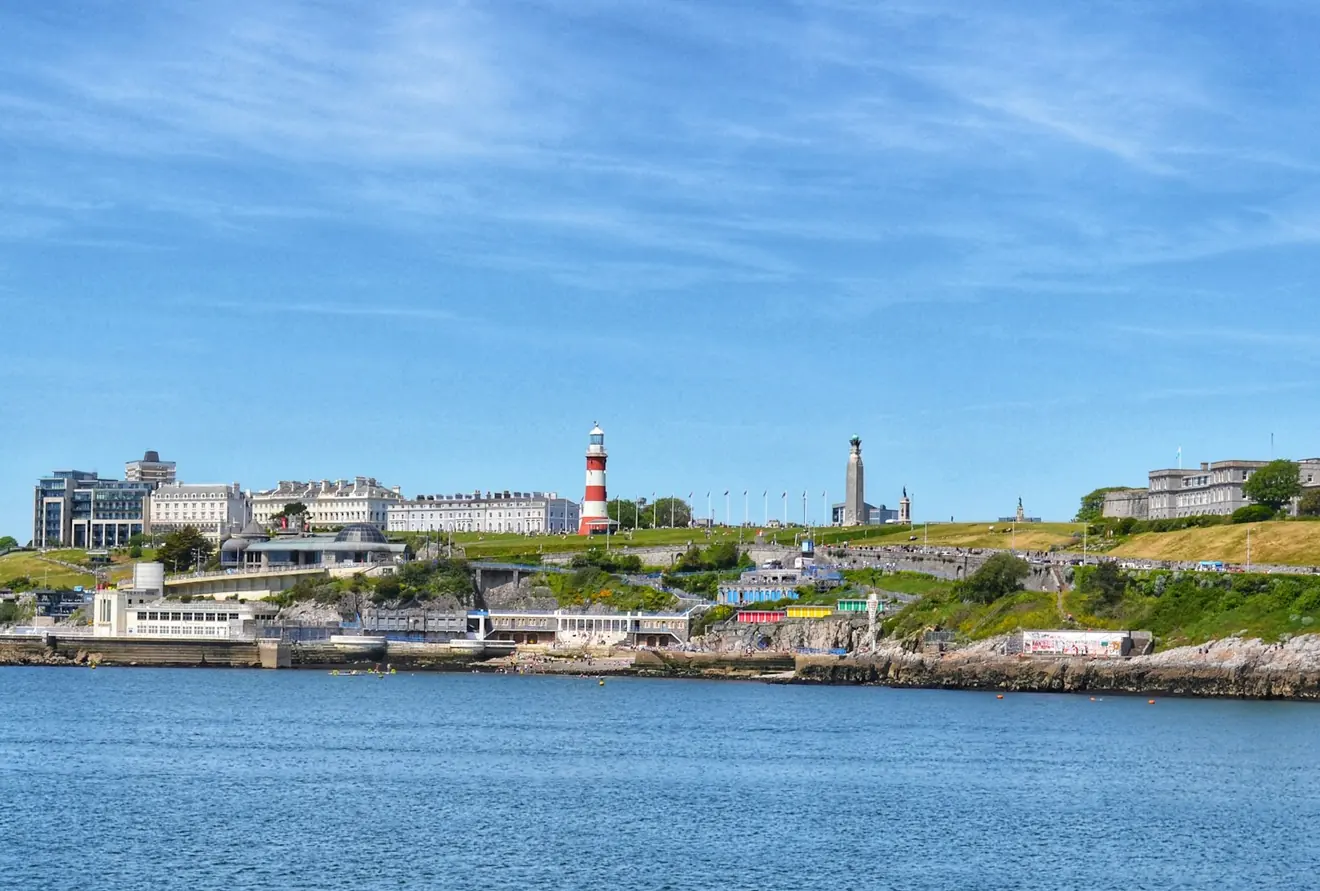
- Waterfront visitors: the Sound is the UK's first National Marine Park, and people strolling the Hoe make up their minds within minutes.
Write your top buyer on the first line of the brief. That group gets the homepage; the others get one obvious route each from the menu.
02What Plymouth Customers Type Into Google
Searches here cluster around wards, the summer influx and specialist procurement, so mapping them early keeps a web design Plymouth brief lean. Note these five patterns before anyone sketches a layout:
- Trade plus area: "roofer Plympton", "physio Mannamead", "locksmith St Budeaux", "nail salon Mutley Plain". Map listings lead these results, so hours, coverage and phone number decide the click.
- Across the bridge: households in Saltash and Torpoint search Plymouth firms too, often adding "Cornwall" or their town name.
- Visitor intent on the day: "boat trip Barbican today", "kayak hire Mount Batten", "breakfast near Royal William Yard", typed within walking distance.
- Procurement language: a buyer in the naval chain types process and standard, such as "pipework fabrication ISO 9001 Devon", rarely a neighbourhood.
- Science and campus: "oceanographic equipment hire", "lab consumables supplier South West", "student room Mutley".
Give it twenty minutes. Open a private window on your phone, type the eight phrases your most valuable customer would use and record who holds the first three places. Wherever a directory or a national chain appears, you have found a page your own site lacks. Keep the list: it becomes the yardstick for judging the new site after launch, and it costs nothing to produce.
03Hiring a Studio Abroad Without Losing Control
A team outside Britain works well for a Plymouth firm when agreements live on paper and the work in progress is never hidden from you. Our whole team is in Istanbul; we have no office, staff or agent anywhere in the UK. Istanbul keeps UTC+3 all year, which puts it two hours ahead of Plymouth while British clocks are on BST and three hours ahead from the end of October until the end of March.
In practice our calls land in your morning, which suits a boatyard or workshop where afternoons belong to customers. A point agreed at ten o'clock in Plymouth comes back to you as a written note before lunch. When shortlisting agencies, whether in Stonehouse or overseas, send each one the same five questions:
- Who is our single contact, and who stands in for them during a holiday?
- Does every call produce written notes on the same day?
- Does the scope name templates, integrations, revision rounds and exclusions for each page?
- May we view the unfinished site on a private link at any hour, unannounced?
- Who drafts and proofreads the English, including naval or scientific vocabulary?
Vague answers to the last question matter for any firm whose buyers read technical English closely. Ask for a sample paragraph about your own service; it reveals more than a portfolio.
04Domain, Hosting and Logins Held by Your Company
Everything the website relies on should belong to your company, so that leaving a provider is your decision alone. Suppliers feel this most: a prime contractor checking your site during a tender expects it to be online and current, not stuck behind a lapsed account.
- Domain name: the .co.uk or .com sits in a registrar account the company opened, and renewal warnings reach a shared office inbox rather than one employee.
- Server: a UK or Western European data centre, a hosting contract carrying the company name and backups held with a second provider.
- Source: the full code, the framework version in use and a page of notes on publishing changes.
- Google accounts: Business Profile, Search Console and GA4 are owned by a company account; the agency appears only as a user.
- Booking and payments: trip calendars, card processors and newsletter platforms are contracted by you, so customer records stay with you.
Keep a register in the handover pack: asset, owner, where the password is kept, renewal date. A charter operator who loses access to a booking widget in July loses the busiest weeks of the year, so read that register every spring before the season opens.
05Our Online Process, Step by Step
A set order of work keeps a Plymouth project calm, since nothing moves forward until you have approved the step before it. Everything runs online, and progress is visible in our CRM:
- Briefing call: your ranked buyers, your eight search phrases and the rivals outranking you today; a written recap follows within hours.
- Page map: every layout, language and integration is named, along with what falls outside the job.
- Material plan: who drafts each page, which photos already exist and which dockside or workshop shots a local photographer of your choosing still has to take.
- Design on genuine text: the homepage and two inner pages are designed with your wording, and you judge them on your own phone.
- Private build: the site takes shape on a closed link where you leave comments directly on each page.
- Go live: consent, analytics, Search Console and redirects are tested, then every password and a set of notes pass to you.
Nothing here requires travel. Should business take you to Istanbul, we are happy to sit down at our office in Ataşehir, though every outcome is recorded in writing either way. Nominate one person who can approve pages within a few working days; most projects slow down while waiting for approval, not while being built.
06Local Search From Plympton to the Barbican
Being found nearby depends on a carefully maintained Google Business Profile and a few substantial area pages; dozens of near identical ward pages look like doorway content and weaken the whole domain. For web design Plymouth work, sort the profile first, then the site.
The profile name must be the one printed on your van, sign or invoice, with no keywords bolted on. Firms that go to the customer, a carpet fitter or a mobile mechanic for instance, can keep their address private and draw a coverage area.
- Spell out the boundaries: Plymouth runs its own council, Saltash and Torpoint are Cornish, and the villages east of the Plym sit in South Hams; one coverage page can say which you reach.
- Justify every area page: a damp proofing firm could write one page on the Victorian terraces of Stoke and Devonport, describing the repairs those houses usually need.
- Matching details: trading name, address and number written identically on the site, the profile, Yell and any trade association listing.
- Steady reviews: request one after each finished job, reply to all of them and offer nothing in exchange.
If you prefer to delegate, our SEO service for local businesses looks after the profile, area copy and technical health. Either way, check the listing monthly, because public suggestions can alter your hours or category without telling you.
07English First, Then Turkish, German, French or Spanish
English does the heavy lifting on nearly all Plymouth sites; a further language pays off only where a known group of customers or partners would commit sooner in it. Your own inbox is the evidence: which messages arrive in another language, and about what?
Three cases are realistic. A Turkish speaking importer of building materials or textiles may want Turkish pages for suppliers and family customers, while councils, banks and landlords stay in English. A German or Swiss engineering firm opening a unit near the dockyard may need German pages for its head office. A guest house near Millbay may greet ferry passengers from Roscoff or Santander with a short French or Spanish page.
- A URL per language: each version lives in its own folder; a toggle that rewrites text on the same address hides it from search.
- Reciprocal hreflang: every version lists all the others plus itself; a free generator produces tags you can check.
- Native writing: each language is written for its reader, with its own examples, never pasted from a translation engine.
- Start narrow: translate the pages that generate enquiries and leave the news archive in English.
Folder patterns and upkeep are covered on the multilingual website page. Give each language a named keeper; an outdated second version erodes trust faster than a missing one.
08Speed and Security on a Hilly, Coastal Network
Speed matters more in Plymouth than owners tend to expect, because many visits happen outdoors: on the Hoe, aboard a ferry entering the Sound or in a van between jobs, where signal comes and goes. Google's three Core Web Vitals, measured at the 75th percentile of real visits, set the bar:
- LCP (Largest Contentful Paint): how quickly the largest visible element, usually the hero photo, appears; good is 2.5 seconds or less.
- INP (Interaction to Next Paint): how fast the page reacts after a tap, for example when a date picker opens; good is 200 milliseconds or less.
- CLS (Cumulative Layout Shift): how far content jumps as late items arrive; good is 0.1 or less.
Harbour panoramas and drone clips are the usual culprits. Save photos as WebP or AVIF sized for the screen that shows them, reserve their space in the layout so text never jumps, and start video only on request. Hosting in the UK or Western Europe keeps the first byte close to Devon.
Security belongs to the same task: HTTPS everywhere, timely updates, rate limits on login pages and backups held elsewhere and actually restored once as a drill. Suppliers should ask a blunt question: what happens if a plugin is compromised during a tender week?
09Site Structures for Plymouth's Main Sectors
Each leading industry in the city needs its own page architecture, and a generic template buries the very evidence that makes a local firm credible. Four structures cover most briefs:
- Naval and defence suppliers: a page for each process, accreditations with expiry dates, data sheets to download and a quote form where buyers attach plans; the website for manufacturers page shows the layout. Anything your contracts treat as confidential stays off the site.
- Ocean technology spinouts: a product page that names the measurement problem in one sentence, specifications in plain units, research partners you are permitted to name and vacancies aimed at local graduates.
- Boatyards and marine services: lift out, antifouling, rigging and winter storage each get a page with seasonal booking windows; the yacht maintenance website page covers the detail.
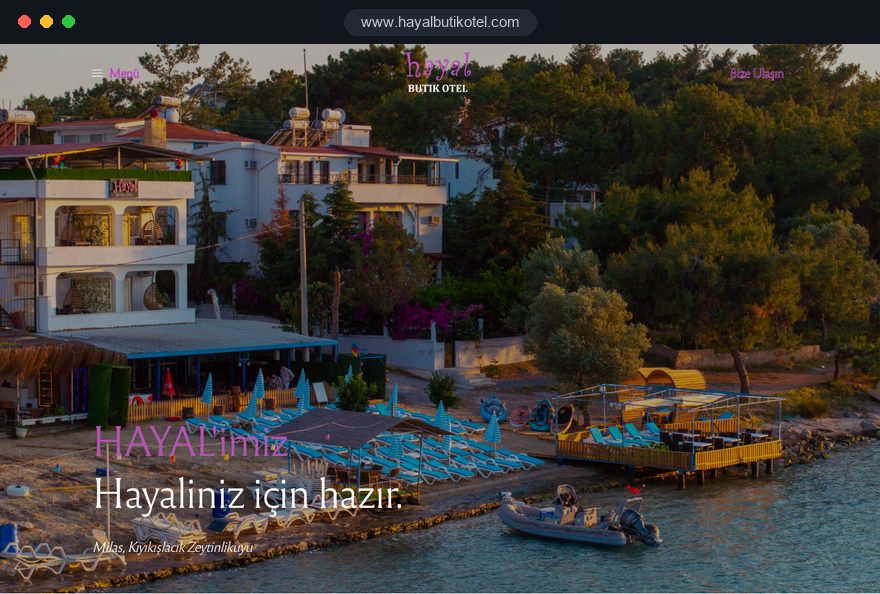
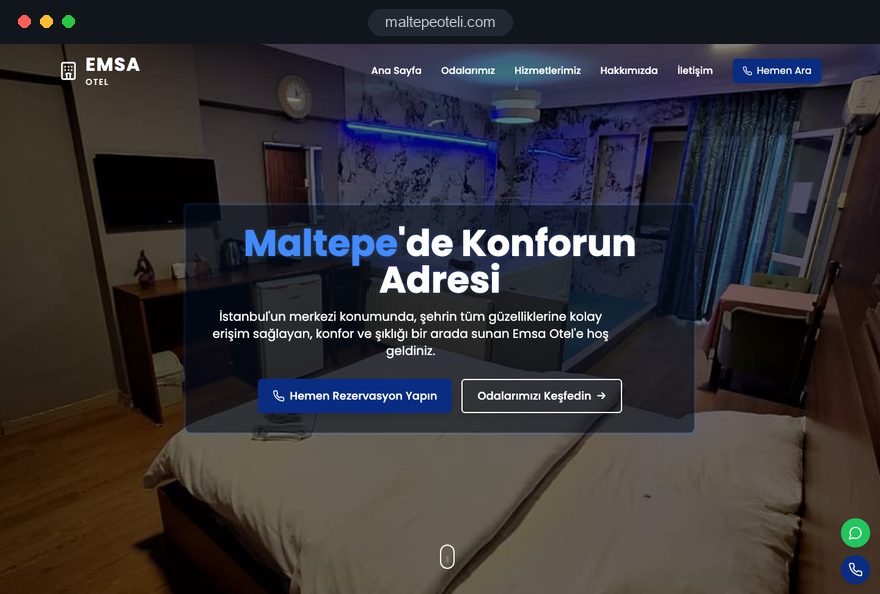
- Waterfront stays and trips: guest houses, wildlife trips and paddleboard schools around Mount Batten need season dates, bad weather terms and quick contact; see the hotel website page for room layouts.
Whatever the structure, show proof that could only be yours: your own yard, your own boat, staff with names and work with dates. Buyers and holidaymakers alike read stock harbour photos as a sign that something is missing.
10UK Legal Basics for a Plymouth Business Site
A Plymouth company site needs a short list of legal elements before it goes public; each is simple, and each is regularly forgotten. Treat what follows as orientation rather than legal advice and let a solicitor approve the final text.
- Privacy notice: as soon as a form, booking tool or analytics handles personal data, the UK GDPR and the Data Protection Act 2018 call for a plain account of what you collect, why and for how long.
- Cookies under PECR: ICO guidance says cookies that are not strictly necessary need consent given by a clear, positive action; scrolling on is not consent.
- Company details: a limited company publishes its registered name, company number, registered office and place of registration on the site.
- Consumer sales: the Consumer Contracts Regulations 2013 give shoppers cancellation rights for most distance purchases, and the checkout must explain them before payment.
- Accessibility: the Equality Act 2010 expects service providers to make reasonable adjustments for disabled people; online that means readable contrast, keyboard access and labelled fields.
Our part is technical: tags stay silent until the visitor decides, forms request only essential fields and company details appear where a buyer expects them. A trip operator taking deposits should also have its booking terms reviewed, because weather cancellations raise questions no template answers.
11Moving to a New Site Without Losing Rankings
Search traffic survives a relaunch when each valuable old address has a new destination agreed in advance. Without that, links from a trade association, a research partner or an old Herald article end on an error page the morning after.
- Inventory: pull every URL you can find from Search Console, analytics, the old sitemap and a crawler, flagging those with visits or backlinks.
- Pairing: beside each one, write its nearest new page, or a reason for retiring it.
- Shield the test site: put a password on it; robots.txt alone is risky, since a blocked page keeps its noindex unread.
- Single hop redirects: one permanent 301 per old address straight to its pair; dumping everything on the homepage wastes the links.
- Four Mondays of checks: submit the new sitemap, read the indexing and missing page reports weekly for a month and refresh your Yell entry.
Avoid relaunching a visitor business between May and August; the calmer weeks after October half term leave room to fix surprises before spring bookings. Rebrands and domain moves need extra care, explained on the website redesign page. Keep the old domain renewed for years so its redirects keep working.
12Frequent Mistakes on Plymouth Business Websites
Underperforming sites in Plymouth seldom suffer from the wrong colours; they leak enquiries through details nobody revisits. Six recur often enough to check for:
- Smeaton's Tower as the hero image: it announces the city, not the company. Open with your workshop, your crew or a recent job.
- Capabilities locked in a brochure PDF: procurement staff struggle to read it on a phone and it ranks poorly. Give each process a page and keep the PDF as an optional download.
- No weather policy for trips: visitors abandon bookings when the cancellation rules are vague. State what happens when sea conditions stop a sailing.
- A vague coverage line: nobody can tell whether you reach Ivybridge, Tavistock or Saltash. Name the towns and wards you really cover.
- Accreditations without dates: an expired certificate on show undermines a tender. List issuer, scope and expiry, and update on renewal.
- Consent with a single button: accept only falls short of PECR. Show accept and reject with equal weight and fire tags after the visitor's choice.
Show your current site to each agency you are considering and ask which of these six it finds; the reply tells you how carefully it looked.
13What Drives the Cost of a Plymouth Website
Price follows effort, never postcode: a build for a Plymstock firm costs what the same build costs elsewhere. To weigh web design Plymouth proposals against each other, ask every studio to price the same list of drivers:
- Layouts: a process page, a vessel or trip page, a crew profile and an article each need a separate template.
- Material status: approved wording and existing photography are quick to place; copy still unwritten and shots still untaken add work.
- Languages: each Turkish, German, French or Spanish version is written, proofread and tested on its own.
- Connections: booking calendars, card payments, a CRM or a document library with access control.
- Old site size: hundreds of legacy URLs mean a longer redirect map.
- Upkeep: whether your staff handle updates and backups or a maintenance plan does.
Preparation is the cheapest saving: approved texts, current photos and someone empowered to say yes. Where a supplier portal or bespoke quoting tool is needed, our software team can treat it as a second phase so the main site is not held back.
14The First 90 Days and Your Next Move
The quarter after launch shows whether web design Plymouth spending is paying back, and each month deserves a single focus:
- Month one: submit every form, tap every phone link and run a test booking on mobile data; confirm GA4 records them only after consent and resolve Search Console warnings.
- Month two: look at the queries and wards that bring visitors and rewrite titles and opening lines on pages that are seen often but clicked rarely.
- Month three: add answers to the questions callers repeat, keep asking for reviews and choose the next lever: local search, ads or fresh articles.
A single language site with a set page list usually fits one of the packages in the web design pricing section; bilingual builds, shops and portals receive a written quote after a short call. Every project we have finished so far is in Türkiye, listed on our references page.
To begin, read how our web design service is organised, then send your ranked buyers and eight search phrases via the contact form. Web design Plymouth customers notice is measured in the calls and bookings of those first ninety days, and good web design Plymouth firms trust keeps earning them afterwards.