Peterborough businesses rarely sell to one kind of customer. A haulier on the Gateway parks answers to warehouse planners, a machine shop in Fengate answers to engineering buyers, and a decorator in Hampton Vale answers to families who moved in last spring. Each of them opens your website with a different question, usually on a phone, and decides within seconds whether to stay.
What follows is a sequence of choices for anyone commissioning web design Peterborough customers will actually use, starting with the local economy and ending thirteen weeks after go live. Each section closes with a check, a question for your agency or a line for your own brief.
01Reading Peterborough's Economy Before Any Layout
A Peterborough website should be planned around the buyers this city actually produces, and the official figures show how quickly that audience is changing. ONS mid year estimates put the population at 224,757 in mid 2025, compared with 184,457 in mid 2011. That rise of 21.8 per cent is roughly double the 10.8 per cent recorded for England, close to Cambridge at 22.1 per cent and well ahead of Norwich at 10.2 per cent.
Behind the headcount sit four economic engines, and each sends a distinct reader to a company site:
- Distribution along the A1: Peterborough Gateway, laid out on 240 acres of former farmland, holds 4.1 million sq ft of finished warehousing used by Amazon, DPD, Lidl and Urban Outfitters.
- Engines and machinery: Perkins Engines Company is registered at Eastfield, which draws machining, casting and maintenance suppliers into its supply chain.
- Sugar and the Fens: British Sugar runs its head office at Hampton and one of its five beet factories in the city, tying Peterborough closely to the farms around it.
- Learning and heritage: ARU Peterborough opened in September 2022 with 2,000 students, and the cathedral, begun in 1118, still brings visitors into the centre.
Before briefing anyone, write down which of these four groups pays most of your invoices. That single ranking decides what belongs on your homepage and what can wait for a later phase.
02How Peterborough Customers Word Their Searches
Searches in Peterborough split into two very different habits: households search by neighbourhood, while trade buyers search by capability and corridor. Mixing both on one page usually serves neither, so sort your target phrases into those two piles first.
- Neighbourhood plus trade: "electrician Werrington", "childminder Stanground" or "boiler repair Orton" are typed by residents who expect a map result and a phone number.
- Newer estates: households in Hampton Vale or Hargate and Hempsted often search soon after moving in, for blinds, flooring, garden work and broadband.
- Corridor searches: a transport manager types "pallet storage A1 Peterborough" or "forklift hire PE2" and wants capacity figures, not atmosphere.
- Capability searches: engineering procurement types the process and the material, such as "precision turning stainless East of England", with no interest in districts at all.
- Visitor and student searches: people around the cathedral, Queensgate or the ARU campus look for cafes, rooms, tutors and events with "near me" added.
Pick your ten most valuable phrases and run each on a phone with location switched on, ideally standing where your customers actually are. Record whether the map pack, Yell, a marketplace or a competitor appears first. That list becomes the evidence behind every page you commission, and it takes no more than half an hour.
03Choosing a Studio in Istanbul: Questions That Matter
Hiring a team in another country works when nothing important lives only in someone's memory and you can see the site taking shape whenever you want. For web design Peterborough clients, our team works from Istanbul, which keeps UTC+3 all year. Peterborough clocks therefore run two hours behind ours from late March to late October, and three hours behind through the winter months.
A 9am call in Peterborough falls late morning in Istanbul, so notes from the meeting arrive while your own working day is still young. Whichever studio you consider, put these questions to them in writing and compare the replies:
- Which person runs our calls, and who steps in during that person's holiday?
- On what day does a decision made in a call appear in writing?
- Which templates, integrations and correction rounds are in scope, and which are left out by name?
- Who drafts copy in British English, and who reviews the trade vocabulary of haulage, machining or farming?
- Is there a preview address I can open at any hour, without waiting for screenshots?
The third reply deserves the closest reading. A scope that names its exclusions protects both sides, while a loose one turns each later request into a debate. Ask for an anonymised scope document from an earlier job before you sign anything.
04Who Should Hold the Domain, Code and Logins
Your company, not your agency, should be the registered owner of every service the website relies on; then a change of supplier is a simple transfer. This matters for Peterborough firms that expand quickly, merge, or move from a small unit in Fengate to larger premises at Orton Southgate.
- Domain name: the .co.uk or .com address sits in a registrar account opened by the business, and reminders go to an inbox that survives staff changes.
- Server contract: UK or western European data centres, with the agreement and every invoice issued to the company.
- Source files: on completion you receive the code, an export of the database and a short note on how updates are deployed.
- Google properties: you are the owner of Business Profile, Search Console and GA4; any agency is added as a user and removed when its work ends.
- Bolt on services: booking calendars, payment gateways and quoting tools are signed by you, so enquiry records remain yours.
A practical habit: maintain a single sheet showing every service, who owns it, who has the password and when it renews. Revisit it once a year, perhaps alongside your confirmation statement at Companies House, and change passwords the same day anyone with access leaves.
05Seven Online Stages From Brief to Launch
Our projects move through seven stages, and none of them starts until you have signed off the one before. Everything happens online:
- Discovery call: your ranked buyer groups, your ten search phrases and the wards or PE towns you cover.
- Written scope: the page list, languages, connections to other systems and the dates each milestone is due.
- Material audit: fleet lists, machine lists, accreditations and photographs collected, with a named person for anything missing.
- Structure: a sitemap and wireframes for the homepage and the two pages most likely to bring in work.
- Visual design: drafts built with your real wording and reviewed on your own handset.
- Development: the site grows on a protected preview address you can visit between calls.
- Go live: redirects, consent, analytics and forms tested, followed by a handover of all logins and an editing guide.
Clients almost never need to meet us in person to complete these steps. Anyone visiting Istanbul is welcome at our office in Ataşehir, though nothing about the process changes.
Book one fixed slot in your diary each week while the site is being built. Feedback that waits a fortnight slows a launch far more than code ever does.
06Map Results Across Wards and the PE Postcode Area
Local visibility in web design Peterborough projects rests on an accurate Google Business Profile and a handful of genuinely useful area pages, never on dozens of near identical town pages. Pages that merely swap a place name fall under what Google treats as doorway pages and can harm how the rest of the domain is judged.
Under Google's rules, the profile carries the name on your signage and invoices, with no search terms bolted on. A mobile business that visits customers may hide its street address and show a service area. Council notices use ward names such as Paston and Walton or Fletton and Woodston, while residents tend to say Paston or Woodston, so match the language people actually use.
- City versus postcode area: the PE area reaches Stamford, Spalding, Wisbech and Huntingdon, so one service area page can explain where you go and how long it takes.
- Area pages with substance: a driveway installer could justify one page for older streets near the centre and one for new estates, because the groundwork genuinely differs.
- Matching details: name, address and phone identical on the site, the profile and Yell.
- Steady reviews: send the review link once a job is signed off, reply to each review and never offer anything in return.
If you would rather hand this over, our SEO service manages profiles and area content. In any case open the profile once a month, since public edits can quietly change opening hours or categories.
07When a Turkish or German Version Earns Its Keep
British English remains the main language for nearly every Peterborough site, and a second one pays off only when a defined group of buyers would act sooner in it. Go through three months of calls and e-mails and mark the ones that arrived in another language.
In this city two cases appear. A Turkish speaking builder, haulier or food wholesaler may deal with clients and subcontractors who negotiate more comfortably in Turkish, even though councils, main contractors and lenders expect English. An agricultural or engineering supplier whose parent company sits in Germany, Austria or Switzerland may want German specification pages for colleagues and dealers back home.
- One folder per language: such as a path for Turkish and another for German, so every version can be indexed.
- Two way hreflang: each version names its siblings and itself; tags can be drafted with our hreflang generator.
- Native drafting: examples, units and phrasing chosen for that reader, never raw machine output.
- Selective start: translate the pages that win enquiries first and add more only when they prove useful.
Give each language a named owner. An outdated Turkish or German section signals carelessness to exactly the readers it was meant to reassure.
08Speed for Yard Phones and Rural Connections
A Peterborough site has to open quickly on a phone in a warehouse yard or a farm office with weak signal, because that is where suppliers get compared. Google assesses three Core Web Vitals from real visits, measured at the 75th percentile.
LCP, largest contentful paint, records when the biggest element on screen has finished drawing and should come in at 2.5 seconds or under. INP, interaction to next paint, tracks the delay between a tap and a visible reaction, with 200 milliseconds or under counted as good. CLS, cumulative layout shift, scores how far content jumps while loading, and 0.1 or under passes.
- Fleet galleries: export lorry and trailer photos as WebP at their displayed width and give each a fixed frame.
- Machining videos: show a poster frame and load the player only after a tap.
- Lower page images: load them lazily, as the visitor scrolls towards them.
- Server and security: UK or nearby European hosting, HTTPS on every address and backups stored off the live machine.
Farm offices across the Fens often depend on rural lines, so throttle the connection in your browser's developer tools and watch how the homepage behaves before trusting results from the office network.
09Page Structures for Gateway, Engine and Fens Suppliers
In web design Peterborough briefs, each core industry deserves its own page structure, since a haulier and a casting shop are judged on completely different proof. Four patterns cover most requests:
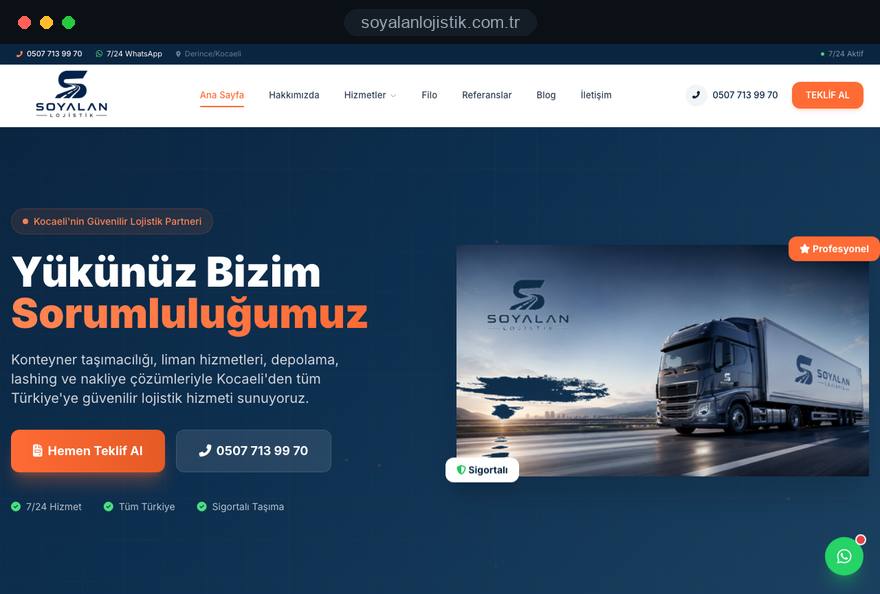
- Haulage, warehousing and staffing for the Gateway: vehicle and trailer types, shift and weekend cover, accreditations with expiry dates and a quote form asking for volume, dates and delivery point; the logistics company website page details the structure.
- Engine and machinery subcontractors: one page per process, a machine list with working envelopes, materials, inspection equipment and a confidential drawing upload; see the manufacturing company website page.
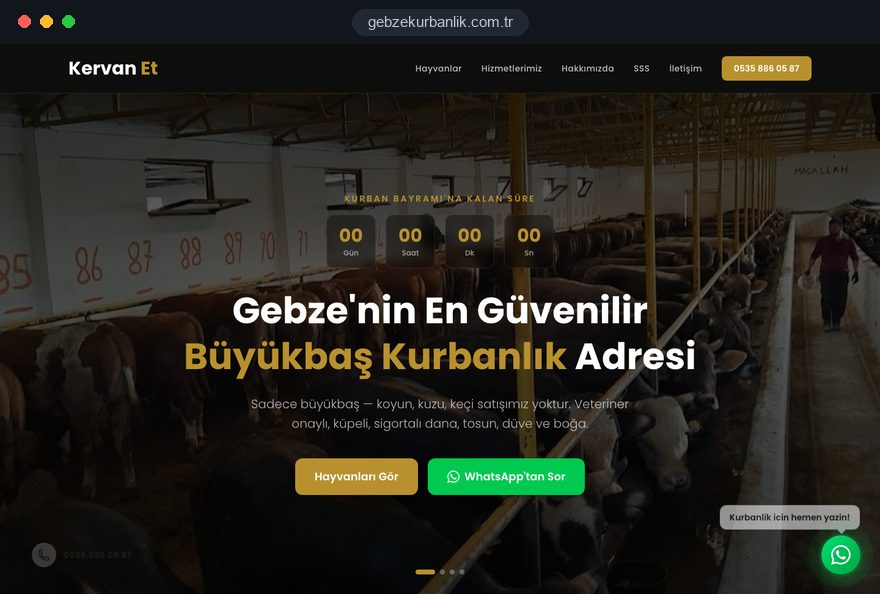
- Farms, packers and agricultural services: crop and harvest calendars, assurance schemes, trade buyer contacts and service windows timed around the beet campaign; the farm business website page shows a model.
- Building and home services for new estates: jobs tagged by area, a boundary map, genuine before and after photos and a survey request form.
Whatever the pattern, show proof that is yours: your own trucks, your own workshop, named staff and dated jobs. A procurement team vetting suppliers for an Eastfield or Gateway contract reads stock photography as a reason to look elsewhere.
10UK Rules for a Peterborough Company Website
A few legal elements must be in place before a Peterborough company site goes live, and while each is simple, audits regularly find one or two absent. This is orientation only, not legal advice; a solicitor should approve the final text.
- Trading disclosures: regulation 25 of the Names and Trading Disclosures Regulations 2015 obliges a company to display its company number, where in the UK it is registered and the address of its registered office on its websites.
- Data protection: quote forms, CV uploads for staffing agencies and analytics process personal data, so the UK GDPR, read with the Data Protection Act 2018, calls for a plain privacy notice.
- Cookies: ICO guidance on PECR makes clear that analytics and advertising cookies, which are not strictly necessary, may only be set once the visitor agrees.
- Consumer sales: for online sales to private buyers, the Consumer Contracts Regulations 2013 usually allow 14 days to cancel, and the checkout has to say so.
- Accessibility: sufficient contrast, full keyboard use and labelled form fields help every visitor and support your duties as a service provider.
We handle the technical side: a banner that holds every optional tag back until the visitor chooses, forms limited to the fields you really need and company details printed in each page footer.
11Moving to a New Site Without Losing Search Traffic
Rankings survive a relaunch when every old URL that earns visits or links already has a destination on the new site. Peterborough suppliers often collect links from trade directories, supplier portals and local news about contract wins, and these fail silently if nobody plans for them.
- Inventory: pull old addresses from Search Console, analytics, the sitemap and a crawl, marking those with traffic or inbound links.
- Mapping: give each one a target page in a shared sheet and write a reason beside any that will disappear.
- Private staging: lock the test site with a password rather than robots.txt, because Google cannot see a noindex on a page it is blocked from crawling.
- Permanent redirects: one 301 per address, straight to its target, with no chains and no mass redirect to the homepage.
- A month of checks: submit the sitemap, read the not found list every week and correct Yell and directory links.
Domain moves and site mergers are covered on the website redesign page. Renew the previous domain for several more years, because brochures, lorry livery and trailer signage keep sending people to it.
12Six Mistakes Common on Peterborough Business Sites
Weak sites here rarely fail because of colours; they lose enquiries through small, fixable details. Check your own site against these six:
- A cathedral photo as the opening image: it shows the city, not your firm. Open with your vehicles, your workshop or a recently finished job.
- "Peterborough and the wider area" as the only coverage line: someone in Whittlesey or Market Deeping cannot tell whether you come. Name the towns and villages you serve on one page.
- Accreditation badges with nothing behind them: Gateway buyers want scope, number and expiry. Write them out and keep them current.
- A twenty field quote form: a shift manager on a phone abandons it. Ask for five essentials and phone back for the rest.
- Seasonal notices left stale: a harvest or beet campaign update from two years ago signals neglect. Date seasonal content and archive it when the season ends.
- Analytics running on first load: scrolling on is not agreement under PECR. Give reject the same prominence as accept and wait for the choice.
Ask every agency that pitches which of these it spotted on your current site. The precision of the reply shows how much homework went into the proposal.
13What Moves the Budget Up or Down
Postcode plays no part in what web design Peterborough firms pay for; scope does. To make proposals comparable, send every studio the same list of drivers and ask them to price against it:
- Template count: a fleet overview, a machine list, a coverage page and a case study are four separate layouts.
- Readiness of content: signed off text and fresh photos go in quickly; copy still to be written or a photo shoot still to be booked adds work.
- Second language: Turkish or German pages bring drafting, proofreading and hreflang work.
- Integrations: CRM, booking, payments, stock data or a tracking portal for customers.
- Legacy volume: the more old pages, the larger the redirect map and the test list.
- Support after go live: a maintenance plan with updates, backups and monitoring, or none.
Preparation is the cheapest saving: an agreed service list, valid certificates and one decision maker who can approve pages. A customer portal or bespoke quoting tool fits better as a later phase, letting the core site launch when planned.
14Thirteen Weeks After Launch, Then Your Next Move
Over its first thirteen weeks a new site either starts producing enquiries or shows clearly where it falls short, so give each block of weeks one job:
- Weeks one to four: place a test enquiry through every route, from the call button to WhatsApp, using a phone outside the office; confirm conversions reach GA4 only for visitors who accepted analytics.
- Weeks five to eight: compare which wards, PE towns and capability phrases earn impressions, and sharpen the title and first paragraph of pages that are seen often but clicked rarely.
- Weeks nine to thirteen: turn the questions your office keeps answering by phone into page content, check accreditation dates and let the data decide whether a new area page or language is justified.
Ready made packages, with what each includes, are set out in the web design pricing section; for sites with several languages or custom systems we prepare a written proposal instead. All of our finished work so far is in Türkiye and is collected on the references page, and our way of working is described on the web design service page.
To open a web design Peterborough brief, share your ranked buyer groups and your ten search phrases through the contact form. Our reply comes with questions about your business rather than a template, and that first conversation carries no charge.