A website in Ordu rarely serves one kind of visitor. A procurement manager at a confectionery plant in Italy wants kernel sizes and moisture limits, a family in Izmir wants to see the lab report behind a jar of honey, and a group heading up to Çambaşı for a ski weekend needs to know whether the road is open. Good web design in Ordu means giving each of them a clear path on one domain without making the others wade through it.
We are Talha Aslan and team, and we wrote this guide for processors, exporters, beekeepers and hospitality businesses in Ordu that are planning a new site or a rebuild. The sections follow the order in which the decisions come up, and each one ends in something you can check, ask or put on your page list.
01What a Website Has to Prove in Ordu's Economy
In Ordu, a website's first job is to prove volume and reliability to a buyer who has never visited the province. Turkish Statistical Institute data quoted in a Ministry of Agriculture report put Ordu's 2023 hazelnut harvest at 199 thousand tonnes out of a national 650 thousand, ahead of Samsun at 113 and Giresun at 72. Honey follows the same pattern: 16,750 of Turkey's 97,253 tonnes in 2025 came from Ordu.
Hazelnuts lead the province's exports, but chemicals, furniture and mining sell abroad too, and cat litter made from local bentonite reaches close to 90 countries. In practice this means an Ordu website is read less like a brochure and more like a supplier file. Before any design work, we suggest writing down three things:
- Scale: Annual processing or production capacity, storage volume and number of lines, in units a foreign buyer uses.
- Evidence: Food safety certificates and lab reports you hold, with their issue and expiry dates.
- Delivery: Packaging formats, the port or carrier you ship through, and the Incoterms you usually quote.
These three answers shape the menu and the first screen far more than any color palette. Once they are settled, discussions about fonts and imagery become short and practical.
02Three Kinds of Searchers Looking for Ordu
Searches connected to Ordu come from three distinct intents, and each one needs its own landing page. Industrial buyers rarely type the province at all; they search for "natural hazelnut kernels 13 to 15 mm" or "hazelnut paste bulk supplier". The page that meets them should show product codes, sizing, packing and a sample request, not a welcome message.
Honey customers usually search by origin or brand: "Black Sea flower honey", "Turkish highland honey", or a producer's name they saw on a market stall. They want the lab report, the harvest area and the delivery time. Since many Ordu beekeepers move their hives to other provinces with the seasons, stating where and when each batch was harvested is a simple way to earn trust.
The third group is visitors, and the calendar drives their searches. Summer brings Boztepe views, the coastal road and the Perşembe highland; winter brings the Çambaşı plateau at 2,000 meters in Kabadüz and its ski center. People landing at the airport in Gülyalı, which opened in 2015 as the first in Turkey and Europe built on the sea, look up hotels, car hire and restaurants on their phones.
A useful exercise: for each customer group, write the three phrases that person would type, then note which page on your site should answer each one. Every phrase without an answer is an item for the new page list.
03Hiring a Team Based Outside the Province
Our work with Ordu businesses runs fully online, so the right partner is the one whose process is written down clearly, not the one closest to your door. We have no office or representative in Ordu and say so in the first call. Video meetings, a written scope and a shared progress board take the place of distance.
Ask every agency you speak with these questions and get the answers in writing:
- Sector grasp: Do they ask what kernel size, moisture and aflatoxin reports mean to your buyer, or only about logos and colors?
- Language work: Who writes the foreign language copy, who checks the technical terms, and does machine translation ever go live unedited?
- Calendar: Are your critical dates, such as harvest, honey extraction or the ski season, written into the launch plan?
- Contact person: Who will you speak to throughout, and can that person explain a technical decision in plain language?
- Live work: Which live sites in food production, manufacturing or hospitality can they show you?
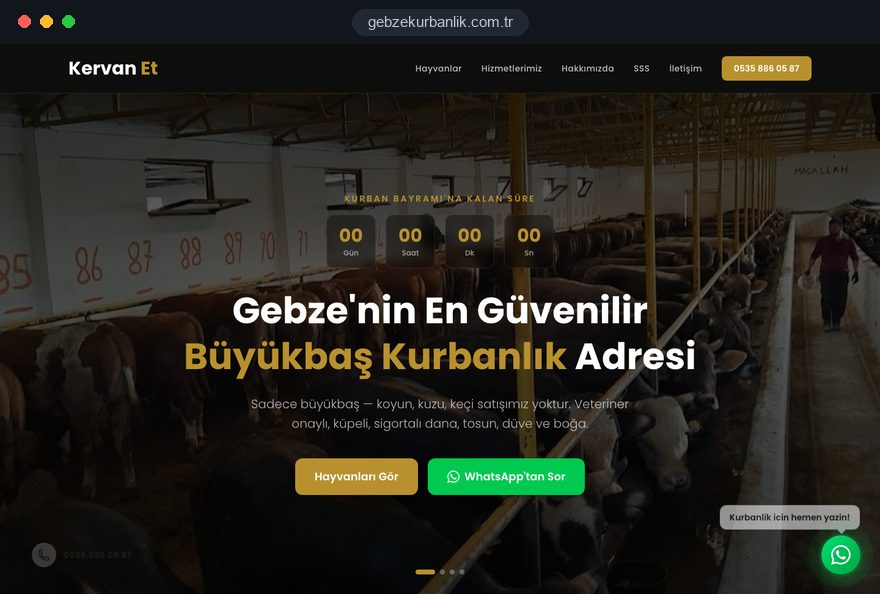
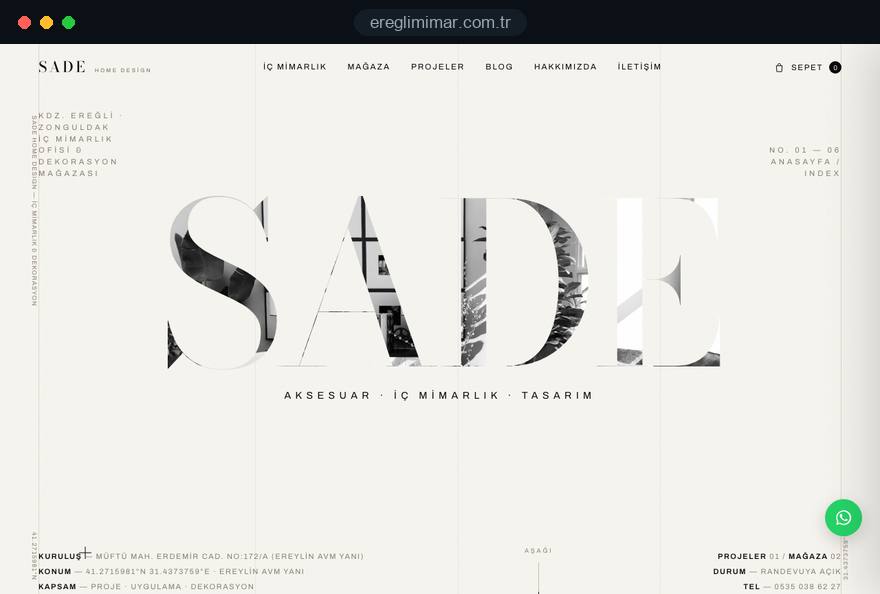
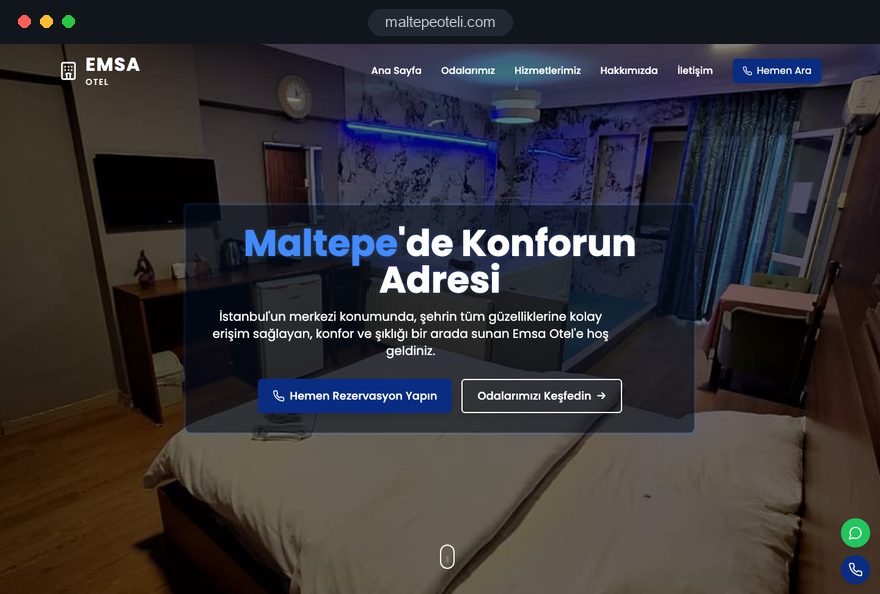
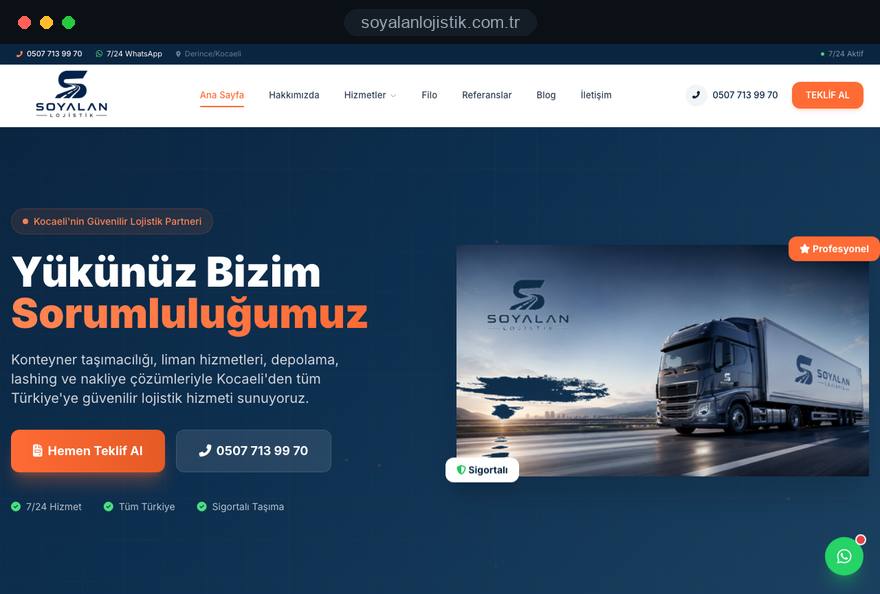
For that last question, ask for live addresses instead of screenshots and open them on your own phone. Our live projects are on the references page; none of them is in Ordu yet, and the closest examples come from food production, hotels and logistics.
04Who Owns the Domain, Code and Accounts
Your business should own the site and every account connected to it, and that rule belongs in the contract before work begins. In family run hazelnut and honey businesses, the domain sometimes sits in a relative's personal account and the mailbox behind a password only a former employee knew. When a generation or an agency changes, recovering access can take weeks.
On handover day, log in with your own credentials and confirm the following:
- Domain: Your registered company name appears as the registrant, and renewal notices go to a company mailbox.
- Hosting: You have administrator access to the server panel, and it is documented where backups live and how often they run.
- Code and database: They can be handed over in full on request, and the license holder of any paid plugin is recorded.
- Analytics and maps: Search Console, GA4 and your Google Business Profile sit under your company account, with the agency added as a user only.
Exporters should add one more item: company e-mail must run on your own domain. A buyer in Rotterdam or Hamburg tends to take a quote from a free webmail address less seriously, and it is also more likely to land in a spam folder.
05From First Video Call to Launch
An online project moves at the speed of its sequence and of a clear record of who approved what at each step. For a processor, beekeeper or hotel in Ordu, the process runs like this:
- Discovery call: On screen, we discuss your business, your buyers and your competitors' sites, and review your current site together.
- Written scope: Page list, languages, any online store and a target launch date arrive in writing; work starts when you approve.
- Material list: Lab reports, certificates, photos of the plant or apiary and the product list are gathered on a single checklist.
- Design approval: You review the design live in a browser and pin comments to the exact element; no code is written before approval.
- Build and test: Forms, checkout and language switching are tested on several phones and browsers.
- Launch and training: After launch, we walk through content updates with you in a recorded video session.
You follow every step in our CRM and upload new lab reports or harvest photos to the same place. If you prefer to meet in person, we can sit down at our office in Ataşehir when you are in Istanbul; the schedule never depends on it.
06Local Search Across Altınordu, Ünye and Fatsa
Local search in Ordu does not gather in one center: Altınordu, Ünye and Fatsa are each searched by name, so a district name belongs on your site only where you actually serve customers. Spinning up near identical pages for all 19 districts is a tactic search engines treat as low value, and it damages trust in the whole domain.
Work through local visibility in this order:
- Profile name: Google's guidelines require your real world business name, without added keywords such as "Ordu Hazelnut Honey Wholesale".
- Address or service area: Businesses that deliver or visit customers can hide their address and list real service areas such as Ünye, Fatsa or Perşembe.
- Consistency: Address, phone and opening hours must read the same on the site, the profile and directory listings.
- Real search tests: Try queries like "Ünye breakfast", "Fatsa guesthouse" or "honey shop Altınordu" in a private window and note who appears.
For a honey producer with a farm shop or a seafront restaurant, the map result can bring more visits than the website itself. Fresh photos, short and calm replies to reviews, and updating seasonal hours on time are the basics. We handle the broader search work under our SEO services.
07English, German or Russian: Matching Language to Buyer
Choose a second language by the market you sell to or want to sell to; opening every language at once strains both the budget and content upkeep. For an Ordu hazelnut processor, English is almost always the first step, since it is the working language of technical correspondence with most European industrial buyers.
German pays off when your buyers are confectioners or bakery suppliers in Germany, Austria or Switzerland, where many purchasers prefer product documentation in their own language. Russian can matter for Black Sea trade and for some hotel guests. For a product like bentonite litter that ships to close to 90 countries, starting with the languages of your three largest markets is a realistic plan.
The technical piece is hreflang, an annotation that tells Google which pages are language versions of each other; every version must list the others and itself. You can build and check those tags with our hreflang generator. We cover structure, URLs and translation workflow in more depth on the multilingual website page.
Decide early who signs off on translations. Building a short glossary with your export manager for terms like "blanched", "diced", "meal" and "paste" saves the same debate on every new product page.
08Fast and Secure Even on a Highland Road
An Ordu website has to load quickly on a phone with a weak signal; a guest on the Çambaşı road or a trader checking prices in an orchard is not sitting at a desk. Google's Core Web Vitals measure this with three values, judged on the experience of 75 percent of visits.
- LCP: How long the largest element, usually the hero image, takes to load; 2.5 seconds or less is good.
- INP: How quickly the page responds to a tap or click; aim for 200 milliseconds or less.
- CLS: How much content shifts while the page loads; 0.1 or less is good.
The most common speed problem on Ordu sites is wide panoramic photos of Boztepe or hazelnut orchards uploaded without compression. Converting images to WebP, serving sizes that match the screen and lazy loading anything below the first screen usually deliver the biggest gain.
The security baseline is straightforward: SSL on every page, current software and plugins, two step login for the admin panel, and regular backups stored away from the server. On a honey store that takes card payments, card data never touches your server; it is processed on the payment provider's secure page, which lowers both your risk and your compliance burden.
09Page Structures for Processors, Beekeepers, Bentonite and Lodging
Each of Ordu's four main business lines needs its own page layout; forcing one template on all of them pushes the most important information out of the buyer's sight. Six companies from Ünye and Altınordu appear on the Black Sea Hazelnut Exporters' Association 2025 top 20 list, which shows how many large processors operate here.
- Hazelnut processor: One page per product, covering natural, roasted, diced, meal and paste, with sizing, moisture, shelf life, packing and pallet data, and a sample request form beneath.
- Beekeeper or cooperative: Harvest area, report date, jar sizes and shipping for each honey type; for the farming side, the farm business website page outlines a fitting structure.
- Bentonite and chemicals exporter: Technical data sheet, granule size and scent options, private label production and container loading details, with a downloadable sheet next to each product.
- Hotel or highland lodge: Separate summer and winter pages, a gallery per room, directions from the airport and the city center, and a direct enquiry form.
Furniture makers should lead with dimensions, material options and how contract orders are handled. If you want to see how a neighboring province differs, the Giresun web design page is worth a look; buyers often overlap, but page priorities do not.
10KVKK, Cookies and Distance Selling Rules
Every business site in Ordu rests on the same legal base: if you collect personal data you need an information notice under Turkey's KVKK, Law No. 6698, and if you use analytics or advertising cookies you need a cookie notice. Article 10 of that law requires telling people who processes their data, for what purpose and on what legal basis, so contact and sample forms should link to that notice.
If buyers from the European Economic Area visit your site, there is a further step. Google requires consent mode for measurement and personalized advertising features for those users, and in the EU non essential tracking should not start before the visitor consents. For an exporter, the cookie banner is therefore not decoration; it is the condition for measurement that works.
Selling jars of honey or packs of hazelnuts through an e-commerce store brings Turkey's distance selling rules into play. The preliminary information form, the distance sales contract, the right of withdrawal and the return terms must all be readable before the order is placed. Exceptions to withdrawal for food and the labeling details change over time, so review the current rules with your accountant or legal advisor.
One more caution for honey copy: claiming that a food prevents or treats illness can conflict with food regulations. Describing the product by harvest area, floral source and lab results is safer legally and more convincing commercially.
11Rebuilding Without Losing Search Traffic
The real risk in a redesign is not the look but losing the search positions of pages whose addresses change. A hazelnut company's old product pages, links buyers bookmarked years ago and listings in trade directories carry quiet value that a careless launch throws away.
Before you rebuild, follow this order:
- Inventory: Export from Search Console every page that earned clicks in the last twelve months, plus every URL with external links.
- Mapping: Match each old address to its new page in a sheet; for those with no direct match, choose the closest topic.
- Redirects: Turn the sheet into permanent 301 redirects and test sample URLs one by one on launch day.
- Index control: Keep the staging site out of the index with noindex; Google cannot read noindex on a page blocked in robots.txt, so do not combine the two.
- Monitoring: Check Search Console coverage and error reports weekly for the first four weeks after launch.
On multilingual sites, map each language separately and update hreflang to the new URLs. Avoid launching just before the honey season or the ski season, so that any issue does not land in your busiest weeks.
12Six Mistakes Common on Ordu Business Sites
Most weak sites in Ordu share one root cause: they were built before anyone decided who the site was speaking to. The six mistakes below, each paired with a better alternative, double as a checklist you can run on your current site today:
- Export page without capacity: Instead of "premium quality hazelnuts", state annual processing capacity, product range and packing options in concrete units.
- Undated lab report: Instead of leaving an old report online indefinitely, publish each harvest's or extraction's report with its date.
- Foreign page, Turkish form: Instead of sending English readers to a Turkish form, translate the form, the auto reply and the thank you page too.
- Summer photos in winter: Instead of beach and sunshine on the homepage during the Çambaşı season, rotate the hero image by season and add current road information.
- District copy pages: Instead of cloning one text for nineteen districts you do not serve, describe your real service area on one strong page.
- Untracked WhatsApp button: Instead of leaving order and booking messages unmeasured, record every tap as a conversion in your analytics.
If three or more of these apply to your site, start the rebuild from the content plan rather than the design.
13Decisions That Widen or Narrow the Scope
Scope is set by your decisions, not by your city; a beekeeper in Ordu is assessed on the same criteria as a company in Istanbul. What shapes the quote is less the page count than the jobs the site must do.
- Number of languages: Each new language means term review, its own form flow and hreflang upkeep, not just translation.
- Online sales: Payments, shipping integration, stock tracking and legal pages make the job noticeably larger than a showcase site.
- Product range: A filtered catalog with a downloadable data sheet archive needs a different structure from a five product list.
- Who produces content: If copy, photos and video arrive ready from you, scope narrows; if you need a shot list and writing from us, it widens.
- Integrations: Connecting a CRM, accounting software or booking system is a separate line item.
A sensible way to protect the budget is to launch with the pages that most affect sales and leave the second language or the store for phase two. Ordu's harvest and tourism calendar makes this easy to plan: phase one goes live before buyers search most, and the rest is finished in quieter months.
You can see what each package includes on our web design services page.
14The First 90 Days and Your Next Step
The first 90 days after launch are for measuring what works and fixing what does not; launch day is the start, not the finish. For an Ordu business, we suggest planning the period like this:
- Days 1 to 30: Confirm in Search Console that pages are indexed, that forms and WhatsApp taps are tracked, and that your business profile matches the site.
- Days 31 to 60: Look at which queries bring impressions, and revisit the title and opening paragraph of product pages that draw no sample or order requests.
- Days 61 to 90: Update content for the coming harvest, honey or ski season, and turn early buyer questions into a new FAQ section.
Sorting enquiries by source during this period shows which language or product group deserves investment in phase two. We make no promises about rankings or enquiry numbers; our commitment is that every decision is measurable and visible to you.
The first step for your Ordu business is a short video call. You can review packages on our web design pricing section, then tell us about your product, your buyers and your season through the contact form. After the call, we send a written scope and quote.