Most people who open a website from Isparta have never stood in the place it describes. An importer in Mumbai compares apple suppliers from a desk, a fragrance buyer in Grasse asks for a rose oil sample, and a family in Antalya checks whether a room near the Davraz slopes is free next weekend. Web design for Isparta businesses comes down to answering that distant reader's questions in the order they arise.
We are Talha Aslan and team, and this guide walks through the decisions an Isparta fruit packer, rose or lavender brand, lakeside guesthouse or student focused business makes before and after launch. Each section ends with something you can check on your own site or ask any agency.
01The Four Jobs a Website Does in Isparta's Economy
A website in Isparta does a different job depending on which part of the provincial economy you belong to, so the first decision is naming that job. According to Turkey's Ministry of Agriculture and Forestry, Isparta grew 23.1 percent of the country's apples in 2024, and the provincial directorate put that year's harvest at 1,019,904 tonnes. In TÜİK's 2023 figures the province produced 1,170 thousand tonnes, more than two and a half times the output of neighboring Antalya.
Alongside that volume of fruit sit rose oil, lavender, manufacturing exports and tourism in every season. Each one asks something else of a site:
- Fruit and cold storage: a product showcase for importers and retail chains, listing varieties, size grades, packaging and shipping windows.
- Rose and lavender: origin, lab reports and a sample route for the cosmetics industry, plus the story and a way to buy for consumers.
- Industrial zone manufacturers: technical data, product codes and a dealer application for buyers of carpets, yarn, chipboard, glass or ceramics.
- Tourism and city life: season information for visitors to Davraz, Eğirdir and Yalvaç; programs, rooms and transport for students.
If your business covers two of these, say a cold store that also hosts guests in its orchard, split the two paths in the main menu from day one. For orchards and grower cooperatives we explain the full structure on our farm business website page.
02Who Searches for What in Isparta, Month by Month
Searches around Isparta follow the calendar, and that calendar decides which page your site should push forward and when. BAKA, the regional development agency, notes that the rose harvest draws visitors in May and June and the lavender season in July and August, while Davraz is in demand in winter. With two universities in town, enrollment periods also lift searches for courses, dorms and rentals.
Mapping the calendar to sample searches makes your page list concrete:
- Winter: queries such as "Davraz ski hotel" or "Davraz ski rental" from people who want slope distance and road conditions.
- May and June: "Isparta rose harvest tour" from visitors, and on the trade side "rose oil supplier Turkey" or "Damask rose otto bulk".
- July and August: "Kuyucak lavender fields" and "Lake Eğirdir guesthouse" from families planning a weekend and photographers.
- September and February: searches for dorms, tutoring centers and flats in the city center from students and parents.
- Harvest and storage months: buyer searches like "apple exporter Turkey" or "fresh apples bulk supplier".
Rewrite this list for your own business: in which month does your phone ring most, and what information is missing from the site before that month? A season page should be live well ahead of demand; because crawling and indexing take time, a page published on the first day of the season can miss its first weeks.
03Hiring a Team From Outside the Province
Our work with Isparta businesses runs entirely online, and we have no branch or representative in the province. That is why we suggest judging us, and any other agency, by how well the process is written down rather than by distance. A packing house in Eğirdir during harvest or a lakeside pension in midsummer cannot sit through long meetings, so the process has to fit that rhythm.
Ask every agency you talk to for written answers to these questions:
- Season dates: does the proposal name which pages will be live, with dates, before the harvest, the rose picking or the ski season?
- Short calls: can approvals move through brief video calls with written notes afterward instead of long meetings?
- Document intake: do lab reports, certificates and photos land in one shared place, or do they get lost in chat threads?
- Point of contact: is it clear who answers a technical question and how quickly?
- Evidence: can they show live sites in food production, shipping or hospitality?
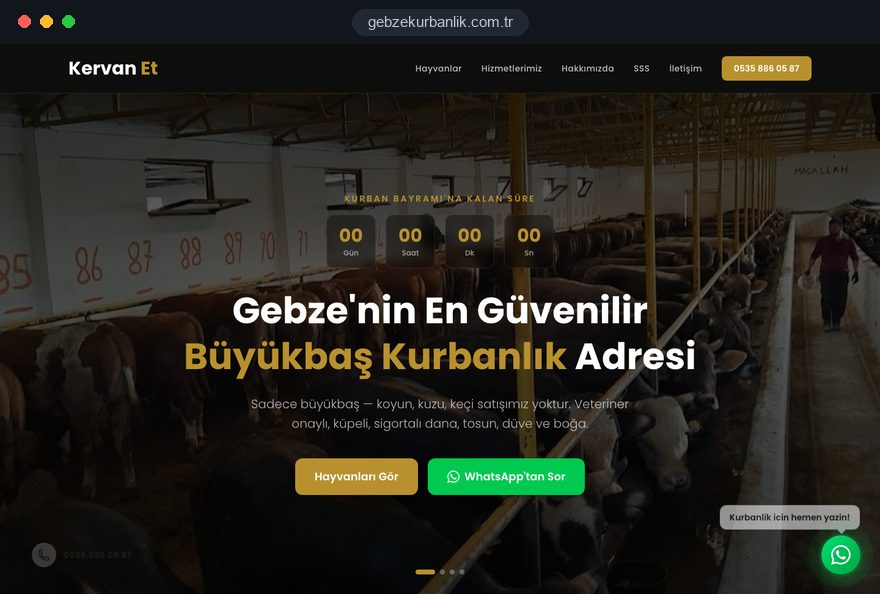
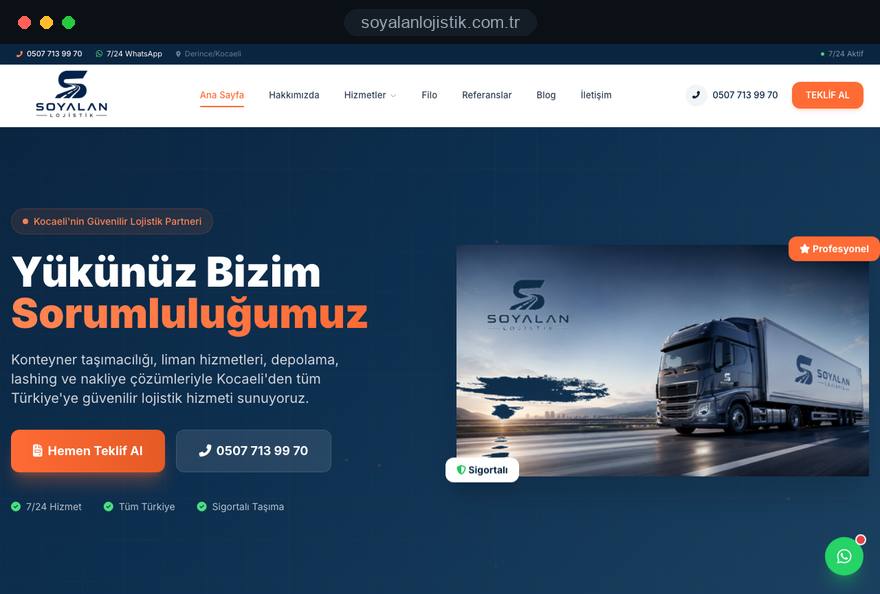
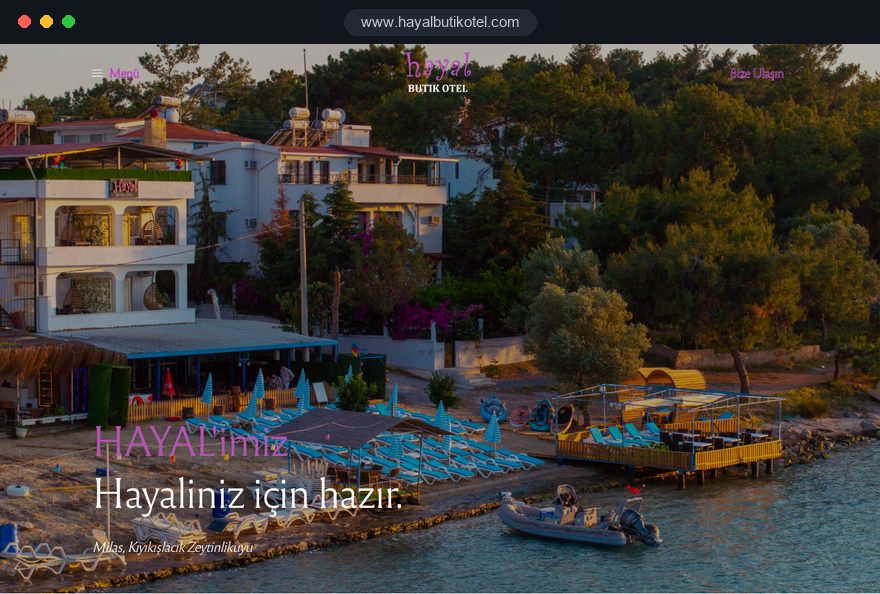
For that last point, ask for live addresses rather than screenshots and open them on your own phone. Our live work in food production, logistics and boutique hotels is on our references page; none of it is in Isparta, but it shows the building blocks a fruit exporter or a lakeside property needs.
04Who Should Own the Domain, Hosting, Code and Accounts
The website and every account tied to it should be registered to your business, and that rule belongs in the first contract. Family run cold stores and distilleries sometimes find their domain or analytics opened years ago under a relative's or a former employee's personal address, and the next generation cannot get in.
On handover day, go through this list together with your agency:
- Domain: the registrant should be your company's legal name, with renewal notices going to a company address, not a personal one.
- Hosting: you should have administrator access to the hosting panel and know in writing where backups are kept.
- Code and database: you should be able to receive a full copy on request, and the license holder of any paid component should be named.
- Measurement and maps: Search Console, GA4 and your Google Business Profile should sit under your account, with the agency added only as a user.
- Brand name: before naming a rose or lavender product line, run it through our trademark search tool.
That final point matters most for brands selling abroad. Planning the domain, the social handles and the trademark filing together lowers the risk of renaming a product after the labels and cartons have already been printed.
05Our Online Project Process, Step by Step
An online project moves quickly when the order of steps is fixed and everyone knows who approved what at the end of each one. With an Isparta business we work in this sequence:
- Discovery call: a short video call about your business, your buyers and your peak season.
- Written scope: page list, languages, forms and launch date, set against your season calendar, arrive in a written proposal.
- Material list: variety and size grade tables, lab reports and property photos are tracked as one checklist in our CRM.
- Design approval: you review the design in the browser and pin comments to the exact spot; no code is written before you approve.
- Build and testing: forms, the WhatsApp button and every page are tested on several phones.
- Launch and handover training: we show you how to update stock notes, season announcements and photos yourself.
You follow every step live in the CRM, so there is no need to chase updates. If you are ever in Istanbul, we are happy to meet at our office in Ataşehir by appointment, though the project never depends on it.
Step three usually decides the timeline. Shooting photos during harvest or peak season is hard, so planning orchard, packing line and room photography a season ahead helps; set a firm shoot date rather than launching with placeholder images.
06Local Search From Eğirdir to Yalvaç
Local visibility starts with your Google Business Profile matching your website exactly. Google's guidelines require the profile name to match your real world business name without added keywords, so a name like "Eğirdir Lake View Cheap Pension" puts the listing at risk. Service area businesses that travel to customers may hide their address and define a service area instead.
The district map of Isparta shapes which pages make sense:
- City center: most local searches start here; courses, cafés and student services need accurate opening hours and directions to campus.
- Eğirdir and Gelendost: fruit, storage and lakeside services dominate, and cold stores benefit from truck access details and clear directions.
- Yalvaç: visitors heading to Pisidian Antioch and the Church of St Paul look for transport and nearby places to stay.
- Keçiborlu, Şarkikaraağaç and Senirkent: name them on the page only if you actually serve them, and never create a page just to hold a district name.
Near identical pages where only the district name changes are what Google calls doorway pages, and they earn no trust. A separate district page only makes sense when it carries information specific to that place. For guesthouses and hotels we cover rooms, seasons and booking flows on our hotel website page.
07When a Second Language Pays Off for Export Buyers
For many Isparta producers a second language is part of the sale, not decoration, but each language should match a real group of buyers. According to press reports, Isparta rose oil goes mainly to the cosmetics industry in France, Switzerland, Germany and the United States, and also to Saudi Arabia, Dubai and Qatar. Since most of that correspondence happens in English, English is usually the first step.
We weigh the language decision against these criteria:
- Actual enquiries: which languages did your e-mails arrive in over the last year; a French or Arabic version earns its place once enquiries in that language are regular.
- Trade vocabulary: size grades, color classes, rose otto and rose water should use the buyer's industry terms, not word for word translation.
- Units and documents: weights, pallet sizes and lab values should appear in the format the buyer expects, with translated certificates attached.
- The Turkish version: domestic wholesalers, supermarket chains and consumers still need complete Turkish pages.
Each language belongs on its own URL, with hreflang tags pointing to itself and to every other version; these reciprocal tags tell Google which page serves which language. Rather than writing them by hand, generate and check them with our hreflang generator.
08Speed, Hosting and Security on a Phone
A fast site signals an organized supplier to a buyer abroad, and for someone searching for a room on the road up to Davraz it is the difference between booking and giving up. We judge speed by Google's Core Web Vitals, not by impressions.
Google treats a page as good when 75 percent of visits meet these values: LCP, the time until the largest content element appears, at 2.5 seconds or less; INP, how fast the page responds to a tap or click, at 200 milliseconds or less; CLS, how much content shifts while loading, at 0.1 or less. On sites built around landscape and orchard photography, uncompressed images are the usual culprit.
- Images: lake, slope and orchard photos converted to modern formats and served at the size of the screen.
- Video: harvest or distillation footage loaded only when someone presses play, never embedded as a heavy file.
- SSL and updates: every page served over a secure connection, with one named person responsible for software updates.
- Backups: stored away from the server that hosts the site, with at least one test restore.
- Company e-mail: SPF, DKIM and DMARC records in place, which lowers the chance that a quote to an importer lands in spam.
Before each season, open the site on your own phone over mobile data and submit the form once.
09Page Structures for Isparta's Own Sectors
Your sector decides which pages a site should put first. The examples below are not client cases; they are general structures we suggest for business types common in Isparta.
- Cold store and packer: one page per apple variety with size and color grade tables, carton and pallet options, storage season and real photos of the packing line; a sample and quote form instead of public prices.
- Rose oil distillery: the journey from picking to distillation, lab reports, minimum order details and a separate wholesale contact route for fragrance houses.
- Lavender farm: a July page for field visits around Kuyucak, a product showcase and clear visiting rules.
- Industrial manufacturer: product codes, technical sheets and a downloadable catalog for carpets, yarn, chipboard or processed wood; see our catalog website solution for that setup.
- Tutoring center or dorm: directions to the Süleyman Demirel University and Isparta University of Applied Sciences campuses, current availability and a WhatsApp link near the top.
What these structures share is that they answer the distant reader's first question on the first screen. An importer wants to know which variety, in which size, ready when; a lavender visitor wants to know when the fields are open and how to get there. If your first screen does not answer your own customer's first question, that is the place to start.
10Legal Basics: KVKK, Cookies and Online Sales
Legal texts should describe what your site actually does and be ready before launch. Copied policies that still carry another company's name lose trust quickly, especially when the supplier review team of a European cosmetics firm reads your site.
- Information notice: Article 10 of Turkey's data protection law KVKK (Law No. 6698) requires a notice wherever you collect personal data, including sample and quote forms, explaining who processes it, why and on what legal basis.
- Cookie consent: the banner must reflect how analytics and advertising cookies really work; for visitors in the EU, consent is needed before any non essential tracking.
- Selling to EU consumers: if you sell rose water or lavender goods directly to buyers in the EU, the GDPR and EU consumer rules, including a 14 day withdrawal period for most online purchases, can apply as well.
- Product claims: ingredient and usage information on cosmetic and food product pages must not contradict the legally required details on the label; check those rules with your regulatory adviser.
The legal content of these texts is your responsibility or your adviser's; we make sure they sit in the right place, stay readable and connect to the forms they cover.
For online sales we plan payment, shipping and returns separately as part of our e-commerce solution, including how fragile glass bottles and liquids are packed, which countries you ship to and how returned products are handled.
11Redesigning Without Losing Rankings
The biggest risk in a redesign is changing addresses Google already knows without a plan. An old page that has shown up for "Isparta rose oil" for years can lose that visibility overnight if it is deleted without a redirect, so an inventory of addresses comes before any visual decision.
- Inventory: list every page that gets clicks in Search Console, every page with external links and every old catalog file.
- Mapping: match each old address to its closest equivalent on the new site; sending everything to the home page throws information away.
- Permanent redirects: set the mapping up as 301 redirects, which tell Google the page has moved for good.
- Quiet launch window: go live outside the harvest rush and the ski season, when demand is calmer.
- Monitoring: watch Search Console's error reports in the first weeks and fix any address that slipped through.
Blocking a staging site in robots.txt is not enough on its own: Google cannot read a noindex tag on a page it is not allowed to crawl. To keep a page out of the index it must be crawlable and carry noindex; password protecting the staging site is the safer route. If you want visibility tracked after launch, see what our SEO service covers.
12Common Mistakes on Isparta Business Sites
Most of these mistakes come from forgetting the reader who is far away rather than from design. Each has a better alternative:
- One page for all apples: instead of one gallery for every variety, give each variety its own page with size grades, color class and shipping window.
- A rose story without proof: instead of telling how the oil rose came from Kazanlak in 1888 while hiding the lab report, put the report and the sample request right next to the story.
- Stale season notices: instead of leaving last winter's slope update on the home page, use a season block that changes by date and refresh it when the season ends.
- A Turkish only quote form: instead of showing foreign buyers Turkish field labels, use a short English form asking for company, country, product and quantity.
- A free webmail address: instead of writing to wholesale buyers from a free mailbox, use an address on your own domain with authentication records set up.
- Borrowed scenery: instead of stock shots of someone else's lavender field or lake, publish real photos of your own fields, warehouse and rooms.
If you recognize several of these on your current site, it is worth checking which ones a content update can fix before deciding on a full redesign.
13What Drives the Budget Up or Down
Scope, not the city, sets the cost of a web design project for Isparta; a cold store there and a company in Istanbul choose from the same packages. Knowing early what enlarges a proposal helps you decide what to do now and what to leave for later.
- Number of varieties and products: a separate page for each apple variety, rose product or room type adds content and design work.
- Language versions: adding French or Arabic next to English means adapted copy and technical setup.
- Online sales: payment, shipping and returns need their own flow beyond a showcase site.
- Integrations: connecting a booking engine, a CRM or a stock system widens the scope.
- Season pages: separate rose, lavender and ski pages bring update work every season.
The sensible way to trim scope is to launch only the pages your main buyer group needs, then add the second language and online sales once real demand appears. That order keeps effort away from pages nobody visits.
14The First 90 Days and Your Next Step
Launch day is the start of measurement, not the end of the project, and the first 90 days show where effort should go. If a harvest, rose or ski season falls within that window, reading the early data against real seasonal demand is especially useful.
- Month one: confirm Search Console and GA4, track form, call and WhatsApp enquiries as conversions, and fix errors.
- Month two: review the most visited variety, product or room pages, and strengthen the copy and photos of pages that bring no enquiries.
- Month three: prepare the page for the coming season and sort foreign enquiries by country so the second language decision rests on data.
To decide, first answer three questions: who should your site speak to first, which season must it be ready for and by what date, and which documents and photos do you already have? You can see our fixed price packages under web design pricing, and reach us from Isparta for a short video call through our contact page.
Bring your current site address, the three questions customers ask most and your peak season dates, and we can talk through a concrete plan. Afterward we send a written scope and proposal that fits your market and season, including which page goes live on which date.