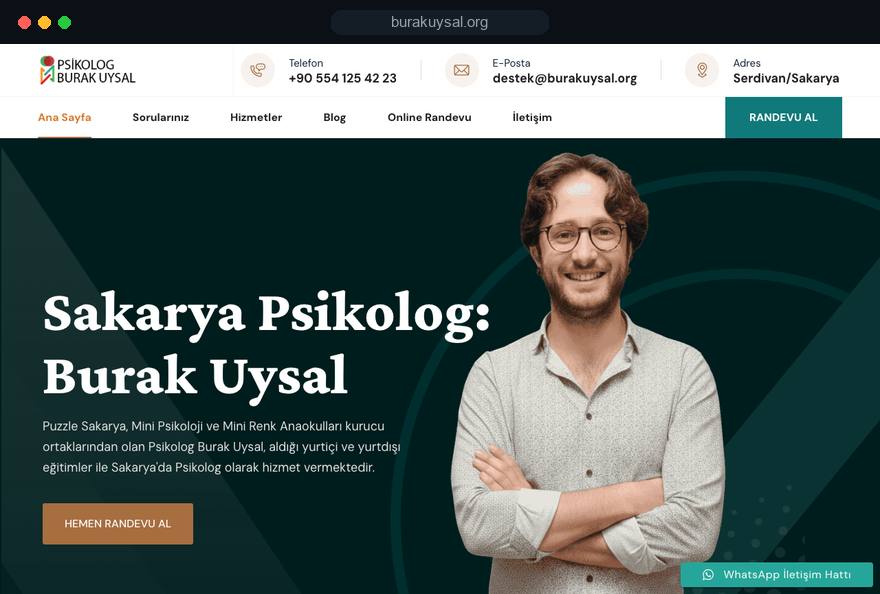
A psychologist website is often read at a vulnerable moment: late at night, on a phone, by someone who has not told anyone else they are looking. That reader is not comparing features. They want to know whether this person will understand them, whether the first step is safe and whether their privacy will hold.
This guide covers what we plan with psychologists, therapists and counseling practices before a single page is designed: structure, profiles, professional rules, privacy, booking, tone, content, search and measurement. It is about the website, not clinical practice; clinical wording and titles always remain the practitioner's decision.
01How clients actually choose a therapist online
Clients usually shortlist two or three therapists and then decide on fit, judged from small signals. They read how you describe their difficulty, study your photo, check whether you work online or in person and look for a clear answer about what happens after they get in touch.
Three needs drive the decision, plus one practical one, and each maps to something you can build:
- Recognition: visitors need to see their situation described in plain words, which is the job of individual area of work pages rather than a list of labels.
- Trust: they need to know who they would talk to, what training that person has and how they work.
- Safety: they need a first step that feels small, private and reversible, such as a short request form or a brief introductory call.
- Logistics: location, session format, languages and availability should be visible without hunting through several pages.
A useful exercise before any design work: write down the five questions new clients asked most often in their first message over the last year. If your current site does not answer them within two taps of the home page, that list is the first brief for your new psychologist website.
02Solo practice or group practice: structural decisions
The most important structural choice is whether the brand is the person or the practice, because it changes navigation, naming and how requests are routed. A solo practitioner is usually searched for by name, so the domain, page titles and Google Business Profile carry that name. A group practice builds a practice brand and introduces practitioners as a team.
Questions we settle in the first planning call:
- Domain and name: if the practice may grow beyond one person, a neutral practice name avoids a rebrand later.
- Navigation: a solo site can lead with the practitioner; a center should lead with areas of work and let clients filter practitioners by focus, language and format.
- Routing: in a group practice, does every request go to an intake coordinator or straight to the chosen therapist? The form and confirmation message depend on this.
- Cross links: each area of work page lists the practitioners who offer it, and each profile links back to those areas.
Practitioners join and leave, and a profile removed without a redirect leaves broken links in search results and directories. We build profiles as structured entries, so a new associate can be added in an afternoon and a departing colleague's page can point visitors to the team overview.
03Area of work pages that inform without diagnosing
Each area of work deserves its own page, because people search for their difficulty, not your modality. Pages on anxiety, relationship difficulties and work with adolescents each answer a different search and a different worry.
A strong area of work page usually follows this order:
- A plain description of the experience in everyday language, without clinical labels in the opening lines.
- Signs that talking to someone may help, framed as possibilities rather than a checklist to score against.
- How you work with this difficulty: approach, typical session rhythm and what a first session covers.
- Who the service may not suit, and when another kind of support, such as a medical assessment, is more appropriate.
- Three to five questions people genuinely ask, followed by the same calm request option used across the site.
Two boundaries matter. The page explains and invites; it never offers a diagnosis, a self test that produces a verdict or a promise about outcomes. And every claim about an approach should be one you would comfortably defend to your professional body.
"Many people find it helpful to understand what keeps anxiety going" is informative. "We will free you from anxiety in eight sessions" is a promise you cannot keep and should not publish.
04Practitioner profiles built on titles you hold
A profile should state exactly the titles a practitioner holds, worded identically everywhere, because titles are where trust and legal risk meet. In the UK, the HCPC protects titles such as clinical psychologist, health psychologist, forensic psychologist and practitioner psychologist; using one without the matching registration is a serious matter.
Counselors and psychotherapists are not regulated by the HCPC, so their profiles should name the professional body they belong to and the membership level they actually hold. A complete profile includes:
- Titles and registration: protected titles only where registered, the registration number where the regulator publishes one, and memberships under their correct names.
- Training: degrees and clinical training with institution and country, which matters to clients comparing practitioners trained abroad.
- Approach: two or three paragraphs on how sessions feel in practice, not every method ever studied.
- Languages and formats: session languages, online or in person, and age groups seen.
- A real photo: a natural, recent portrait in good light, never a stock image.
We take titles from documents you provide, not from an old site or directory listing. The same wording then appears in the profile, page title, structured data and Google Business Profile; "psychologist" on one page and "clinical psychologist" on another is exactly what a careful client or regulator notices.
05Advertising rules, testimonials and professional codes
How therapists may present themselves differs by country and professional body, so the site must be planned around the codes that apply to you, not around marketing habits from other industries. HCPC standards expect registrants to be honest about their qualifications and to keep promotional activity accurate and not misleading. Bodies for counselors and psychotherapists publish their own codes.
A client testimonial can reveal that a real person is in therapy, can read as a promise of results and may have been given out of a sense of obligation.
For clinical psychologists in Turkey, the regulation published in the Official Gazette on 12 November 2025 bans promotional use of patient thanks or satisfaction statements, and asks health websites to show a last updated date and contact details for the person responsible for the content. Practitioners there who see English speaking clients online should keep both their Turkish obligations and the rules where clients live in mind.
A practical way to handle this:
- Replace testimonials with explanation: describe what the first session covers, how goals are agreed and how progress is reviewed.
- Show professional context instead of praise: registration, memberships, supervision and continuing training.
- Keep a review log: note when each page was last checked against your code, and by whom.
06Privacy by design for session requests
A session request becomes health information the moment it mentions why someone is writing, so the form should collect only what you need to reply. Under UK GDPR and the EU GDPR, data concerning mental health is special category data under Article 9 and needs extra protection. In Turkey, KVKK Article 6 treats health data the same way, and Article 10 requires an information notice.
A request form that respects this asks for:
- A name, or the name the person would like you to use.
- One contact channel, phone or e-mail, with a note on whether a voicemail or text is acceptable.
- An online or in person preference and a convenient time window.
- An optional field of a sentence or two, labeled "anything you would like us to know before we reply", never "describe your problem in detail".
Behind the form, the decisions are technical. Submissions travel over HTTPS, land somewhere with restricted access and are never copied into a marketing tool, a shared spreadsheet or analytics.
Your privacy notice sits beside the form, not three clicks away, and states who receives the request, how long it is kept and how to ask for deletion. Ask every form, booking or e-mail provider for its data processing agreement and where it stores data. Any consent checkbox should be specific, separate and never preselected.
07Explaining online and in person sessions clearly
Session format is one of the first things clients check, so it needs its own page rather than a sentence in the footer. A client weighing you against another therapist wants to know where sessions happen, how long they last, what the first one is like and what happens if they cancel.
For in person work, cover the area, building accessibility, transport, waiting arrangements and whether the entrance is discreet. Real photos of the consulting room help more than any description.
For online work, explain the platform and why you use it, whether anything needs installing and what to do if the connection drops. If you see clients abroad, name the time zone with every session time, list your languages and state where you are registered.
Whether your registration and insurance cover a client in another country is a question for your regulator and insurer; the site reflects their answer. A practice working across languages benefits from a multilingual website structure planned from the start, each version written for its readers.
Every page should also carry a short, visible note that the practice is not an emergency service, pointing to the local emergency number.
08A booking flow that removes friction
The first contact should take less than a minute and leave the client feeling that nothing irreversible has happened. People abandon requests halfway when a form asks for more courage than they have that evening.
A flow that works for most practices:
- One consistent call to action on every page, worded gently, such as "Request a first conversation".
- A short form or a choice of channel: form, click to call during stated hours, or a messaging app you can answer reliably.
- A confirmation page stating when you will reply, by which channel and what happens next.
- Your reply within that time, offering two or three slots rather than an open question.
- A reminder before the first session with the address or online link, the length and the cancellation terms.
Whether clients pick their own slot depends on how you work. Self booking suits practices with predictable availability; many therapists prefer a brief call first to check fit, which a calendar cannot do.
If you use a booking tool, make sure clinical details can be kept out of reminders; a text reading "your anxiety session tomorrow" on a shared phone is a privacy breach. Cancellation terms belong on the session page in plain words, so nobody discovers them in a reminder.
09Calm design and accessibility for anxious visitors
Design on a therapy site should lower tension, not compete for attention, and accessibility is part of that calm. Pop ups, countdown banners, autoplay video and chat widgets that open by themselves all signal pressure to someone who is already stretched.
Concrete design decisions that help:
- Color and contrast: a soft palette is fine, but body text needs enough contrast for a dim phone screen; test pairs with a color contrast checker.
- Typography: body text around 18 pixels on mobile, generous line spacing and short paragraphs, because anxious reading is skim reading.
- Layout: one clear action per screen, a request button in a consistent place and no carousels hiding key information.
- Imagery: real photos of the room, building and practitioner, not stock images of people in distress.
- Keyboard and screen readers: visible focus states, labeled form fields and headings in logical order.
Speed is part of calm too, which is why we check Core Web Vitals before launch. LCP, which measures how quickly the main content appears, should be 2.5 seconds or less; INP, which measures response to a tap, 200 milliseconds or less; and CLS, which measures unexpected layout movement, 0.1 or less. A mobile friendly test on your current site often reveals the obvious problems.
10A content plan that answers real questions
Articles earn their place when they answer questions people ask before they are ready to book, and when a qualified person clearly wrote them. Search engines examine mental health content closely for expertise and accuracy, so authorship, review dates and sources matter as much as keywords.
Good topics come from your own practice, not from keyword tools alone. Article angles that inform without diagnosing:
- What a first session with a therapist usually involves, and what you do not have to share in it.
- How couples therapy works when only one partner is ready to come.
- How to suggest seeing a counselor to a teenager without it feeling like a punishment.
- What to ask on an introductory call to judge whether the fit is right.
- The difference between a psychologist, psychotherapist, counselor and psychiatrist in your country.
Each article shows the author's name and title, the last reviewed date and its sources, and ends by pointing to the relevant area of work page rather than a sales message.
Avoid symptom checklists that tell readers what they have, and anything that reads as advice for someone in crisis; that reader needs the emergency note and a person. Our SEO service plans topics so each one supports a specific page instead of competing with it.
11Local search, Google Business Profile and directories
For in person practices, the Google Business Profile often brings more first contacts than the website, so the two must match exactly. Google's guidelines require the business name to match the real world name without added keywords; stuffing "Anxiety Therapist" and a city into the name field breaks the rules and risks suspension.
Google lets service area businesses hide their address, but a practice receiving clients at a fixed location usually shows it; think carefully before publishing a home address. Steps that keep local search consistent:
- Use the same practice name, address and phone number on the website, the profile and every directory.
- Choose the primary category matching your registered profession, and add secondary categories only where accurate.
- Link the profile to the session page or a relevant area of work page, not only the home page.
- Add real photos of the entrance and room so first visits feel familiar.
- Check professional directories and your professional body's register so titles and contact details agree.
Reviews need the same caution as testimonials. You cannot stop clients from posting them, but a reply that confirms someone attended sessions is a confidentiality breach; a short, neutral thank you without specifics is the safe pattern. Structured data on the site should mirror the profile and use the practitioner pages' titles.
12Measuring inquiries without exposing clients
Measure that people reached out, never what they wrote or which difficulty brought them. The useful numbers for a therapy practice are few: form submissions, taps on the phone number, messaging clicks and the pages that led there.
What to track and what to leave alone:
- Track: completed requests, call and messaging clicks, and the landing page of each visit that ended in a request.
- Do not track: form contents, remarketing on area of work pages, or session recordings and heatmaps on the request form.
- Configure consent: in the EU and the UK, cookie consent comes before non essential tracking; for EEA users, Google requires consent mode for measurement and personalized advertising features.
- Check URLs: confirmation pages and query strings must never carry names or reasons for contact into analytics.
If you advertise, note that Google's personalized advertising policy lists health as a sensitive interest category and stops advertisers in it from using their own audience lists, which rules out the usual remarketing.
Search campaigns on carefully chosen terms remain possible, and a single purpose landing page for a group program or workshop keeps that traffic separate from the main site. Our Google Ads management works within these policies, and we review the conversion setup with you.
13Common mistakes on therapist websites
Most problems we see on a therapist website come from treating it like a generic business site. Each has a straightforward alternative:
- One services page listing twenty issues: build fewer, deeper pages for the areas you work with most, and mention the rest briefly on an overview.
- Titles copied from an old directory listing: rebuild every profile from current registration documents and keep the wording identical everywhere.
- A contact form asking for a detailed history: ask only what you need to reply, and gather clinical information later through your own secure intake.
- Advertising pixels on every page: limit tags to measuring requests, keep pixels off area of work pages and respect consent choices.
- A booking tool chosen for features alone: pick one with a data processing agreement, discreet reminder wording and storage you can explain in your privacy notice.
- No crisis note anywhere: add a short, visible line on every page saying the practice is not an emergency service and where to turn instead.
None of these fixes needs a full redesign alone, but together they decide whether a careful visitor feels safe enough to write.
14Choosing a web partner and your next step
The right partner for a psychologist website treats trust and privacy as the brief and your professional code as a fixed requirement, not an obstacle.
Questions worth asking any agency before you commit:
- Where will form submissions be stored, who can read them and which providers process them?
- How will my titles and registration details be kept consistent across the site, structured data and Google Business Profile?
- Which tracking will you install, and what will you deliberately leave out?
- Who writes the content, and how do I approve every clinical sentence before it goes live?
- Can I add a practitioner, article or session type myself after launch?
Our web design service covers structure, design, development and the technical foundation for therapist and counseling practice sites, and related work is on our references page. Clinical content and titles always go through your approval.
For a sense of scope, the web design pricing section lists the packages. For a practice with several practitioners, a booking calendar or more than one language, send us a short note about your practice and we will reply with a page structure and a written quote.