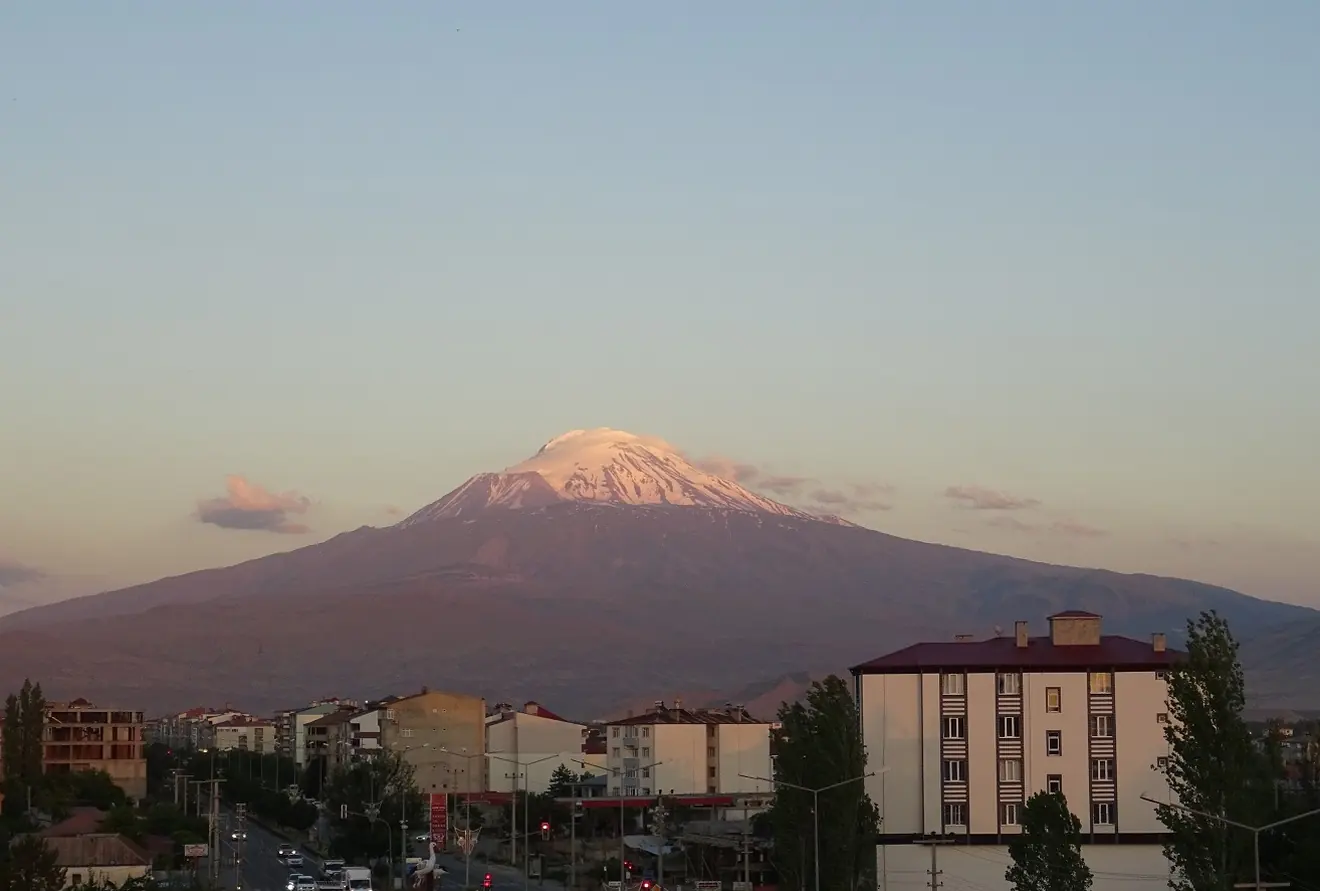
Igdir is the only Turkish province that borders three countries. Its plain, sheltered on the north side of Mount Ararat, grows a registered apricot, and the salt caves of Tuzluca draw visitors all year. Each of those strengths brings a different reader to a local business website: a produce buyer in Bursa, a trading company in Nakhchivan, a family planning a road trip from Erzurum.
This guide from Talha Aslan and team walks through the decisions an Igdir grower, haulier, exporter or host should make before a website project starts, in the order they come up. Each section gives you something to act on: a question for an agency, a check to run yourself or a page structure.
01The Four Jobs a Website Does in Igdir
A website in Igdir has to make clear, on its first screen, which of the province's four strengths your business stands on: border trade, the protected apricot, farming on the plain or visits to Tuzluca. A site that blends all four answers everyone a little and nobody well.
The figures explain why this matters. Serhat Development Agency's investment office, citing TÜİK data for 2024, reports that half of the exports of the region made up of Ağrı, Ardahan, Igdir and Kars leave from Igdir. Iğdır Kayısısı was registered as a designation of origin on 17 September 2018 under number 385, and the provincial agriculture directorate says apricot orchards cover 74 percent of the province's fruit area. Long term weather data puts Igdir's July average at 26.0 °C, against 21.1 °C in Ağrı and 17.6 °C in Kars.
Before any design work, we suggest answering three questions in writing:
- Main revenue door: Which brings in most of the turnover: wholesale apricots, cross border haulage, export orders or room nights?
- The distant decision maker: Where does the person who checks you online sit, and in which language do they read?
- Proof on screen: Which evidence convinces that person: a registration document, your fleet, customs experience or real room photos?
The answers set the menu order. An apricot business leads with produce and harvest, a Dilucu haulier with routes and quotes, a guesthouse near the caves with directions and rooms.
02Who Searches for Igdir, for What and When
Most searches about Igdir come from outside the province, and each group types a different pattern, so your site needs a separate page for each. Queries are short and usually typed in lowercase, which is a good reason to keep page titles plain as well.
- Fruit buyers: A grocery chain typing "igdir apricot wholesale" or "dried apricots igdir" wants the harvest window, carton weights and dispatch days.
- Freight customers: A company searching "igdir nakhchivan freight" wants vehicle types, the crossing point and how fast a quote arrives.
- Travelers: Someone typing "tuzluca salt cave" or "igdir hotel" wants directions, visiting arrangements and a place to stay in one view.
- Produce wholesalers: Buyers of watermelon, melon and tomatoes from the Aras basin ask when the season opens and what is available.
Seasons shift intent. Apricot buyers plan orders weeks before the harvest; summer brings plain produce and visitor searches; border trade runs all year but peaks in questions about paperwork. Turning that calendar into a publishing plan means the right page is live when demand rises.
03Working With a Team Outside the Province
Our work with businesses in Igdir runs fully online, and on a remote project trust comes from a written scope and a clear record, not from distance. We have no branch or representative in Igdir, and we say so from the first call.
Whichever agency you speak to, ask these questions and ask for the answers in writing:
- Regional understanding: Can the team describe what a protected product, a border haulier or a seasonal guesthouse needs on its pages?
- Language capacity: If you need an Azerbaijani or Russian version, who translates it and who signs off on the text?
- Tracking: Is there a dashboard where you can see the current stage without waiting for a message?
- Live examples: Which logistics, producer or hotel sites by this team are online right now?
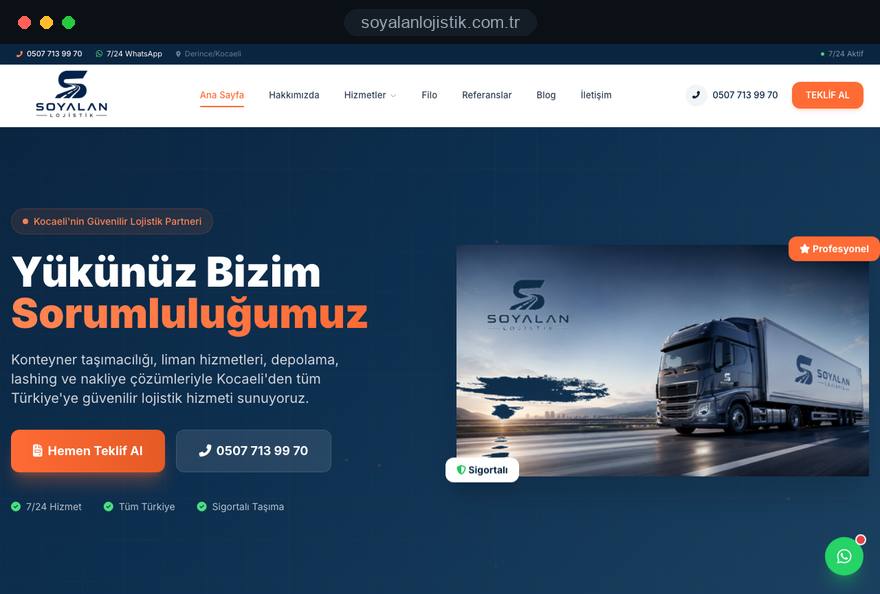
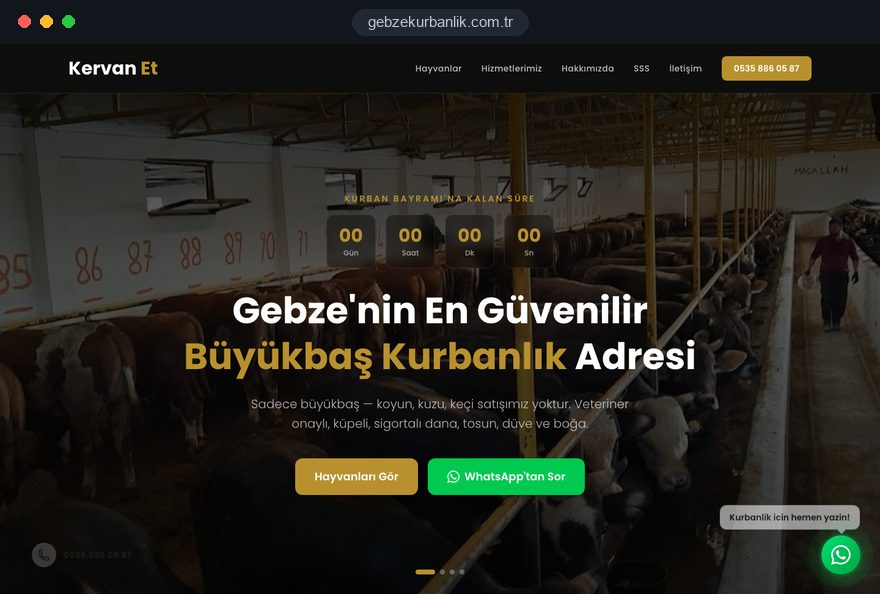
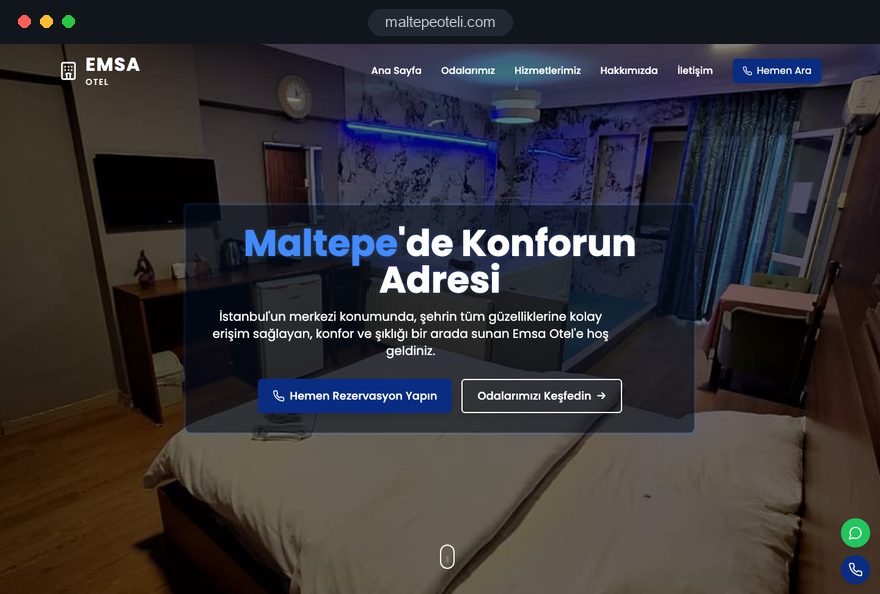
For the last question, do not settle for screenshots. Open the live site on your own phone over mobile data and submit the form. You can test the sites we built for a logistics firm in Kocaeli, a livestock producer in Gebze and a city hotel in Istanbul the same way on our references page.
The real risk in remote work is decisions lost in phone calls. Asking for a short written summary after each meeting makes the distance between Igdir and Istanbul irrelevant in practice.
04Who Owns the Domain, Server, Code and Accounts
Every asset tied to the website should belong to your company, and the contract should say so before work begins. In family businesses, accounts often end up in a nephew's or a former employee's personal inbox, which turns into a problem the day that person moves on.
On handover day, check these together with your agency:
- Domain: The registrant should be your company's legal name, with renewal notices going to a permanent company address.
- Hosting: You should have administrator access to the hosting panel and a written note of where backups are kept and how often they run.
- Code and database: The full site files should be deliverable on request, and paid plugin licenses should state whose name they are in.
- Measurement and profile: Search Console, GA4 and your Google Business Profile should sit under your own accounts, with the agency added as a user only.
- Messaging line: The WhatsApp number on the site should be a company line, so buyers' chat history stays when staff change.
That last point matters most for border traders: if a buyer in Nakhchivan has written to the same number for years, that number is the relationship.
05The Online Project, Step by Step
What sets the pace of a remote project is the order of the steps and a clear record of who approved what at the end of each. Here is the sequence we follow with businesses in Igdir:
- Introductory call: On video, we talk through your product, route or guests, your competitors and your current site.
- Written proposal: The page list, languages, modules and launch date are in the proposal; work starts once you approve it.
- Material collection: You upload photos of orchards, drying areas, trucks or rooms to a shared folder; we keep the list of what is still missing.
- Page plan: The menu, page order and the single purpose of each page are agreed in writing.
- Design preview: You review drafts on a live link from your phone and leave comments on the exact element.
- Build and testing: Forms, WhatsApp links and language switching are tested on different devices.
- Launch and training: A short video session shows you how to update harvest news or room details yourself.
You follow every step and file in our CRM in real time. If you prefer to meet in person, we can see you by appointment at our office in Ataşehir whenever you are in Istanbul; tracking continues in the same record.
Step three usually stretches the calendar. A grower out in the orchard at harvest time rarely has a moment for photos, so plan the shoot before the season and give the material collection to one person in the company.
06Local Search in Igdir: Four Districts, One Profile
Local visibility in Igdir rests on a Google Business Profile opened at your real address and kept consistent with your website. Map results come from that profile; the site confirms what the profile says and persuades the visitor.
TÜİK's 2025 address based records show 152,455 of the province's 205,071 residents living in the central district. Searches such as "igdir boiler repair" or "igdir wedding venue" therefore point mostly to the center, while Tuzluca, Aralık and Karakoyunlu are searched for their own reasons: Tuzluca for the salt caves, Aralık for the Dilucu gate.
- Real name: Google's guidelines require the profile name to match your real world name; adding words like "Cheap Apricot Wholesale" risks suspension.
- Service area: Businesses that travel to customers can hide their address and list the districts they serve.
- District page rule: Open a district page only where you genuinely serve customers or buy produce, and fill it with facts about that district.
- No copies: Pages where only the district name changes are what Google treats as doorway pages, and it values them poorly.
A guesthouse page for Tuzluca can describe the distance to the caves, parking and winter access; a haulier's page for Aralık can explain proximity to the gate and waiting arrangements. Those details, not the place name in the title, make a page original. To plan local and sector searches together, see our SEO service.
07Azerbaijani, Russian, English or German: Choosing Languages
The decision on a second language in Igdir should follow the language your buyers already write to you in; versions opened on a hunch tend to go stale. Because Dilucu opens toward Nakhchivan, the first candidate for border traders is usually Azerbaijani.
- Azerbaijani: The natural first choice for buyers in Nakhchivan and Azerbaijan. It is close to Turkish, yet product names and official terms differ, so a native speaker should review the text.
- Russian: Some companies in the region still correspond in Russian, which helps most on pages dealing with documents and customs terms.
- Persian: Worth considering for exporters who trade regularly with Iranian buyers; right to left script needs its own design preparation.
- English and German: Make sense when you sell dried apricots to European importers or to supermarket chains in Germany.
Each language needs its own address, and switching languages should open the matching page rather than dropping the visitor on the homepage. hreflang tells Google which page belongs to which language, and every version must reference itself and all the others.
Writing product names the way people in the target country search for them works better than literal translation. If you need several languages with different products per market, plan the structure from the start; our multilingual website page explains how.
08Fast Pages for Orchards, Truck Cabs and Border Roads
Visitors to an Igdir business site often browse from an orchard, a truck cab or a roadside on a weak mobile connection, so pages must be light. We judge speed against Google's Core Web Vitals rather than by feel.
Google treats these values as good when 75 percent of visits meet them: LCP, the time until the largest element appears, at 2.5 seconds or less; INP, how quickly the page responds to a tap, at 200 milliseconds or less; CLS, how much content shifts while loading, at 0.1 or less. Full resolution photos of orchards or of Mount Ararat are the usual culprits.
Before launch we run these checks:
- Image weight: Landscape and product photos are resized to screen width and served in modern formats; you can slim down your current images with our image resizer.
- Server location: Pages should open in reasonable time both in Turkey and across the border; a content delivery network is added where needed.
- SSL and updates: Every page loads over a secure connection, and one named person is responsible for software updates.
- Backups: Backups are stored away from the server, and a restore is tested at least once.
- E-mail authentication: SPF, DKIM and DMARC records are set up, so quotes sent to foreign buyers are less likely to land in spam.
09Page Structures for Apricots, Freight, Exports and Stays
Each of the four common business types in Igdir needs a different page skeleton. The examples below are not client case studies; they are general structures we suggest based on the province's profile.
- Apricot grower or drying plant: Fresh and dried produce on separate pages, the orchard and drying process in photos, carton and sack weights, dispatch days and a wholesale enquiry form. If you hold permission to use the registered name, show it with the document. Details on our farm business website page.
- Haulier working through Dilucu: Service types, vehicle types, routes and the general paperwork process under separate headings, with a quote form that asks for cargo type, tonnage and origin in separate fields. See our logistics company website page.
- Exporting manufacturer: The investment office lists chemicals, ready made clothing, leather, furniture and machinery among the province's leading export items. Product groups, technical sheets and a quote form in the buyer's language form the core.
- Accommodation in Tuzluca or the center: Room types, breakfast, directions to the caves and a group request form; more on our hotel website page.
Businesses near the salt caves should observe one boundary: describe the visit, never promise a cure. The Culture Portal notes that the galleries stay around 12 degrees all year; telling visitors to bring a warm layer is more useful than any health claim.
10KVKK, Cookies and Selling Apricots Online
Legal texts on the site should describe the data you actually collect and the sales you actually make. Templates copied from another company catch the eye of foreign buyers and local customers alike.
- Information notice: Article 10 of Turkey's data protection law KVKK (Law No. 6698) requires a notice at every point where you collect personal data, including quote and contact forms.
- Cookie choices: The banner should state plainly how analytics and advertising cookies work; for visitors from the EU, consent is needed before non essential tracking.
- Distance selling: If you sell apricots to consumers online, a preliminary information form and a distance sales contract must appear on the site.
- Right of withdrawal: Turkey's Distance Contracts Regulation lists perishable goods among the exceptions to the withdrawal right; clarify with your legal adviser how fresh and dried fruit are treated.
- Food rules: Confirm labeling, registration and permits with the provincial directorate or your food consultant.
Use of the protected name is a separate matter. The registration was filed by the Iğdır Chamber of Commerce and Industry, and conditions for using the name and logo follow the rules of the holder and its control body. Without a permit, telling the story of your orchard, harvest and drying method is both honest and convincing.
Legal content remains your or your adviser's responsibility; we make sure the texts are placed legibly and linked to the forms. We set up payment, shipping and returns as part of our e-commerce service.
11Moving to a New Site Without Losing Search Traffic
The biggest risk in a redesign is changing addresses Google already knows without a plan; a far better looking site can attract fewer visits than the old one simply because redirects were missed. Many Igdir businesses have one apricot or freight page, published years ago, that still brings in visitors, and that page must be protected.
- Build an inventory: List every old address, the pages earning clicks in Search Console and the pages with external links.
- Map one to one: Point each old address to its closest new equivalent instead of sending everything to the homepage.
- Use 301 redirects: A permanent redirect tells browsers and Google the page has moved for good.
- Lock the staging site: Protect the site under construction with a password. Google cannot read a noindex tag on a page blocked in robots.txt; to stay out of the index, a page must be crawlable and carry noindex.
- Watch the first weeks: Check Search Console error reports regularly and fix any missed addresses quickly.
Do not schedule a relaunch in the middle of harvest or the summer season. An address problem during the weeks buyers look most can turn into lost orders; switching during the quiet weeks before the season lowers that risk.
12Common Mistakes on Igdir Business Websites
Most recurring mistakes on Igdir business sites come from forgetting the reader outside the province. Here are six of the most frequent, each with a better alternative:
- One page for every product: Instead of a single gallery for fresh apricots, dried apricots and plain produce, give each product its own page with weights, season and dispatch details.
- Harvest news only on social media: Rather than announcing the season in posts alone, keep a dated news area on the site where search engines and buyers can find it.
- Machine translated language versions: Instead of auto translated Azerbaijani or Russian pages, publish fewer pages checked by a native speaker.
- Health promises for the salt caves: Replace therapeutic claims with verifiable facts: directions, temperature, visiting arrangements and what to bring.
- A generic quote form: Rather than a single message box, ask for cargo type and tonnage in freight, or quantity and delivery city for apricots.
- Using the registered name without proof: Instead of featuring the designation of origin or its logo without a permit, show the document if you have it, or tell your own production story.
13The Decisions That Shape Scope and Budget
Scope, not location, sets the cost of a website; a grower in Igdir chooses from the same packages as a business in Istanbul. The main decisions that enlarge a proposal are these:
- Number of languages: Each extra language means adapted copy, its own address structure and hreflang setup; right to left scripts such as Persian need extra design work.
- Online sales: Apricot ordering, restricted delivery zones and payment require a sales system beyond the website itself.
- Depth of products and services: Many product groups, vehicle types or room pages raise the content and design effort.
- Integrations: CRM, booking, shipment tracking or accounting connections widen the scope.
- Photos and copy: Good existing material shortens the timeline; material created from scratch is added to the plan.
The practical way to keep the budget in check is to work in phases. Launch the Turkish core and the pages that bring the most business first, then add a second language, online sales and extra modules as enquiry data comes in. That way you see which investment actually creates demand before spending on it.
14The 90 Days Before Harvest and Your Next Step
Planning an Igdir website around the season means putting the first 90 days after launch on the calendar too; growers need the site live before the harvest, hosts before the summer.
- Month one: Search Console and GA4 are monitored, calls, forms and WhatsApp messages are tracked as conversions, and technical errors are fixed.
- Month two: The most visited pages and the quote form are refined, and the Business Profile gains photos and current details.
- Month three: Harvest news, season pages and, if needed, a second language go live; the next step follows from which pages bring enquiries.
Before deciding, answer this guide's three opening questions for your own business: which revenue door matters most, which language your distant decision maker reads, and which proof you already have. A call that starts with those answers settles the scope in the first conversation.
You can see our fixed price packages in the web design pricing section, and write to us through our contact page for a free video introduction from Igdir. After the call we send the scope and proposal in writing, with the aim of having your site live before the next harvest or summer season.