A Cambridge business website is read by unusually demanding people. The same contact form may receive a message from a lab manager on the Science Park, a homeowner in Romsey and a doctoral student who landed at Stansted last week, and each of them judges the site within seconds.
This guide is for owners and founders who are commissioning a new site or rebuilding one that no longer reflects the company. Talha Aslan and team have ordered it by the decisions you will actually face, and each section ends with something concrete: a check, a question to put to any studio or a choice to record in writing.
01The Job a Website Does in Cambridge's Knowledge Economy
In Cambridge a website first has to prove competence to readers who know the subject better than most copywriters do. The city is small, with 149,872 residents in the ONS mid 2025 estimate, yet it grew by 22.1 per cent since 2011, well ahead of England as a whole, and its economy rests on knowledge rather than volume.
Three groups shape what a good site looks like here:
- The University and its 31 colleges: 24,927 students from 144 countries create steady demand for rooms, tutoring, repairs and catering, often from readers whose first language is not English.
- The science and technology cluster: Cambridge Science Park, founded by Trinity College in 1970, and chip designers such as Arm buy equipment, software, recruitment and facilities services from firms that must look credible on paper.
- The Biomedical Campus: more than 22,000 people work around Addenbrooke's, Royal Papworth and AstraZeneca, so health suppliers and clinics face buyers who check every claim.
Before any design work, write one line for each group: do they pay you, refer you, or not concern you at all. In web design Cambridge projects that single page of notes decides the menu, the homepage order and which enquiries you will measure.
02Who Searches for What Across the City
Search behaviour in Cambridge splits clearly between residents looking for a nearby service and professionals looking for a specialist supplier. The first group types a ward or street name; the second types a technical term and rarely mentions the city at all.
- Resident searches: "boiler engineer Cherry Hinton", "dentist Trumpington" or "nursery Chesterton", usually on a phone, often answered by the map pack before any website.
- Newcomer searches: families arriving for a research post search "near me" because they do not yet know that Arbury and King's Hedges sit next to each other.
- Term time searches: student demand peaks before Michaelmas term in October and again around the end of the academic year, when people move out and need storage, removals and cleaning.
- Specialist searches: a procurement lead types "cleanroom validation service" or "calibration lab equipment UK"; your capability page competes nationally, not just locally.
Make two short lists before the brief. The first holds five local phrases with a ward name; the second holds five technical phrases your most valuable clients would use. If a phrase has no matching page on your current site, that gap belongs in the scope. Searching "web design Cambridge" yourself mostly shows who advertises, which tells you little about your own customers.
03Hiring a Studio Abroad Without Losing Control
Working with a team outside the UK is sensible only when every decision is visible and written. We work from Istanbul with no office, agent or staff in Britain, so a Cambridge client is right to test us more strictly than a studio on Hills Road. Use the same tests on everyone you shortlist.
Questions that separate a reliable remote partner from a risky one:
- Will we receive written minutes after each video call, and who signs off changes to scope?
- Is there a password protected preview we can open at any hour, including from a lab or hospital network?
- Who writes and proofreads the British English, and how are technical terms checked with us?
- What happens to timelines if our team is busy with a grant deadline or a term start?
Istanbul stays on UTC+3 throughout the year. During British Summer Time that puts Istanbul two hours in front of you; once the clocks go back in autumn, until they change again in spring, the difference becomes three hours. A call at half past nine Cambridge time therefore lands comfortably inside both working days.
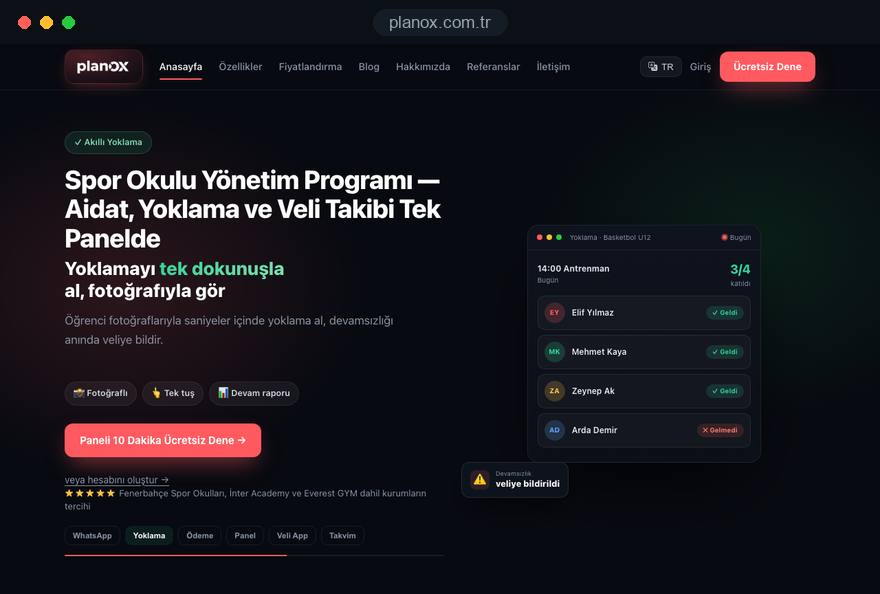
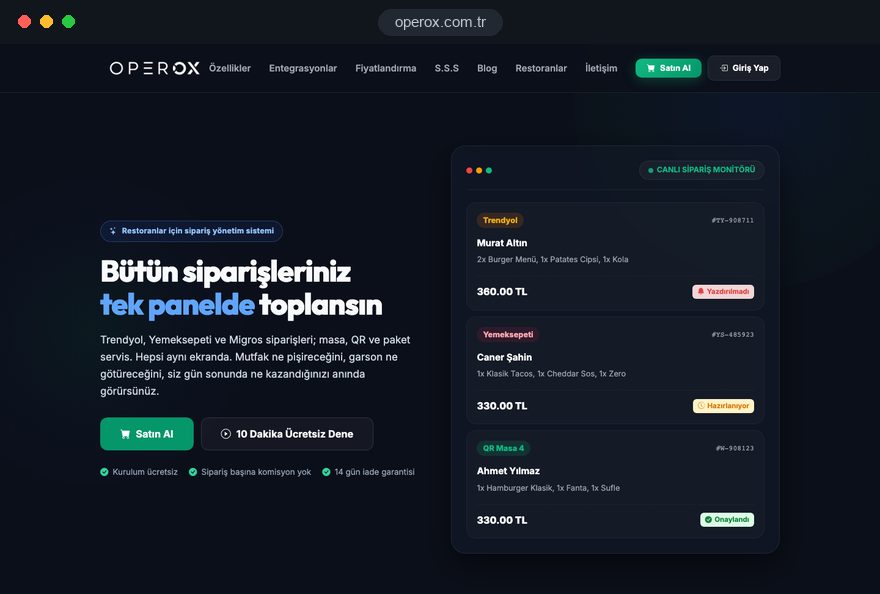
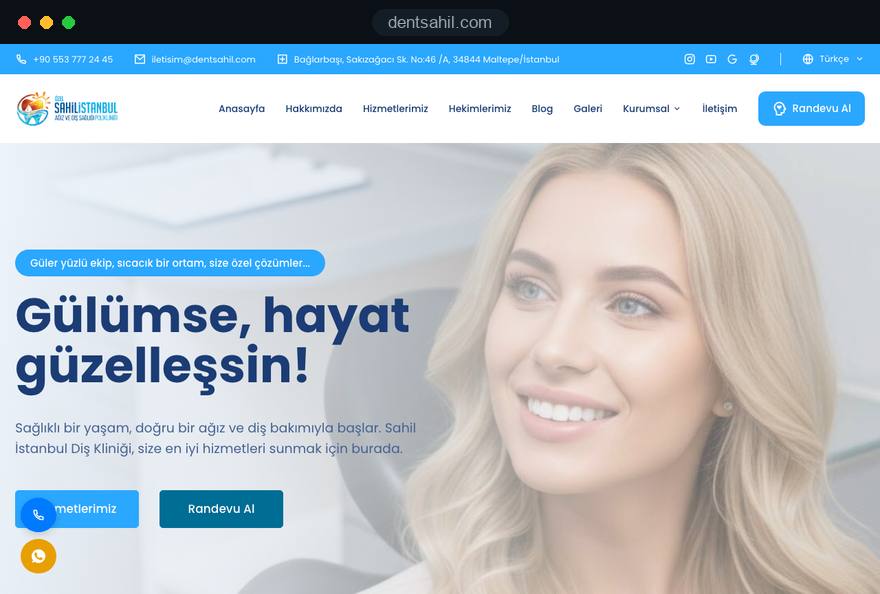
Every finished project of ours is a live site in Türkiye, collected on our portfolio of client work; nothing has shipped in Britain so far, which is exactly why opening a few of them on a phone and submitting a trial enquiry is a fair test.
04Domain, Hosting, Code and Accounts in Your Name
Everything the website depends on should belong to your company, not to a founder's personal account or to the studio. Cambridge companies change shape often: a spinout raises a round, an adviser leaves, a lab moves from one park to another. Assets held by individuals become a problem precisely at those moments.
- Domain: .co.uk or .uk when your buyers are mainly British, .com when you sell internationally or expect investors abroad; registered to the limited company with a shared company mailbox as contact.
- Hosting: a contract held by the company, plus direct access for you to the hosting dashboard and to DNS, meaning the records that tie the domain to its server and mailboxes.
- Code and media: a copy of the source delivered on launch day, font and photo licences on file, and a written right to reuse the design later.
- Accounts: Google Business Profile, Search Console and analytics owned by the company, with the studio added as a user who can be removed.
Ask for an access sheet at handover listing every login and its owner. If an investor or acquirer later runs due diligence, that sheet answers a question that otherwise takes days.
05The Project From First Call to Launch, Fully Online
A clear sequence keeps a remote project calm, and each step should end with something you can open and approve. Every stage is handled remotely from Istanbul. Should a trip ever bring you to the city, a face to face session in Ataşehir is possible, though no step requires one.
- Discovery call: we talk about your readers, from ward residents to procurement teams, and agree what the site must achieve in its first year.
- Written scope: page list, features, languages, content owners and dates in one document you sign before design begins.
- Structure and wireframes: the menu, the service and capability pages and the enquiry routes, reviewed on video.
- Design on the live preview: real text, real photos of your team or lab where permitted, tested on your own phone.
- Build and checks: speed, accessibility, forms, cookie consent and redirects tested before launch.
- Go live and handover: a recorded walkthrough so the person maintaining pages, perhaps an office manager or a postdoc, works independently.
Fit sign off moments around the rhythm of your organisation. Grant deadlines, conference season and the start of term absorb attention, and a missed review costs more time than any technical task.
06Local Search Across Cambridge's Wards and Villages
Local visibility in Cambridge depends on an accurate Business Profile, honest service areas and pages that describe real work in real places. The city council has 14 wards, and residents use those names, together with neighbourhoods such as Mill Road or Newnham, when they search.
- Business Profile: use the trading name as it appears on your van or door, with nothing stuffed in; a mobile trade such as a plumber may keep the home address private and name the wards served instead.
- Area wording: describe jobs in Petersfield, Abbey or Queen Edith's naturally on project pages instead of creating one thin page per ward.
- South Cambridgeshire: villages around the city fall under a separate district council; one well written service area page covering them is safer than dozens of near duplicates, which Google treats as doorway pages.
- Directories: keep Yell and any trade association listings consistent with the site, especially phone numbers and opening hours.
Reviews matter more than their number suggests, because newcomers rely on them. Send a short review link after each completed job and reply to every review in plain, polite language. Our search engine optimisation service covers this ongoing work when you prefer not to handle it yourself.
07Languages: British English First, Others With a Purpose
British English should be the main version of almost every Cambridge site, written plainly enough for the many readers who learned English as a second language. Short sentences, defined acronyms and units help a visiting researcher as much as they help a native speaker in a hurry.
A second language earns its place only when a defined group needs it:
- Turkish: for firms whose clients or partners are in Türkiye, or for services aimed at students and researchers who arrive from there.
- German: for suppliers and subsidiaries whose parent company, investors or distributors sit in Germany, Austria or Switzerland.
- Other languages: only with a person who will keep that version current after launch.
Every language version deserves separate URLs, a switcher that lands people on the matching page rather than the homepage, and hreflang tags that tell Google which version suits which reader; every version must point to the others and to itself. Our web design service includes this structure in every web design Cambridge project, and a second language should never mean publishing machine translation nobody has checked.
08Speed, Hosting and Security for Busy Readers
Cambridge readers often open your site between experiments, on a ward round or on the train at Cambridge North, so speed on a mobile connection is not a detail. Google judges this with three Core Web Vitals, each assessed on three quarters of real visits:
- LCP (largest contentful paint): the biggest visible element should appear within 2.5 seconds.
- INP (interaction to next paint): a tap or click should get a visible response within 200 milliseconds.
- CLS (cumulative layout shift): unexpected movement of the layout should score no higher than 0.1.
Choose a server in Britain or close by on the Continent; short distances help loading times, and the legal position of visitor data is easier to explain. Shrink photos of benches, kitchens or clinic rooms before they go online, drop homepage videos that start by themselves, and self host your typefaces.
Security should match the readers. Hospital and corporate firewalls can refuse a page whose certificate has lapsed or whose scripts are out of date, so automate HTTPS renewal, patch plugins monthly and give admin rights only to named individuals. You can check how a current page behaves on a phone with our mobile friendly test before the first call.
09Sector Examples From the Cambridge Cluster
Page structure in Cambridge should mirror the trade you are in. The examples below show how differently five local business types need to present themselves.
- University spinout: a problem statement in one sentence, a technology page an engineer can follow, team and advisers with real affiliations, and a demo request form; the startup website page explains this layout in depth.
- Laboratory supplier: product or service cards with specifications, downloadable data sheets, accreditations with expiry dates and a named contact for each region.
- Private clinic or therapy practice: clinician profiles with registrations, treatment pages that also state who is not a suitable candidate, and online booking; multi specialty practices can follow the medical centre website guide.
- Trades serving new housing: project galleries by area, warranty terms described accurately, and a quote form that asks for postcode and photos.
- Student and researcher services: room lets, tutoring or bike repairs with term dates, clear terms and quick contact for people new to the country.
Choose whichever example sits nearest to your firm and write down what today's site is missing. Such a list briefs a designer better than any moodboard, and it keeps web design Cambridge projects focused on the buyer rather than on decoration.
10UK Rules a Cambridge Website Should Cover
English law asks a handful of things of a business website, and none of them is hard if planned from the outset. Treat what follows as orientation rather than legal advice, and ask a solicitor to review the finished wording.
- Company details: under the Names and Trading Disclosures Regulations 2015, a limited company's site states its registration number, whether it is registered in England and Wales, Scotland or Northern Ireland, and its registered office.
- Privacy information: UK GDPR, read with the Data Protection Act 2018, leads the ICO to expect concise, clear privacy information at the point you collect personal data, covering purposes, lawful basis, retention and individual rights.
- Cookies: PECR means analytics, advertising pixels and similar optional storage wait for the visitor's agreement, and saying no should take no more effort than saying yes.
- Online sales: for most distance contracts the Consumer Contracts Regulations 2013 allow consumers 14 days to cancel, and checkout pages and terms have to say so.
- Accessibility: the Equality Act 2010 requires service providers to make reasonable adjustments for disabled people, so readable contrast, keyboard navigation and alt text are worth building in from the start.
Health and laboratory firms often carry extra sector rules on claims and registrations. Record the name of whoever signed off each legal page and the date, which makes later revisions quick.
11Rebuilding a Site Without Losing Search Rankings
Most ranking losses after a rebuild come from changed addresses without redirects, not from the new design. Many Cambridge firms have older sites with years of links from university pages, conference listings and partner websites, and those links carry trust you should keep.
- Before touching anything, pull a full list of addresses with traffic or backlinks from Search Console and analytics.
- Pair every old address with the nearest equivalent new page and set a permanent 301 redirect; our redirect mapping tool speeds up this matching.
- Leave the title and H1 of already strong pages largely unchanged.
- Launch at a quiet moment, not during a product announcement or the first week of term.
- Send Google the fresh XML sitemap and review indexing and not found reports weekly for a month.
Write to departments, societies and partners whose links bring visitors and ask them to point at the new addresses. One technical trap: Google cannot see a noindex tag on a page it is forbidden to crawl, so anything you wish to remove from results needs noindex and open crawling, not a robots.txt block.
12Common Mistakes on Cambridge Business Websites
In a city full of specialists, the mistakes that hurt most are about credibility, not looks. Each line pairs a frequent problem with what to do instead.
- Jargon on the homepage: technical terms with no explanation lose investors and generalist buyers; lead with the outcome in plain words and keep detail on the technology page.
- Unverifiable claims: "world leading" or borrowed customer logos damage trust with expert readers; show publications, accreditations and named partners you may cite.
- One page per village: copied pages for each place around the city look like doorways; use one service area page and real project examples.
- Missing company details: no registered number or address on the site; add them to the footer and the contact page.
- Cookie banner without a real choice: analytics firing before consent; configure tags to wait for the visitor's decision.
- Stale term information: last year's dates on pages for students; put a named person and a calendar reminder behind every seasonal page.
Read your own site as a stranger would, then fix the first three of these before adding anything new. That order delivers more than another round of visual changes.
13What Drives the Cost of the Project
What a web design Cambridge project costs follows from its scope rather than its postcode. When two proposals differ sharply, they usually describe different work, and these drivers explain where.
- Number of templates: capability, team and case study layouts are each designed separately, whereas additional pages reusing a layout are quicker.
- Content work: writing, editing technical copy with your scientists, photography and translation take time that many quotes leave out.
- Features: appointment booking, gated downloads, a portal for members or a shop each bring their own build and test effort.
- Integrations: linking a CRM, an applicant tracking system or an ordering tool means work and testing on both ends.
- Languages: each extra version adds layout checks, hreflang work and ongoing updates.
Hand every shortlisted studio one identical scope and ask for itemised prices and a list of exclusions. Our packages and prices set out what each level contains; bespoke requirements are priced in writing once we have spoken.
14The First 90 Days and Your Next Step
A launch is the start of the useful work, not the end, so agree the follow up plan while the build is still running. This three stage rhythm suits most Cambridge firms.
- Month one: submit test enquiries through each form, tap every phone and WhatsApp link, confirm analytics stays silent until consent, and clear broken links flagged by Google.
- Month two: publish one substantial page a fortnight, such as a case study, a method note or a guide for newcomers to the city.
- Month three: see which channels produced real leads, refresh Business Profile photos and study the queries that now bring people in.
Track three figures from launch day: genuine enquiries each month, phone calls started from Google Maps and the proportion of mobile visits. Raw visitor totals say far less.
Thinking about web design Cambridge plans for the coming months? Share your current address and the audience that matters most via our enquiry form, and we will come back in writing with questions, an outline page list and a realistic start date.