Most York businesses meet their customers twice: once on a screen, often weeks before the trip or the job, and once at the door. A guest house off Bootham, a tearoom on Stonegate, a joiner in Acomb and a lab supplier near Heslington all face the same test, because the first meeting decides whether the second ever happens.
This guide from Talha Aslan and team follows the order in which a web design York project really unfolds, from reading the local economy to the first season after launch. Each section closes with something practical: a test you can run on your phone, a question worth asking a studio, or a decision for the brief.
01What York's Economy Expects From a Website
A York website has to persuade people who are not yet in York. The latest ONS figure for mid 2025 puts the City of York at 209,118 residents, while Make It York reports 8.88 million visitors in 2025, with tourism supporting around 15,900 full time equivalent jobs. Visitors outnumber residents many times over, and most of them decide from a distance.
Alongside tourism sit three other engines, and each changes what a site must prove:
- Visitors: couples, families and groups comparing rooms, tours and tables from Leeds, London or abroad, mostly on a phone.
- Industry buyers: procurement and engineering staff linked to Nestlé's York site, which the company calls the home of KitKat and which hosts its global R&D centre for KitKat, chocolate and biscuits.
- The university community: more than 20,000 students and 5,000 staff at the University of York, plus their visiting families.
- New neighbours: residents and firms arriving as York Central adds homes and offices beside the station.
The population is also highly qualified: the 2021 Census records 38.8% of York residents aged 16 and over holding Level 4 qualifications or above, against 34.7% in Leeds and 33.4% in Sheffield. Expect readers who check details and notice vague claims. Rank these four groups for your own business before anyone opens a design file.
02Who Searches for York, and From Where
Searches about York come from two places: inside the ring road, and far outside it. The phrasing differs sharply, so a site needs pages for both rather than one homepage trying to please everyone.
- Trip planners: "family room York with parking", "York ghost walk tonight" or "afternoon tea near the Shambles", typed in a living room in Manchester or Munich.
- Residents with a task: "plumber Haxby", "dog groomer Dringhouses" or "physio Clifton Moor", usually answered by the map pack.
- Big event traffic: visitors heading to large events on the Knavesmire or to the St Nicholas Fair Christmas market look for rooms, food and transfers near the venue.
- Academic searches: parents, researchers and students around Heslington and York St John University looking for lets, cafés, printing or tutoring.
- Buyer research: a supplier's name followed by "certification" or "datasheet", from someone who already has a quote on the desk.
The calendar matters as much as geography. Searches for the JORVIK Viking Festival build in the weeks before February, and Christmas interest starts well before the market opens. List your ten money phrases by season in a spreadsheet; that list becomes the page plan for your web design York brief.
03Hiring a Studio Abroad for a York Project
Working with a team in another country depends on written agreements and visible progress, not on distance. Our studio works from Istanbul, which runs two hours ahead of York while the clocks are on British Summer Time and three hours ahead in the winter months, so a ten o'clock call in York falls in our early afternoon.
Whatever studio you shortlist, ask these questions and keep the answers:
- Will the proposal name every template, form, integration and revision round, and state what is left out?
- Can we look at a protected preview link whenever we like between calls?
- Who writes and proofreads the English, and will it follow British spelling and the way York people actually describe places?
- Where are decisions from each call written down, and can we read them later?
- Who answers if the site breaks on a Saturday in August, when a guest house cannot wait until Monday?
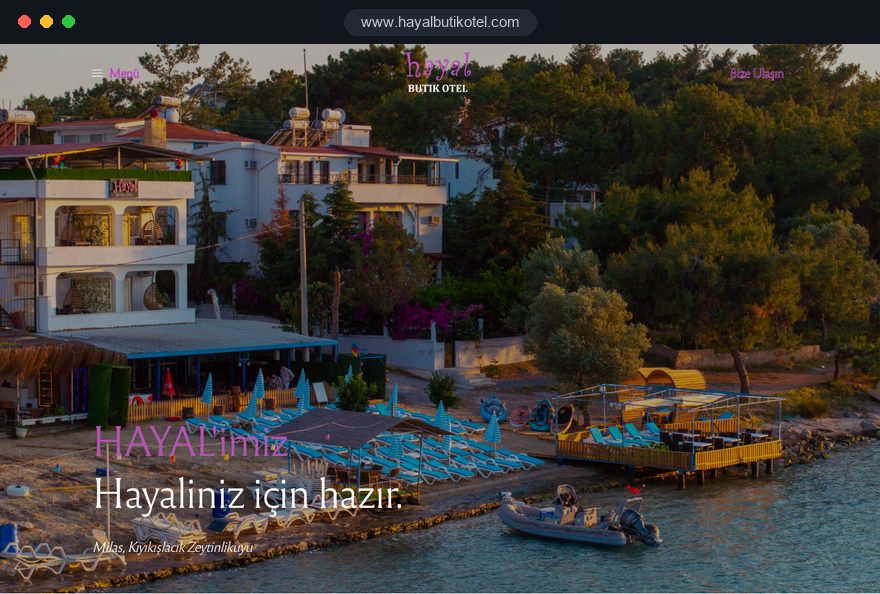
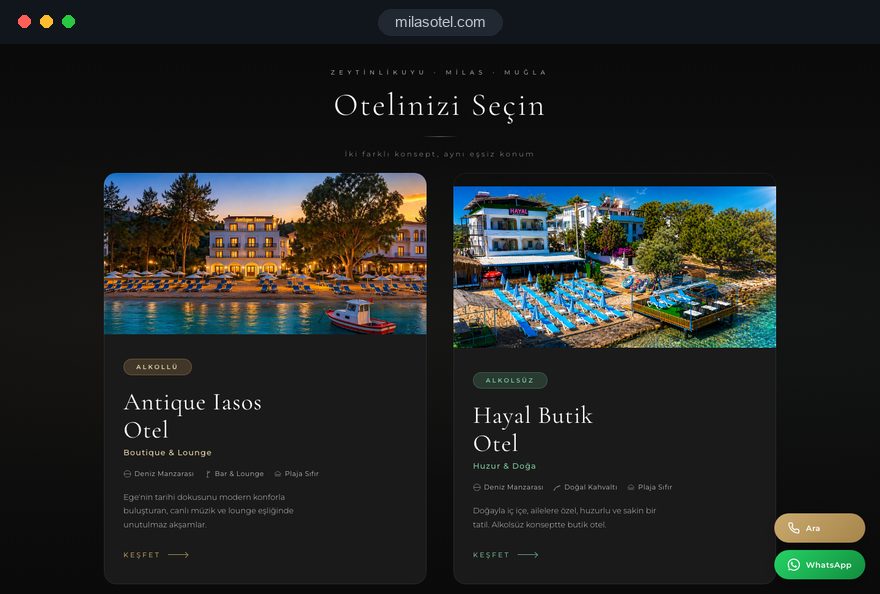
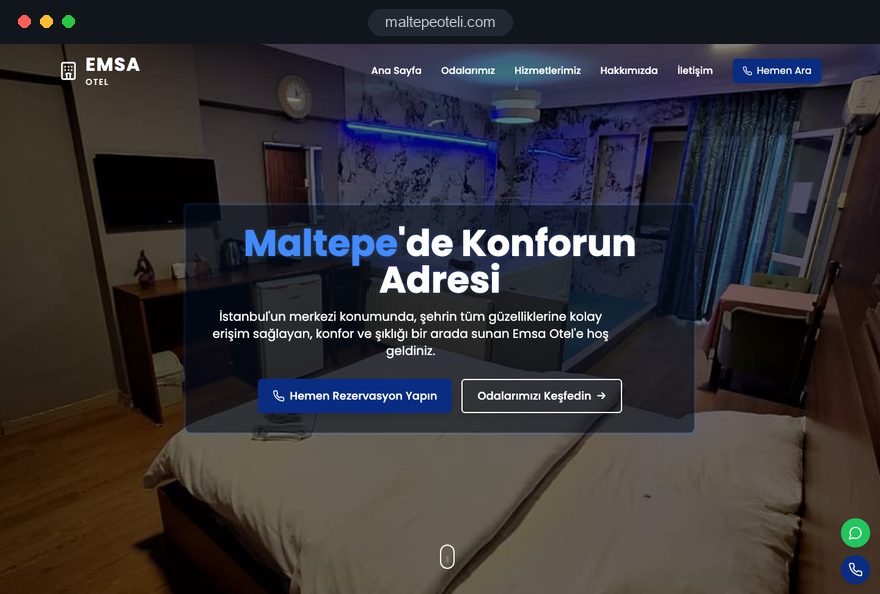
Then look at finished, live work rather than mockups. We have not yet built a site for a client in the United Kingdom; everything we have delivered is in Türkiye, including hotel and clinic sites listed on our references page. Open two of them on your phone at a busy moment and judge them the way a guest would.
04Keeping the Domain, Hosting and Logins Yours
Every account a site depends on should belong to your business from day one. Hospitality businesses in York change hands and managers move on, and a domain tied to someone's old personal inbox can lapse unnoticed in the middle of peak season.
- Domain: a .co.uk or .com in the company's name, held at a registrar you can log into yourself, renewing automatically.
- Hosting: a contract in your name with a data centre in Britain or elsewhere in Europe, plus your own entry to DNS, the settings that point your address at the site and your mail at its server.
- Booking and payment tools: the channel manager, booking engine and payment provider accounts opened by you, so commission statements and guest data never sit with the agency.
- Google accounts: Search Console, Analytics and the Business Profile owned by a business login, with any agency invited as a user you can remove.
- Code and media: usage rights confirmed on paper, a full copy of the files, and photos and typefaces licensed to you.
Keep one short register listing each account, its owner and its renewal date. If you ever sell the guest house or the shop, that page makes the handover far simpler for the buyer and their solicitor.
05How a York Project Runs From Brief to Launch
A York project moves through six stages, and none of them closes until you have approved it in writing; each approval is logged in our CRM. Meetings take place by video within UK office hours, so no travel is ever needed.
- Brief: your guests or buyers, rivals, seasons and target enquiries, summed up in a scope document that says who provides each text and photo.
- Structure: the page list and the key copy, including room, tour or product pages, agreed before visuals so the design fits real content.
- Design: the homepage and one inner template presented on a call and on a preview link; the remaining layouts follow once you agree.
- Build: development on a hidden staging copy, with privacy wording, cookie choices, forms and booking connections built in rather than bolted on.
- Testing: booking flows, page speed and common phones checked, and each confirmation message read through as a guest would receive it.
- Launch and handover: the switch on a quiet weekday, each contact route tried live, and a recorded walkthrough for whoever updates rooms, menus or events.
Plan the launch around your calendar. A tour company should go live well before February half term, and a café before the summer rush, not in the middle of either. If you happen to visit Istanbul, we are glad to hold a working session at our Ataşehir office, though it is entirely optional.
06Local Search From Acomb to Strensall
For residents searching "near me", Google's map results lean heavily on the Business Profile, and the website adds the depth that wins the click. Keep the name, address, phone number and opening hours word for word the same in both places.
- Name: the name on your sign, nothing added. Google's guidelines forbid extras such as "Cheap Rooms York Minster" in the business name.
- Service area: a salon on Bishopthorpe Road shows its address; a roofer covering Huntington, Copmanthorpe and Poppleton can hide it and list those areas instead.
- Categories and photos: choose the most precise primary category and add real interior and exterior photos, updated each season.
- Directories: keep Yell, Tripadvisor where relevant and any trade association listing identical to the profile, and correct old addresses after a move.
- Reviews: share a direct review link after a stay or job, offer nothing in return, and reply politely to every review.
Resist publishing near copies of one service page for Fulford, Heworth and Tang Hall. Google treats such pages as doorways, and readers spot them instantly. One strong page that names the areas you genuinely cover does more good. For steady work on the profile, reviews and fresh local pages, our SEO service sends a short report every month.
07English First, Then the Languages Your Guests Speak
English carries the bookings, the legal pages and the replies, so it must be complete before any other language is considered. Add a second language only if a real share of your guests or clients reads it, and only if somebody on your side can reply in it.
- German: useful for hotels and tour operators that welcome group travel from Germany, Austria and Switzerland, and for suppliers selling into DACH food producers.
- Turkish: worth it for businesses whose owners or customers speak Turkish, such as builders, accountants, salons or restaurants, provided replies come in Turkish too.
- A single key page: some guest houses publish one translated page with directions, arrival times and house rules rather than a full second site.
Every language deserves its own URLs, usually a separate folder, and text written by people instead of an automatic translation widget. The versions are tied together with hreflang annotations, where each page names itself and all its siblings; if a sibling does not name it in return, Google may ignore the pair. Our hreflang generator writes the tags, and a glance at the page source after launch confirms them. Treat any second language as a promise to keep dates and menus in step with the English.
08Fast Pages for Visitors on Mobile Data
Visitors in York often load your site standing on a pavement, in a queue at the station or on a coach on the A64, with patchy reception. Speed is therefore part of the welcome. Google's Core Web Vitals judge it on real visits, using the experience of the slowest quarter of them as the benchmark:
- Largest contentful paint (LCP): when the biggest visible element, usually the hero photo, finishes drawing; good means 2.5 seconds at most.
- Interaction to next paint (INP): the delay between a tap and a visible reaction; good means no more than 200 milliseconds.
- Cumulative layout shift (CLS): how far elements move as the page settles; good means a score no higher than 0.1.
York sites tend to be heavy for one reason: photography. Pictures of the Minster or a beamed dining room are worth showing, but a gallery of uncompressed camera files will wreck LCP. Export images at their display size, serve modern formats, and convert your existing library with our image converter before handing it over.
Booking widgets, review carousels and stacked tracking tags slow things further, so keep only those that pay their way. Choose a British or European data centre, load typefaces from your own server, keep HTTPS and updates current, store nightly backups elsewhere and practise restoring one. Turn on two step login for editors, and set up mail authentication records so booking confirmations do not end up in spam.
09Site Patterns for York's Hotels, Tours and Suppliers
The right structure depends far more on your sector than on your size. These patterns reflect York's mix of businesses; treat them as starting points, not client stories.
- Hotels, guest houses and holiday lets: one page per room type with real photos, walking times to the Minster and the station, honest parking notes and a direct booking route. Our hotel website page sets out the structure.
- Walking tours, ghost walks and experiences: date and time slots, meeting points with a map, accessibility notes and what happens in bad weather; see websites with a booking system.
- Cafés and tearooms: menus as real text rather than PDFs, allergen information, seasonal opening hours and a table request that works one handed.
- Independent shops in the Shambles and Gillygate: a small online range of gifts and local produce, with delivery and returns explained in plain words.
- Food and science suppliers: capability pages, certifications, downloadable datasheets and a technical enquiry form that asks the questions a buyer would.
- Trades serving York Central and the suburbs: finished jobs pictured street by street, the postcodes you cover, and an enquiry form that lets people attach a photo of the problem.
Pick the one pattern closest to your business and sketch the three pages a customer would visit before contacting you; those pages deserve the first share of any web design York budget.
10The UK Rules a York Website Must Respect
Several parts of a York site are there because UK law expects them, which is why they go into the first draft. This is orientation only; a solicitor should sign off the actual text.
- Privacy notice: booking and enquiry forms gather personal data, so UK GDPR and the Data Protection Act 2018 call for plain information on what you hold, for what purpose and for what period.
- Cookies: under PECR, as the ICO explains it, anything beyond strictly necessary cookies waits for the visitor to opt in actively, so statistics and ad scripts load only afterwards.
- Email marketing: newsletters to individuals need prior consent, with a limited exception for past customers who could easily refuse when they gave their address.
- Company details: limited companies must display their registered name on the website; adding the registration number and registered office address is common practice.
- Accessibility: the Equality Act 2010 expects service providers to make reasonable adjustments for disabled people, and building to WCAG 2.2 AA is the sensible route.
Guest houses also hold dates of stay, phone numbers and sometimes dietary or access needs, so decide who can see booking records and how long you keep them. If you sell gifts or produce online, the Consumer Contracts Regulations 2013 usually let shoppers cancel within 14 days of delivery, and the shop has to say so before payment. Our e-commerce development puts those terms into the checkout itself.
11Replacing an Old Site Without Losing Search Traffic
Rankings carry over to a new site when each old URL that still draws visitors or links forwards permanently to its nearest new page. In York, older sites often hold years of links from tourism blogs and listings, which makes careful mapping worth the effort.
- Inventory: gather the old addresses from the sitemap file, Search Console reports and a crawler, together with traffic and backlink figures.
- Decide: give every old page a fate, kept, combined or dropped, and write the destination beside it in a sheet both sides edit.
- Shield the test site: lock it with a login. A robots.txt block stops Google reading any noindex tag, so a blocked staging copy can still surface in results.
- Redirect: one permanent 301 per old address straight to its final page, never via a chain and never everything to the homepage.
- Watch: submit the new sitemap, check the coverage and 404 reports weekly for a month or two, and update listings that still show old links.
Our redirect mapping tool pairs old and new URLs to speed up the second step. Time the switch for a quieter month such as January or early November, so any early dip in traffic does not coincide with peak bookings. When the domain itself changes, keep the old one alive with redirects and tell Google through the change of address setting.
12Common Mistakes on York Business Websites
Underperforming sites in York seldom fail on looks; they fail on everyday detail. Six that recur, each paired with a better approach:
- Stock photos of the Minster: every competitor uses the same view. Instead, show your own rooms, counter, team or workshop, then one honest picture of the street outside.
- Only an OTA link for bookings: sending every guest to a booking platform hands away the relationship. Instead, offer a direct request or booking route next to the platforms you keep.
- Last year's dates still live: a festival offer from a previous February damages trust. Instead, give seasonal pages an owner and a review date in the content calendar.
- Directions that assume a car: many visitors arrive by train or park and ride. Instead, give walking times from the station and the nearest park and ride stop.
- A cookie banner without a real refusal: a notice that treats scrolling as agreement collects nothing valid. Instead, make declining as easy as accepting and keep scripts off until a choice is made.
- Menus and price lists as PDFs: hard to read on a phone and invisible to many searches. Instead, publish them as real text on a fast page.
Correcting two of these often lifts bookings more than any redesign of colours and fonts.
13What Moves the Budget on a York Site
We quote the same way for York as for anywhere else; cost follows scope, content and integrations. Web design York offers are much easier to compare when each studio splits its figure along these lines:
- Layouts: the count of different page designs (room, tour, menu, product, article) matters more than the number of pages.
- Photography and copy: whether good photos and text already exist, or need to be commissioned and written.
- Booking and payments: a simple request form, an embedded booking engine or a link to a channel manager each carry different effort.
- Languages: every added version needs its own writing, proofreading and approval round.
- Online shop: product numbers, delivery rules and stock updates.
- Migration and aftercare: how many old URLs to redirect, and whether updates and backups sit with you or with a maintenance plan.
Preparation saves more than haggling. Come with room or product descriptions settled, a folder of usable photos and one person empowered to say yes, and the rounds of changes get shorter.
Insist on line items from every studio you ask. A single total on a web design York proposal makes it impossible to see what has been left out.
14Your First 90 Days and the Next Step
A new York site proves itself in its first season, as long as each month carries one job. A rhythm that suits most local businesses:
- Month one: make sure booking requests, taps on the phone number and form sends register as conversions in Analytics, respecting consent, and fix any errors Search Console raises.
- Month two: note which queries bring people in, sharpen titles and first lines where pages appear in results but rarely get clicked, and draft the next seasonal page.
- Month three: turn questions guests asked on the phone into answers on the site, ask happy customers for reviews and pick the next priority.
A focused English site usually fits one of the fixed packages in the pricing section on our web design page. Booking integrations, extra languages and shops are quoted in writing after a short call. Tell us your main audiences, your busiest months and five searches you care about via our contact form, and we will reply with a written outline for your web design York project.
Whichever studio you choose, treat this first season as part of the work. A York website has done its job when the right visitors find it and book.