In the same week, a business profile in Solingen is opened by a neighbor in Wald, a purchasing manager in another state, a visitor who has just stood on the Müngsten Bridge and a commuter scrolling on the train home. This guide does not repeat the summary above; it walks through the decisions you face when you set the profile up.
Talha Aslan and team deliver social media management Solingen businesses can run fully online. We have no branch, representative or employees in Solingen or anywhere else in Germany, so every section also explains how filming, approval, replies and reporting work from a distance. Legal notes are general information and do not replace a review by your own lawyer.
01Sort out who actually sees your profile
Start by splitting the people who open your account into groups, because language, platform and posting time follow from that answer. The figures below come from official sources and show roughly how big the groups are; they are context, not a target or a promise.
- Buyers of cutlery: the Bergische IHK counts 2,740 employees subject to social insurance in cutlery and tableware in the city, and 6,450 in metal products overall. These buyers want to know material, origin and workmanship.
- Commuters: in 2024, 37,936 working residents left Solingen for work in other cities, and 23,314 came in. This group looks for short, clear information in the evening.
- Visitors: the city recorded 100,423 overnight stays in 2024, 24,315 of them from guests abroad.
- Neighbors in the districts: Mitte, Gräfrath, Ohligs, Wald and Höhscheid each have their own habits and their own street language.
Then list your last ten inquiries: where did they come from, in which language, through which channel? That list is more reliable than any assumption, and in social media management Solingen clients are asked exactly this on the first call. An account that tries to please all four groups at once usually convinces none of them.
The groups also overlap. An apprentice who lives in Wald may be a weekend visitor at Müngsten, so the goal is not to put people in boxes but to know which question each post answers.
02Choose platforms by type of business
The right platform is the one where your buyer makes decisions, not the one with the most users. Start with two channels plus the Google Business Profile and add a third only once the rhythm of the first two holds.
- Instagram: the shop window for manufactories with their own sales, hairdressers, cafes and trades. Reels show the process, stories the day, highlights the fixed details.
- LinkedIn: for suppliers, contract manufacturers and exporting producers; purchasing staff and applicants look at machines, certificates and the team here.
- Facebook: suited to district groups, event notices and an older audience that prefers reading to swiping.
- YouTube: useful when you want to document longer processes such as grinding or assembly; short clips stay on Instagram.
- Google Business Profile: the first point of contact in map searches. It does not replace social media, but it must carry the same facts.
A workshop that wants to reach vocational school students and apprentices might consider TikTok, but only if someone on the team can keep video going for months. An abandoned channel looks worse than one that was never opened.
03A local content calendar built around the workshop year
Tie the calendar to the rhythm of your work, not to dates. In Solingen that rhythm has three main cycles: gift occasions, the outing season and the start of the training year. A fourth cycle is the workshop's own year.
- Gift occasions: knives and cutlery are given for weddings, housewarmings and Christmas; care and use content should start weeks before these occasions.
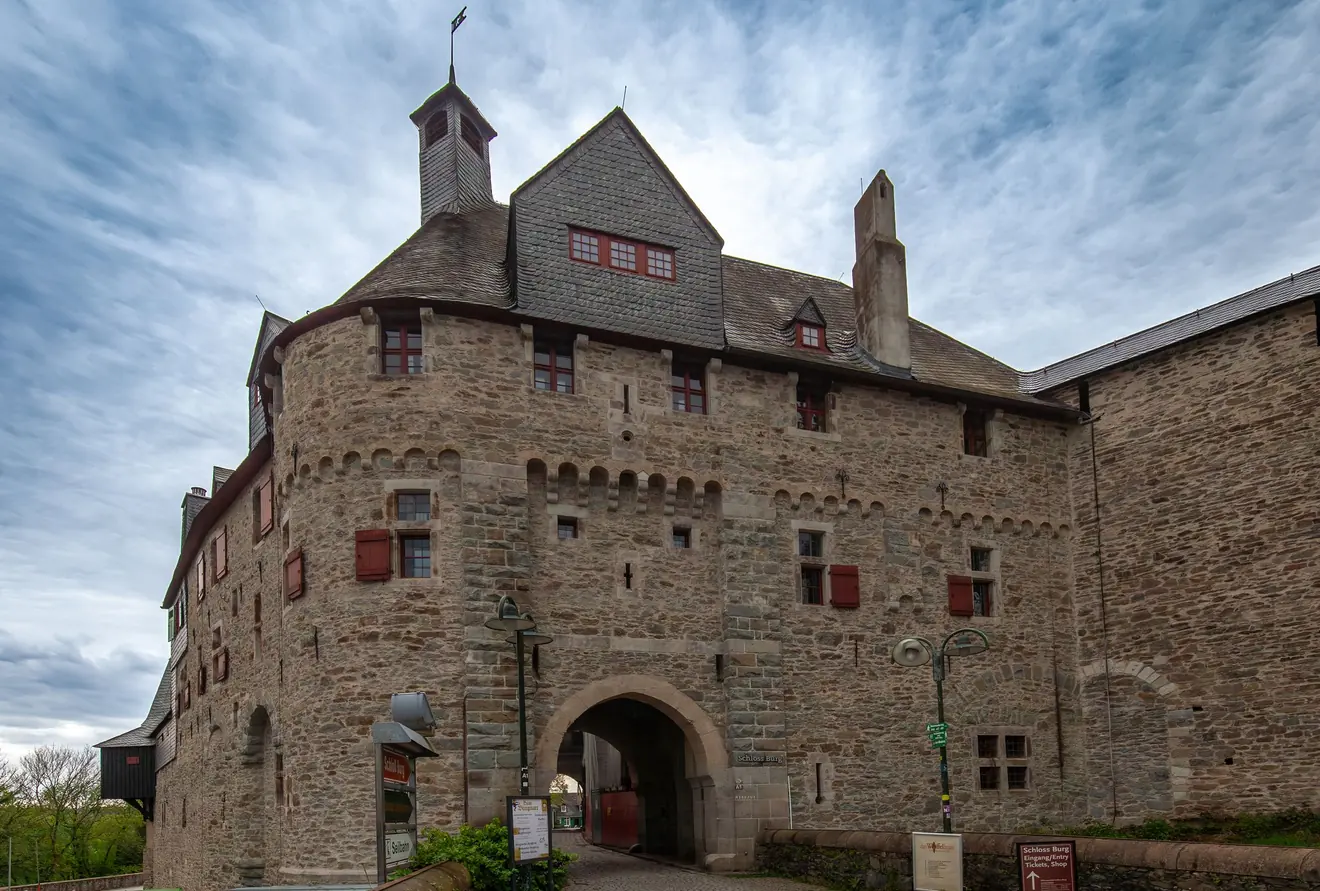
- Outing season: people heading to Schloss Burg, Müngsten and Gräfrath check the weather; opening hours and directions belong on top in this period.
- Training year: companies seeking apprentices should show their openings long before the start.
- The workshop's own year: annual closure, inventory day, a new machine; each becomes a short story.
Think of the calendar in three layers: fixed series such as a care tip or a workshop moment, seasonal blocks for gifts, outings and training, and news for that specific week. In social media management Solingen calendars, fixed series lighten the filming load because the same template is filled with new footage every month.
Add one neighborhood story a month: a shop on Düsseldorfer Straße in Ohligs, the narrow lanes of old Gräfrath, a workshop in Wald. Dated events are always checked against official calendars; we never enter dates by guesswork.
04Producing content remotely: shot lists, templates, approval
When the team is online, quality comes from preparation before the shoot. You, your employees or a photographer you choose do the filming; we supply the list, the formats and the caption drafts. The flow repeats every month:
- On the first call we walk through products, workshop and sales area by screen sharing and phone video.
- We produce a monthly shot list: which bench, which hand movement, which product, how many seconds.
- You gather the filming in a single day; a phone is enough, and a window supplies the light.
- You upload the files to a shared folder; we edit, write captions and slot everything into the calendar.
- Every post reaches you in writing before publication; nothing goes out that you have not approved.
Templates also keep the brand consistent: cover text, color, logo position and caption style are decided once, so the account looks like one business even when different people film. Vertical framing, the product in the first second and captions for silent viewing are a sufficient standard for most companies.
In the workshop we check beforehand for protective clothing, safe machine handling and screens without customer data. If you work with a photographer, we pass the shot list to them; you choose the person, and we never claim that our team is in Solingen.
05Community management: comments, messages, handoff
A reply routine is as visible as the content itself. Answering a product question two days later usually means the sale went elsewhere, which is why social media management Solingen work treats comments and messages as a separate task.
- Fixed times: we answer comments and messages at agreed hours; the difference between Istanbul and Germany is one hour in summer and two in winter.
- Reply guide: short drafts for price, stock, care, workshop visits and appointments; even so, no reply should look like a template.
- Handoff: together we set the point at which a product or booking conversation moves to WhatsApp or the phone.
- Difficult comments: answered calmly and with facts instead of defensiveness; legal questions go to your lawyer.
Tone matters in direct messages too. We decide up front whether the account addresses people with Sie or du, how greetings and closings are written, and put it in the reply guide, so different people still sound like one business.
Anything that might be urgent, such as a delivery delay or weekend opening hours, we settle in writing with your contact person beforehand, so nobody has to guess at midnight who will answer.
06Google Business Profile posts and local reviews
In searches for something nearby, Google shows your business profile first. According to Google's guidelines, the profile name must match the real world name of the business, without added keywords.
- Matching facts: the hours of a factory outlet or workshop store must be identical in the profile and on the social media account.
- Posts: short updates in the profile, such as a new product line or an announcement of the annual closure.
- Photos: entrance, interior and products should be real; add an outside shot that helps people find the door.
- Reviews: answered in the language they were written in; we do not suggest bought reviews, review groups or discounts in return.
People in Solingen search with district names, such as a hairdresser in Ohligs or a garage in Wald. Keep the service area in the profile and in posts to the places you really serve; tagging places you do not serve is misleading and leads to a poor experience.
07Languages: German, English and Turkish
For most businesses the main language of the account is German, because customers, authorities and neighbors speak German. Other languages are added only when they serve a separate reader; a language added for decoration only creates maintenance work.
- English: a short line or a separate version for manufacturers with buyers abroad and for hosts with guests from farther away.
- Turkish: according to the integration profile of the State of NRW, 40.1 percent of people in private households in Solingen have an immigration history, and Turkey ranks first among nationalities with 5,765 of 29,829 residents without German citizenship. A Turkish line is written for these readers, not translated from the German text.
- Mixed account: three languages side by side in one post tire the reader; separate posts or stories are cleaner.
Citizenship says nothing about language skills. You see which language belongs to which customer in your own messages and customer conversations, not in a statistic, so it makes sense to start the Turkish line small and grow it by watching the replies.
A practical yardstick: the first reply time to a German post and to a Turkish post should be the same. Opening two language lines and answering one of them late is worse than not opening it. If your resources are limited, be regular in one language first.
08Sector examples specific to Solingen
The same method looks different in four types of business in Solingen. In each case we start from the same question: who opens this account, what do they look for, and what is the next step?
- Manufactory: short process clips from grinding to final inspection, care tips, gift occasions. For the structure of an industrial account see social media for industrial companies.
- Supplier: machine park, certificates, faces from the shift, open training places; LinkedIn for purchasing, Instagram for applicants.
- Hosts and cafes: hours, directions, parking and a photo of the view. The page on social media for hotels serves as a model.
- Hairdressers and trades: finished work, booking path, replies to reviews; see social media for hairdressers.
If the answer differs, the content line differs too. A manufactory's buyer questions origin, while a hairdresser's customer just wants to know whether there is a free slot this week.
One account should never be a copy of another type. A supplier and a cafe in the same city are two separate worlds; only the method is shared. Tell us on the first call which type your account is closest to, and we mark which parts of the example pages apply to you.
09Local collaborations and ad labeling
A collaboration with a creator from the region, a museum or a business nearby builds trust, but in Germany it comes with rules. A post made in return for money, goods or another benefit must be recognizable as advertising; the basis is Section 5a UWG, and the guide to labeling ads from the Medienanstalten explains it in more detail.
- The label sits inside the post: visible at the start of the caption or video, not hidden in the profile or a link.
- Written agreement: who posts what, on which date, with which usage rights?
- Mutual tagging: a cafe and a workshop tagging each other can count as advertising even without money changing hands; if in doubt, ask your lawyer.
- Selection: look at whether the audience overlaps with your customers, not at the follower count.
Mutual deals are the area small businesses overlook most often; sending a free product can also count as a benefit. Keep a short written note before any collaboration: what was given, what was expected, where the label will appear. When in doubt, publishing with a label is far safer than publishing without one.
We plan work with creators separately under influencer marketing; the rules in this guide cover the everyday running of an organic account.
10Origin claims and the name Solingen
The rule most specific to this city is about the name itself. In social media management Solingen businesses need to know that the Solingen Ordinance allows the name only for cutlery that was essentially worked and finished in Solingen or Haan. It is a naming rule, not a design rule.
- Approved wording: we put only the origin claim you have confirmed in writing into texts, hashtags and captions.
- Supply chain: if part of the work is done elsewhere, stating that openly is the safe path; if it stays unclear, take it to your lawyer.
- Visual language: grinding, polishing and handwork, framed by the kitchen, the table and the craft. Products are shown from the world of home and skill.
- Abroad: the same wording applies to the English line; translation does not loosen the rule.
People read a name on a product as a promise: if it says Solingen, something has been claimed. When a new product launches, the wording on the account is compared with the wording on the product page. One claim on your website and a different one on your account is the most visible form of inconsistency.
11Privacy, consent and copyright
Photos and video are a separate legal topic in Germany. Images of people may as a rule be published only with their consent (Section 22 KunstUrhG), subject to statutory exceptions. For workshop and shop filming, a short checklist prevents most problems.
- Employees: recognizable people consent in writing; they are told in advance that consent can be withdrawn.
- Customers and visitors: they are kept out of the frame; parental consent is required for images of children.
- Music: in reels and stories only tracks that Meta's music guidelines allow are used; business accounts face restrictions.
- Legal notice: for commercial use the profile links to an easily reachable legal notice under Section 5 DDG; a link in the bio is often enough.
- Confidentiality: customer names, technical drawings and screens with confidential data stay out of the frame.
In practice three documents solve most of it: a consent form for employees, a parental consent for images of children, and a short note on the source of the music and images you use. Prepare them in the first month and every later shoot goes faster. For legal details, ask your lawyer.
12Measurement and monthly reporting without promises
The monthly report shows interest that came back to the business, not likes. We give no number for follower growth or reach, because nobody can know it in advance, and we promise none.
- Saves and shares: a better sign of real interest in a piece of content than a like.
- Profile visits and link clicks: the bio link gets a UTM tag; you can build one yourself with the UTM link builder.
- Messages and calls: we compare how many became inquiries with your own records.
- QR code: at a factory outlet or on the counter, it counts who came because of a video.
The report is read as two things together: the number and its context. If a post is saved often, we note why, for example whether it was a gift occasion or a care tip, so the next month the same content line can be repeated on purpose. Formats that stay low are dropped and replaced by a new test.
A report is a decision document, not a ledger. Each month it answers three questions: what worked, what moved nothing, and what we try next. We read it together on a video call. The page your link leads to is the job of web design for Solingen, and the report shows how much interest the account carries to it.
13Common mistakes of Solingen businesses on social media
Six mistakes come up again and again, and each has a better alternative.
- The same post for everyone: writing one text for dealers, applicants and visitors; give each group a short line of its own.
- Leaving questions unanswered: not replying to a product question for days; set up a reply routine with fixed hours.
- Loose origin claims: writing Solingen on every product; use a list of approved wording.
- Old information: the annual closure is over but the post stays up; update hours in the profile and the account together.
- Images without consent: posting an employee or customer without asking; get written consent.
- Buying followers: fake attention brings no real customers; we never recommend it.
Most mistakes come from lack of time, not intent: a person busy in the workshop leaves the account alone for three weeks and then posts ten times at once. The sturdier solution is batch filming and a prepared calendar. Tell us which step you struggle with most, and the system is built to make that step easier.
If paid reach is needed, we plan it next to the organic account under Meta ads management; it does not replace weak content or a disconnected landing page.
14Choosing a partner and the first 90 days
The right partner listens, explains the work openly and leaves access with you, even after the contract. Ask these questions: who keeps the accounts, who does the filming, how does the report arrive, and what is not promised? A good social media management Solingen partnership follows a plan like this:
- Week one: profile review, audience and language decisions, first draft of the shot list.
- Weeks two and three: first filming day, first content calendar, alignment of the Google profile.
- Month one: publishing starts, the reply routine settles, UTM and QR measurement is set up.
- Month two: first monthly report, dropping weak formats, decision on a second language line.
- Month three: update of the seasonal calendar and the decision to continue.
At the end of month three, look at three questions. Do inquiries and messages arrive more steadily? Are the facts in the profile consistent? Does the filming and approval flow tire you out? If the answers are negative, we lighten the rhythm or narrow the scope, and in a good partnership that decision is discussed in writing from the start.
What the packages depend on is explained under pricing, and the first step is on the contact page. In a short call we listen to your business, your district and your goal, and we say openly what an account can and cannot do for it. For the general framework, see the social media management service.