Someone who opens a business account in Göttingen is usually seen through three different windows at once: a student at the start of a semester, a visitor on a weekend trip and a buyer searching for a laboratory supplier may all land on the same profile. This guide does not repeat the summary on the page above; it follows the decisions a business makes in order: who is looking, on which platform, in which language, under which rules and with what measurement.
Talha Aslan and team run social media management Göttingen businesses can use fully online. We have no staff in the city, so each section also explains how filming, approval, replies and the monthly review work without anyone visiting you.
01Who looks at your account in Göttingen
Social media management Göttingen businesses need is built for four groups that have little in common, and each asks a different question on the first screen. The figures show how large the groups are; the account has to answer all four.
- Students: according to Destatis, the University of Göttingen had 27,353 students enrolled in the winter semester starting autumn 2024, about 4,800 of them without a German passport; another 2,148 study at the HAWK location in Göttingen. Their questions: is it open, how do I get there, can I be understood in English?
- Visitors: Göttingen Marketing reports 410,133 guests and 695,991 overnight stays for 2024. Their questions: how far is it on foot, is it open right now?
- Specialists and buyers: the GWG counts about 71,000 employees in roughly 10,000 businesses. Their question: what exactly does this company do?
- People from the surroundings: the city has 18 Stadtbezirke and is the center of a region of more than 500,000 people across three districts. Their questions: is it close to me, did someone I know recommend it?
Write the purpose of the account in one sentence: "This account helps someone who has just arrived find us in their first week." Then list where your last ten customers came from, which language they wrote in and how they found you. That list is more reliable than any assumption about the city, and it is exactly what we ask in the first call.
02Which platform suits which business
The platform is decided by where your audience makes its decision, not by how large the platform is. In Göttingen that decision usually happens on the map, on the phone screen and in the professional network, so each business gets one main platform and treats the others as support.
- Instagram: the shop window for cafes, restaurants, hairdressers, courses and studios; Reels for discovery, stories for daily information, highlights for the menu and directions.
- LinkedIn: the stage for measurement technology suppliers, laboratory service providers and startups from the university; team, open positions and method stories are read here.
- Google Business Profile: the first stop for anyone searching on the move; hours, photos, posts and reviews.
- Facebook: useful for families from villages and districts and for event announcements; its weight among students is usually lower.
- TikTok and YouTube: only if you can produce short video regularly; otherwise Reels are enough.
Being regular on two platforms beats looking weak on five. Which two depends on the answer to the audience question and on how much filming your team can carry.
03A calendar of semesters, festivals and seasons
The content calendar in Göttingen follows two rhythms: the university semesters and the yearly events of the city. Putting both on one table shows from the start when the account will be busy and when it will be quiet.
According to the university's festival list, the International Handel Festival runs in May, the Kultursommer in June, an open air festival in the Kaiser Wilhelm Park in August, the Gänseliesel festival in September, the Literaturherbst in October, the European film festival and a jazz festival in November, and the Christmas market around the Old Town Hall in December. International puppet theater weeks in February are on the list as well. In summer the Kiessee draws people outdoors, and at semester starts searches for rooms, hairdressers and cafes rise.
Our rule is simple: exact dates are checked in the official calendar, and posts stay general, such as "this weekend" or "during the festival days", so they do not go stale. For each event we plan a preparation post about three weeks ahead, hours and directions during the event week, and a thank you with a short recap afterward. Quiet months are not left empty; team, process and kitchen stories fill them. We review the social media management Göttingen calendar twice a year, before each semester starts.
04Districts and places as story material
In Göttingen people often search for and tag a business by a place they know rather than by street address. Those places include the Markt, Weender Straße, the Gänseliesel, the Kiessee and districts such as Weende, Geismar, Grone, Nikolausberg or Herberhausen.
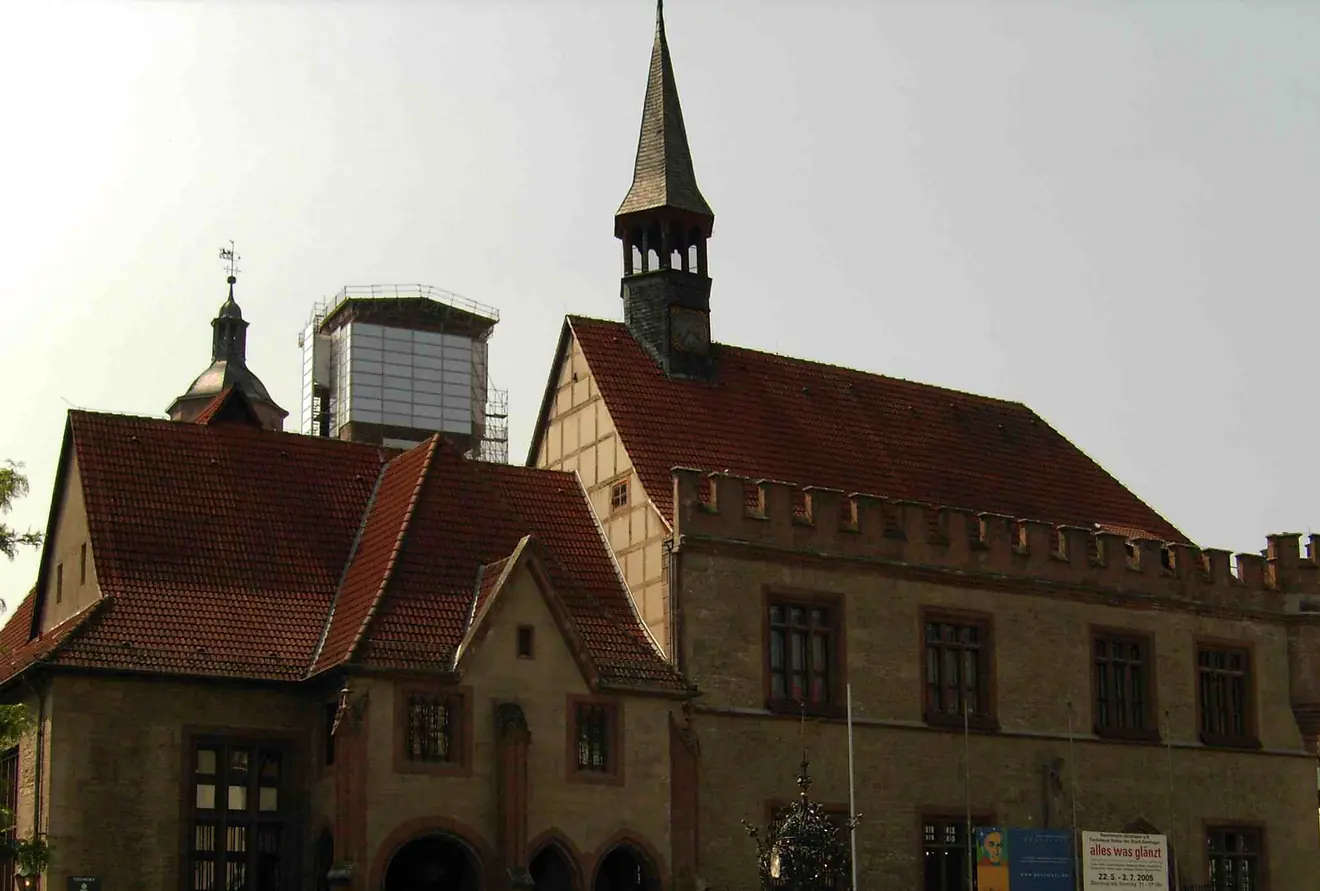
According to the university, the Gänseliesel has stood on the Markt in front of the Old Town Hall since June 1901, and newly promoted doctors bring flowers and kiss the figure. Photos of this are shared only with the consent of the people shown. Göttingen Tourismus describes Weender Straße as the most important shopping street, largely a pedestrian zone, so a short video "from the street into the shop" is a natural content line for a store there.
- Location tag: tag only the place where your business really is.
- District story: a workshop in Weende or Geismar can speak to customers from that district; do not list districts you do not serve.
- Hashtags: a short list built from place names is enough; we make no promises about hashtag numbers.
05Remote filming plan and approval routine
Even when filming happens on your side, the plan stays written on ours: the camera is in your hands or those of a photographer you choose, and we settle what is shot before and what happens after. We have no team in Göttingen, so we say this openly and do not pretend otherwise.
- The monthly plan decides which formats (Reels, carousels, stories) are produced.
- A shot list is written: framing, length, light, background and sound in short notes.
- You or your photographer collect the material in a single shooting day.
- We edit the footage, write the copy and place the drafts in the calendar.
- You approve every draft in writing; nothing is published without approval.
- On the first day after publishing, comments and messages are watched.
You can choose the photographer in Göttingen yourself; we share the image templates and the shot list with that person. Material gathered in one day yields content for weeks, which removes the pressure to film daily in a kitchen or workshop.
06Comments, messages and the handoff to phone or WhatsApp
Among students, social media management Göttingen businesses win or lose in messages, because this audience prefers writing to calling. That is why we set up the reply routine before the content formats.
The reply guide puts into writing who answers which question, how fast and in which words; where a conversation is handed over for prices, appointments or reservations; and whom we inform immediately about complaints and crisis signs. Türkiye is one hour ahead of Germany in summer and two hours ahead in winter, so we set check times to your business hours, and who can be reached how in an urgent case also stays in writing.
The business itself always confirms the appointment, the table or the pickup time. We direct the conversation to your phone, WhatsApp number or form. In a negative comment we do not argue: facts are checked first, a short and calm reply is written and the solution moves to a separate channel. Copying the same reply for everyone harms both the audience and the review.
07Google Business Profile and reviews in Göttingen
Someone searching on the move for a cafe, hairdresser or workshop looks at the map first, which makes the Google profile your second shop window. Name, address, hours and photos there must match what your accounts say, otherwise trust suffers.
- Posts: publish important announcements, festival week hours and the new menu on the profile as well.
- Photos: Instagram material can be reused, but add current images for semester start and summer.
- Review replies: answer each review in the language it was written in; German reviews in German, English in English.
- Limits: under Google's Maps content policy, offering payment, discounts or free goods in exchange for a review counts as fake engagement; we never suggest it.
Asking customers for a review is allowed, but it has to happen without pressure, without requesting specific content and without promising anything in return. A small QR code at the counter and a line such as "if you were happy, we would appreciate a few words" is enough.
08German, English and Turkish: which language for whom
For most Göttingen businesses the first language is German, the second is a short English line, and Turkish becomes a separate line only when the Turkish speaking community is a real part of your audience. Each language needs its own written copy, not a translation.
Of the 695,991 overnight stays in 2024, 573,650 came from guests from Germany, which shows why German leads. For international students and researchers and for guests from the USA, one English line should carry hours, address and the main message. Guests also arrive from markets such as Denmark, Switzerland and Sweden, but we produce content only in German, English and Turkish, and short English works for these visitors too.
If your customer base is the Turkish speaking community, for example through Turkish groceries, barbering or consulting, we build Turkish as a separate content line. It is not a translation of the German account; it has its own stories, its own sentences and its own hours. A single post that mixes languages reaches both groups only halfway.
Language choice does not end with the post text. Story captions, highlight titles and the bio follow the same logic. One English line next to the German main text is usually enough and easy to read, while long bilingual texts are skipped and do not fit the short text layout of the platforms.
09Sector examples from the science city
Examples in Göttingen come from three economic veins of the city: everyday services around the university, the visitor economy of the old town and high technology. The following are setups a business could design; they are not real client examples.
- Cafe and restaurant: morning coffee, lunch menu and semester start information without promotion language; the workflow is shown on social media for restaurants. According to the university, more than 40 Nobel Prize laureates have lived and worked in the city, which gives material for stories.
- Measurement technology supplier: a part family, a calibration process and a portrait of one team member on LinkedIn; customer names only with written consent. For the framework see social media for industrial companies.
- Language course or tutoring: semester start, trial lesson and first week; written consent for every person shown. Details are on social media for course providers.
- Accommodation: rooms, breakfast room and the walk to the old town, with brief directions in English.
What all examples share is that they answer one main question for the audience: "is it open" for the student, "how do I get there" for the visitor and "what do you do" for the specialist. When we adapt an example to your business, we ask whether the audience can take the next step after seeing it. If hours, address, message route or request form are missing, the content does no work however attractive the image is.
10Working with creators and labeling advertising
If a creator posts in return for money, products or another benefit, the commercial purpose must be recognizable; in Germany the basis is section 5a, subsection 4 of the UWG. The rule asks that a post state clearly that it is advertising whenever the commercial purpose is not obvious from the circumstances.
According to the guide on advertising labels of the German state media authorities, every story slide has to be labeled, and so does a repost. Meta in turn requires the paid partnership label and the tag of the partner in branded content. We build the label into the plan from the start and run agreement and briefing separately.
- Briefing: what is said, which label is used, who must approve.
- Label: in a visible place in the post and on every story slide.
- Record: the agreement, the date and the approval are kept in writing.
When choosing a local creator, look at the audience's tie to Göttingen more than at the follower count. A student account can be a natural bridge at semester start, but the product or service you give in return is also a benefit and has to be labeled. Spoken agreements that are not recorded cause trouble later. The collaboration itself belongs to influencer marketing; on the account side we handle briefing, labeling and review of the post. For legal assessment ask your lawyer.
11Consent, legal notice and music rights
Three rules sit on the checklist before every post: image consent, provider details and music rights. All three look small, yet each can lead to a suspended account or a legal demand.
For image rights, section 22 of the KUG says portraits may be distributed or shown only with the consent of the person depicted. If you film in front of the Old Town Hall, ask people in the foreground for approval, preferably in writing; shots without recognizable faces are simpler. For employees we obtain approval before publishing, and we plan for consent to be withdrawn: if someone leaves or changes their mind, the content is removed.
On profiles used for business, provider details under section 5 DDG are expected to be easy to reach, so we usually link the legal notice page of your website in the bio. For music we follow the Meta music guidelines: the library available to business accounts is limited, and we never record a song playing in the room into a video. In workshop and laboratory shots we also watch screens, documents and customer parts for visible information, and change the camera angle where needed. A lawyer decides the exact legal assessment on these points.
12Measurement and the monthly report
The monthly report measures decisions, not likes: which content was saved and shared, produced profile visits and route requests, and which messages became real inquiries. The numbers come from your accounts and your own records; we give no forecasts.
- Reach and saves: signs of interest; likes alone carry no decision.
- Profile visits and link clicks: a UTM link goes on the bio link, so clicks show on a separate line.
- Routes and calls: counted separately from the Google Business Profile.
- From message to inquiry: together we mark how many conversations became an appointment, an order or a quote request.
For comparison, quiet weeks, semester start weeks and festival weeks are read apart. That shows which kind of post worked in which period. At the monthly review we drop formats that did not work and extend those that did. Small and uneven numbers in the first months are normal, and we read them as learning data, not as a promise of results.
At the end of each report in our social media management Göttingen routine three things are written down: what we learned, what we drop and what we try next month. Those three sentences are a more valuable decision record than any table of figures. Free tools without registration are enough to build the tracking links.
13Common mistakes of Göttingen businesses
Most mistakes do not come from carelessness but from treating the audience as one block. These are the five we see most often in first conversations, each with the better path.
- Assuming one "Göttingen audience": students, visitors and specialists ask different questions; write a separate first sentence for each group.
- Not updating hours: festival week and holiday hours must be identical on the profile, the map and the stories.
- Answering messages late: at semester start students write instead of calling; set up a routine that replies the same day.
- Buying followers or reviews: it breaks platform rules and destroys trust; grow through content, community and, where it makes sense, ads.
- Leaving consent and labels for later: fixing them after publishing is hard; apply the checklist before publishing.
A sixth mistake is opening every platform at once. Being regular on two platforms brings more work in than being scattered on five.
None of these mistakes is beyond repair. Aligning hours, setting up the reply routine and writing one first sentence per audience group are tasks for the first weeks. In the first conversation we mark together which of them weighs most in your case.
14Choosing a partner and the first 90 days
When you choose a partner for social media management Göttingen deserves a clear checklist: does the offer start with the audience question, does it say plainly who films, do the accounts stay in your name, is the monthly report written and does it promise results? Treat an offer that talks as if a team sat in the city with caution.
- Weeks 1 to 2: video call, account review, the answer to the audience question.
- Weeks 3 to 4: content plan, shot list, reply guide and the first shooting day.
- Month 2: regular publishing, message routine, matching the Google Business Profile to your accounts.
- Month 3: first three month reading, simplifying the formats, updating the semester and festival calendar.
The page that receives visitors from social networks is part of web design for Göttingen; paid reach, if needed, is planned separately under Meta ads management. For the scope of the service see social media management, for packages the pricing section, and to describe your business write to us.
Bring to the first call your profile links, your target audience, your business hours and who will do the filming. The scope depends on the number of platforms and languages, the share of video, the filming need and the volume of messages; an ad budget is not part of a package. We promise nothing about followers or reach; what we do promise is regular production, written approval and transparent measurement.