Social media management Amasya businesses need is rarely about one audience. A single account is read by a traveler planning a night or two, by students spread over the districts, and by buyers abroad who are looking for stone or apples. All three see the same posts, and each is waiting for the answer to a different question. This guide does not repeat the page summary; it walks through the decisions in the order you will face them.
Talha Aslan and team run the work fully online from start to finish. We have no office, representative or employee in Amasya, so every section also explains how shooting, approval, message replies and measurement work at a distance.
01Who the social media audience of Amasya is
An Amasya account is seen by at least four groups, and each looks for something else. TÜİK's 2025 address based count puts the province at 342,242 people; in and around that number these audiences stand out.
- Visitors: facilities licensed by the Ministry received 233,854 guests and logged 296,982 overnight stays, so a stay lasts only a little longer than a night per guest. Facilities in the central district counted 8,951 foreign guests.
- Students: Amasya University has 20,815 students, with campuses in the center and in Merzifon, Suluova, Taşova and Gümüşhacıköy.
- District residents: 151,433 people live in the central district, 77,077 in Merzifon, 46,928 in Suluova, 30,034 in Taşova and 22,319 in Gümüşhacıköy.
- Buyers: wholesalers and importers who look for Beji natural stone and Misket apples from outside the province and from abroad.
If you cannot write in one sentence whom the account speaks to, it is too early to start a content plan. Try something like "This account tells families who come to the Yalıboyu on weekends about rooms and breakfast" or "This account shows importers looking for block stone the quarry and the paperwork". Platform and language follow from that sentence.
The split has two practical effects. The same photo is not shown to the visitor and the buyer: the visitor wants the room and the view, the buyer wants the process and the certificate. And a plan for social media management Amasya owners can use cannot be built around one age group, because the four audiences do not use the same tools.
02Which platforms fit which Amasya business, and which do not
The choice depends on where your audience makes its decision; you do not need to be everywhere. In Amasya the practical pairing usually looks like this.
- Instagram: the main shop window for mansion hotels, guesthouses, cafes, gift shops, hairdressers and courses. Reels carry discovery, stories carry daily information, highlights hold fixed facts such as the route and the hours.
- Google Business Profile: for the visitor and the student who decide on the map. Hours, photos and reviews are decisive here.
- TikTok: for businesses that can show a process or a place in a short video and want to reach students.
- LinkedIn: for quarries, workshops, industrial zone firms and producers who hire; mostly wasted effort for a small shop.
- Facebook: for district groups, event announcements and talking to existing customers; secondary for finding new audiences.
Knowing what does not fit is a gain too. A one person guesthouse has no time for five platforms, and being steady and accurate on two beats being half finished on five. We pick one main channel and one support channel first, and widen after three months based on measurement.
03A local content calendar for Amasya
The Amasya calendar has four rhythms: the spring blossom, the summer holidays with the June festival, the autumn harvest and the student term. Keeping a social media management Amasya calendar free of years, as a frame that renews each season, protects the content from going stale.
- Spring: the time when apple trees blossom is a ready made topic for producers; for mansion hotels it is the opening of the riverside walking season.
- June: the international Atatürk culture and arts festival, held every year from 12 to 22 June, brings movement to the city. Lodging, cafe and guide accounts prepare route and program content for those weeks ahead of time.
- Autumn: harvest, storage and packing are explained to wholesalers and to home buyers; with the start of the term, content for students opens as well.
- Winter: the quiet period for customer questions, team introductions and collecting photos for the next season.
Neighborhood stories belong in the calendar: the morning light on the Yalıboyu, the narrow streets of Hatuniye, a tea break around Gökmedrese. They work in short video and carousels because a visitor wants to see the street before walking it. Saying "this season" instead of writing the date on every post keeps the calendar usable for years.
04Producing content when the team is online
We have no team in Amasya, so the camera is in your hands or those of a photographer you choose, while we handle the list, the templates and the editing. Set up properly, this gives steadier results than a one off visit, because the list is written in advance.
- The monthly content lines are set: rooms and view, product and process, team, frequent questions.
- For each line we send a shot list: frame size, vertical or horizontal, how many seconds of video, in what light.
- You or your photographer collect the frames on one shooting day and upload them to a shared folder.
- We select and edit the frames, write caption drafts and place everything in the calendar.
- You approve or ask for changes; nothing unapproved is published.
In risky places such as a quarry or a workshop, shooting safety is the business's responsibility; we say which frame is needed, and you decide how to take it safely. In a mansion, daylight and an empty room are the most valuable resources, so shooting during hours without guests is enough.
When choosing a photographer, look at the interior, product and short video samples in the portfolio; having worked in Amasya is not required, showing work similar to yours is. Agree on usage rights with the photographer in writing at the start. The accounts and the photos stay with you.
05Community management: replies, messages and the handoff to the phone
Visitors mostly write close to the day of the trip, so reply speed decides the room or the table. The routine has three parts: who looks, when they look, and who they hand over to.
- Reply window: the hours in which we answer and the hours in which the business looks are written down.
- Ready sentences: answers to repeated questions such as opening hours, parking, walking distance, breakfast and cancellation are written together; each reply is still adapted to the person.
- Handoff rule: confirmation of a room, table or order always comes from the business. We send the guest to the phone or to the business's WhatsApp line.
- Complaint flag: when a harsh comment or message arrives, the business is told at once, and we do not carry on an argument in public.
For questions from abroad we set a path too: short English reply templates and one sentence explaining the time difference are enough. Messages from students mostly ask about prices and hours; those answers should also stay fixed in the profile so the same question is not asked every day.
One simple rule covers crisis signs: if a comment or message holds a legal claim, a health or safety complaint or a press question, we do not answer it ourselves and pass it to the business the same day. Most social media management Amasya accounts need is about ordinary unanswered questions, not about such high risk cases, and the routine is built for exactly that.
06Google Business Profile posts and local reviews
On the map the decision usually rests on opening hours, photos and reviews, so the profile is the second shop window of the account. Two problems are common in Amasya: hours that are not updated when the season changes, and a district name missing from the profile.
- Consistent details: hours, address, phone and category on the account match the profile exactly. Keywords are not added to the business name.
- Posts: a new menu, a season opening, a festival week or a harvest announcement is added to the profile too; photos come from the real place.
- Review replies: thanks are kept short, and criticism is answered with detail and a calm sentence. The same template sentence looks careless.
- District name: a business in Merzifon, Suluova, Taşova or Gümüşhacıköy shows its district plainly in the profile and description.
We do not buy reviews, and we do not ask customers for reviews in exchange for a discount or a gift. For a satisfied customer, a plain message after payment such as "we would be glad if you shared your experience" is enough; putting the link on the table or at reception with the QR code tool also works.
07Languages: when to write in Turkish, English or Arabic
The language decision depends on your audience and your sales records; not every business needs three languages. For a local shop Turkish is enough, and for a producer who sells abroad English becomes the base.
- Turkish: the main language for local visitors, students and district customers. Warm, short and written with neighborhood names.
- English: for foreign visitors and importers. Foreign guests are a small share of the total, but a short English headline and the opening hours help lodging accounts; for stone and apple buyers English is the working language.
- Arabic: considered only if a market such as the Gulf or Lebanon clearly shows up in your sales records and someone who knows the language as a native will write and check the text.
A headline produced by translation software can be worse than no headline. We write English text in a natural voice, and for Arabic we first confirm the need. A hesitant account in one language earns more trust than a long but careless multilingual one.
A practical method is to build a strong main line in one language and add the second to selected posts. A mansion hotel writes room names, hours and the booking route in English as well, while stories and long captions stay in Turkish. A stone firm gives product name, surface finish and size in English too. Writing the same information twice is always more readable than leaving half a translation.
08Sector examples from Amasya
The same method creates a different content line in every sector. The examples below make clear what an account should show; none of them is a client example.
- Mansion hotel and guesthouse: the river view from the window, the breakfast table, the walking time into the old town and parking. Details are on the social media for hotels page.
- Natural stone firm: block, slab and surface finishing videos, shipping steps and the paperwork process. More on the social media for building materials page.
- Apple grower: blossom, harvest, storage and packing; varieties for the wholesaler, crates and the order route for the home buyer. See social media for farms.
- Student cafe or hairdresser: an introduction for newcomers at the start of term, hours during exam weeks, and a student price shown clearly with its dates.
For producers in the industrial zones, production line, team and job post content finds an audience on LinkedIn. According to the Governorate's report there are four organized industrial zones in the province and built in kitchen appliances stand out in exports; the accounts of these firms should show the catalog with product codes.
09Working with local creators and the advertising label in Turkey
Working with an influencer or a local creator can bring a new audience to your account, but the rule in Turkey is clear. Under Article 23A of the Regulation on Commercial Advertising and Unfair Commercial Practices, advertising made through a social media influencer must carry the word "Reklam" or "Tanıtım" (advertisement or promotion).
- Paid or free stays: a post by a creator hosted in a guesthouse also carries a label, because it involves compensation.
- Brief: a written note sets out what will be shown, which facts must be right and where the label will sit.
- Selection: look less at follower counts and more at the audience's link to Amasya, the quality of the comments and the consistency of the content.
- Check: after publishing, review once more that the label, the location tag and any price statement are correct.
Finding creators and writing contracts is a separate service that runs under influencer marketing; on the account side we handle the brief, the label and the check afterwards. We never recommend buying followers or engagement, or joining engagement groups.
A second form of local collaboration is cross sharing between shopkeepers: a mansion hotel and a shop that sells regional products can appear on each other's accounts. If compensation is involved, the label rule applies. Before resharing customer content, get written permission from the owner and credit the source.
10Privacy, consent and copyright in Turkey
Customer photos, images of staff and music are the three areas where accounts most often run into legal risk. For images that count as personal data, explicit consent is needed under the Personal Data Protection Law No. 6698 (KVKK); it should be written and state the purpose of the post clearly.
- Guests and students: the face of a person at a table, in a room or in a cafe is not posted without consent. For a child, a parent's approval is needed.
- Staff: written approval is taken for images of people working at the quarry, the workshop or the orchard; if consent is withdrawn, the post is removed.
- Music: putting a copyrighted song into a video without permission can lead to removal. For business accounts we check the music library and rules that the platform offers.
- Images: photos downloaded from the internet or pictures of another venue are not used; we use only your own frames or licensed images.
For legal questions we recommend consulting your lawyer; we build the checklist and apply it before publishing, but we do not give legal opinions. Keeping consent forms in the shared folder makes it easy to find which frame was published with which permission.
11Measurement and the monthly report without promises
A like count does not tell you why someone decided; interest that turns into a table, a room or a quote does. So the monthly report rests on indicators that come close to messages and calls, and it contains no promise of results.
- Reach and saves: a saved place or route shows that someone is thinking of coming.
- Profile visits and link clicks: by tagging links with UTM parameters we separate which post led to the website.
- Google profile actions: searches, direction requests and phone taps are tracked separately.
- Inquiries from messages: how many messages turned into a room, an order or a quote comes from your own records; we never invent the figure.
If you want to calculate engagement yourself, the Instagram engagement rate tool works without sign up. At the end of the month we talk about which format worked, what to drop and the plan for the next month. We make no promise about follower numbers, reach or occupancy.
The social media management Amasya report we write fits one page in three parts: what was published this month, what worked, and what changes next month. For a seasonal business, comparing a month with the same month of the last season is more meaningful than comparing it with the month before; July is set against the previous July, not against March. When numbers are small we look at the messages and calls themselves rather than percentages.
12Six mistakes Amasya businesses often make
The mistakes below are patterns that appear often on Amasya accounts; each one comes with a sturdier alternative.
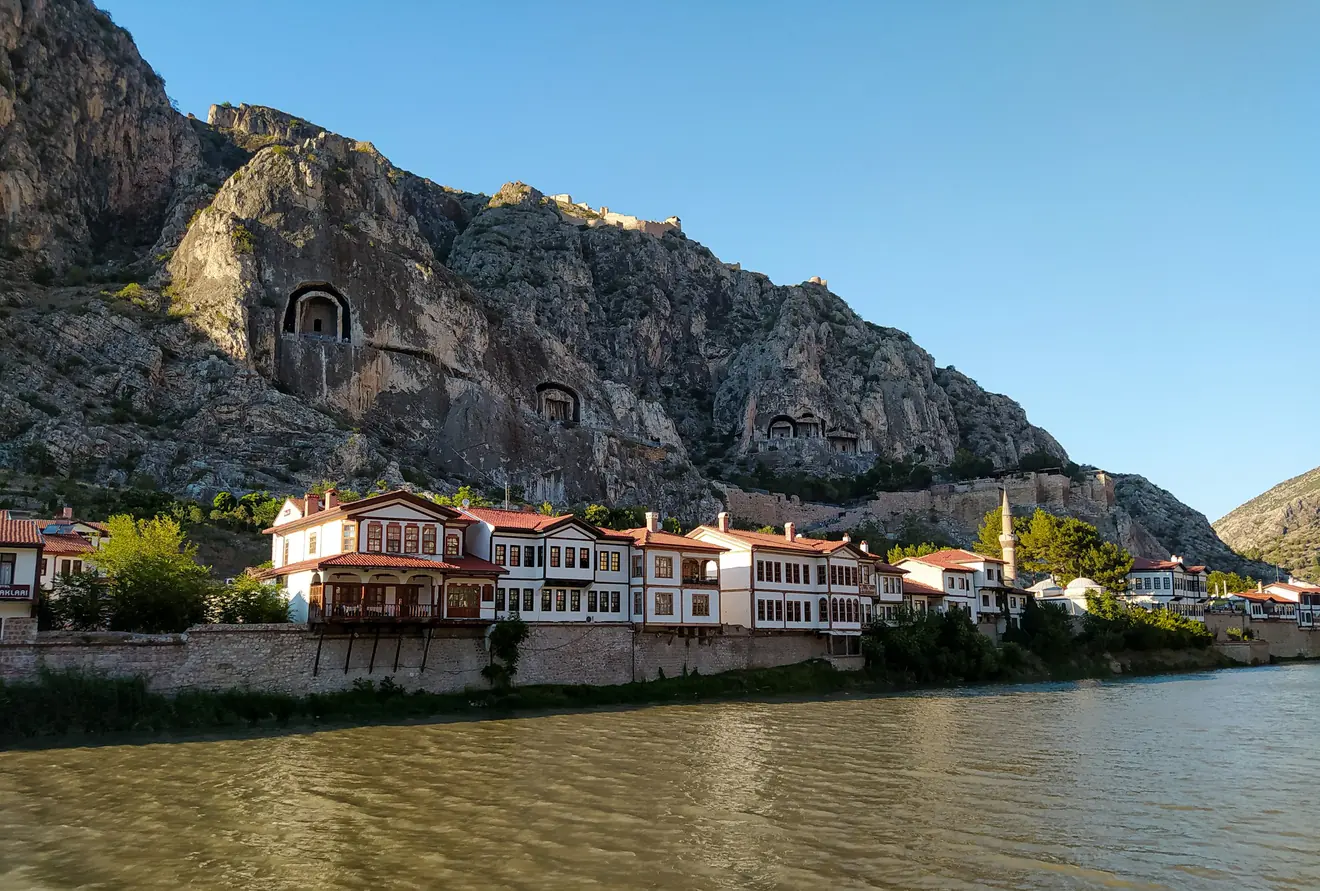
- Showing only the historic place: rock tombs and waterfront houses are the frames everyone posts. Instead, connect your own room, table or product with that view.
- Leaving weekend messages empty: visitors write close to the trip. Write down the reply window and define the phone handoff.
- Dropping the district name: a business in Merzifon that appears under the name Amasya can fall behind in local search. State the district plainly.
- Showing the stone and hiding the process: buyers want to see the quarry, the workshop and the documents. Add process videos and a short English headline.
- Leaving a student campaign open: an expired price post creates a wrong expectation. Give the campaign an end date and remove it when it passes.
- Doing everything on every platform: choose one main channel and spend the remaining time on messages and the profile.
Most of these come from the order of decisions, not from budget; they improve once audience, platform and content are set in that order. A seventh mistake should not stay off the list: old information left on the account. Closed seasonal hours, a changed phone number or a finished campaign mislead every day, and a short monthly check of profile, highlights and Google details prevents most complaints.
13Choosing a partner and the first 90 days
Ask a partner you will work with at a distance three questions: who shoots, how does approval work, and in whose name is the account. Good social media management Amasya owners can rely on starts with honesty about this. Be careful if a partner says it has a local team in Amasya but cannot explain the shooting and approval routine plainly. With us the accounts stay with you, and you add the team through the official access panels.
- Weeks 1 and 2: account and audience review, a video call, the decision on district and language, and corrections to profile details.
- Weeks 3 and 4: the first shot list, templates, the first monthly calendar and its approval.
- Second month: regular publishing, the comment and message routine, Google profile posts.
- Third month: the first measurement review, dropping a format that does not work, the decision on a second platform.
Scope and packages depend on the number of platforms, the content volume and the message load, and the current terms are in the pricing section. Our web design work for Amasya receives the visitors your account sends, and paid boosting is planned separately under Meta ads management. To look at your account together, get in touch and we will come back with a written scope and quote.