Real estate SEO is the work of choosing which searches an agency can actually win while it shares the results page with the portals, then connecting those searches to viewings, valuations and new instructions. The lasting asset of an agency is not any single listing but its local knowledge and its relationships with owners; visibility built on those two survives every sale.
The sections below follow the decisions a broker or branch owner makes in order: which person to reach with which words, which filters deserve a page, what happens to a sold listing, the map pack, advertising rules and the numbers to watch. Each section gives you something to check this month.
01Three people, three different search vocabularies
Property searches come from three different people: someone looking for a home or commercial space, an owner who wants to sell or let, and a past client who looks up the agency or an agent by name. Their words and your chance of winning differ, so the plan starts from that split.
- Buyers and renters: "two bed flat to rent Clapham Junction", "condos for sale in The Waterline", "townhouse with garage Brookline". The more specific the query, the weaker the portals' hold and the stronger the agency that knows the streets.
- Owners: "how much is my house worth", "letting agent for one property", "sell inherited house in probate". These searches grow your stock, and portals cannot answer them with a list of listings.
- Agency and agent: your brand name, "estate agents Islington", an agent's name plus "reviews". The decision is mostly made.
- Information: "who pays closing costs", "stamp duty on a second home", "how long does conveyancing take". These meet people months before they act.
To see your own mix, export the last twelve months of queries from Search Console and tag each one with one of these four groups. If the owner group is close to empty, that is usually where real estate SEO has the most to give, because new instructions grow your inventory, not visitor numbers.
02Deciding which filter combinations become pages
A filter combination earns an indexable URL when people type it as a search of its own and the page can hold enough listings to stay useful most of the year; every other combination stays out of the crawl. A written decision table prevents thousands of pointless URLs from the start.
- Search demand: the combination appears as a phrase in keyword tools or in your own Search Console queries.
- Stock continuity: the page stays filled through seasons; full one month and empty for three loses trust.
- Clean, stable URL: a short readable path built from transaction, property type and area, not a chain of parameters.
- Its own title and intro: two or three sentences written for that combination, not one templated line.
In practice, transaction plus property type plus area usually becomes a page. Bedroom count only earns one in specific places, for example one bed rentals around a university or a hospital. Price bands, size ranges, sort orders and view toggles never enter the index.
An empty combination should not be a page that says no properties found while returning a success code; it returns a real 404. On paginated lists each page canonicalizes to itself.
03Making your listing page more than a portal copy
If the same home sits on Rightmove, Zillow or the MLS syndication network, your page only stands a chance when it carries information the copies do not have. When Google sees several versions of one text it usually picks one to show, so the reason to pick yours has to be on your page.
- The agent's own observations: when the living room gets the sun, how quiet the street is at night, what the parking really looks like, whether the entrance has steps.
- Different text from the portal: a short summary for syndication and the full description on your site; the two never open with the same paragraph.
- Context links: descriptive links from the listing to the area page, the development page and other homes listed by the same agent.
- Labeled media: a floor plan, photos named by room and alt text that says what each picture shows.
In the United States, IDX feeds put the same MLS listings on many broker sites at once, so feed pages rarely rank on their own. Keep them for visitors, but build organic strategy on pages only you can write.
Listings also carry required information. In the UK, National Trading Standards guidance sets out the material information a property listing should show, from council tax and tenure to utilities and, where relevant, flood risk. In the US, the Fair Housing Act makes it unlawful to publish a housing advertisement that indicates a preference or limitation based on race, color, religion, sex, handicap, familial status or national origin, so phrases like "perfect for young professionals" stay out of titles.
04Planning what happens to sold and let listings
The fate of a sold, let or withdrawn listing's URL should be defined in your software before the listing goes live. Leaving a home online as available after it has gone risks misleading people, which consumer protection law treats as unfair, and it fills the index with dead ends. The flow we recommend:
- Status lives in its own field: available, under offer, sold, let, withdrawn.
- When status changes to sold, let or withdrawn, the listing comes off the site within a short, fixed window set in your process, not whenever someone remembers.
- A listing URL that earned links or steady traffic redirects permanently to the list page for the same area and property type.
- A listing URL with no links and no traffic returns a 410, which says the page is gone for good.
- The XML sitemap updates the same day: removed listings drop out, new ones enter with their last modified date.
- For rentals that return to the market a year later, decide once whether the old URL is reused, and apply that rule every time.
Some US brokers keep sold pages as a track record; check your MLS and brokerage rules first and label them clearly as closed sales. When you change platform or rebuild the site, map every old listing and list URL to its new equivalent; the redirect mapping tool helps match an export of old URLs to the new structure. Check the not found report weekly after the move.
05Area, development and building pages that deserve to exist
An area page deserves its place in the index only when it answers questions that someone working there every day can answer. Dozens of pages with one text and swapped place names fall under Google's doorway abuse definition and weaken trust in the whole site; depth comes before count.
What a strong neighborhood page includes:
- Differences at street level: which side is hilly, which road is busy in the evening, where older housing stock is concentrated.
- Verifiable transport and services: walking distance to stations, schools, clinics, market days, parking rules.
- Housing stock: period conversions versus new build, leasehold or condo association patterns, ongoing regeneration.
- Live listings in that area, plus the name and photo of the agent who knows it.
Searches for a named building or estate are narrow, high intent and often unclaimed. A page describing the blocks, shared amenities, management arrangements and typical layouts becomes the natural home for every listing from that building. New build launches are often sold by the developer directly; we cover that side on our SEO for construction companies page.
Keep every area claim verifiable; lines such as "values here can only go up" create legal risk and erode trust.
06Owner searches are where your stock comes from
On the buyer side you share the market with the portals; on the owner side the person is choosing who to trust with a sale or a let, and your own site is the natural answer. Adding valuation and instruction searches to a real estate SEO plan is the only organic route that grows your inventory independently of the portals.
- Valuation page: explains in plain words what your price opinion is based on, why a visit matters and how it differs from a lender's formal valuation or appraisal.
- Landlord page: covers tenant referencing, the tenancy agreement and inventory, deposits and what you handle once the tenant moves in.
- Special situation guides: an inherited home, a sale with tenants in place, a short lease flat, an owner living abroad.
- A short form: street or postcode area, property type, bedrooms and contact details, with a clear privacy notice right below it.
The topics for these pages sit in your agents' phone calls, not in a keyword tool. Have agents note owner questions for a month; a question three people ask is a guide topic. Owner searches are lower in volume, but each can become an instruction and then many buyer inquiries; weigh them that way when you set real estate SEO priorities.
07The map pack, agent profiles and reviews
For searches such as "estate agents near me" or "realtor Brooklyn Heights", map results sit above the organic list, which makes the Business Profile a main channel for an agency, not a side listing. A profile that follows Google's rules is the precondition for being seen at all.
- Name: exactly what is on the sign; adding "homes for sale" or an area name risks suspension.
- Category: real estate agency as primary; property management or lettings as secondary only if you really offer them.
- Agent profiles: only for agents who meet Google's individual practitioner conditions, with names distinct from the agency profile and the hours they truly see clients.
- Photos: the storefront and sign, the interior and the team, so visitors recognize the door.
Tie review requests to completion: after the sale closes ask both buyer and seller, after a let ask both tenant and landlord, all with the same message. Asking only the clients you expect to be happy, or offering a discount for a review, breaks Google's fake engagement policy. Fake reviews are banned outright in the UK under the DMCC Act 2024, and the FTC's rule on consumer reviews targets them in the US. Reply to negative reviews within two working days, without personal details and without arguing.
08Trust signals and the limits of property advertising
Buying or selling a home is a major financial decision, and Google looks closely at who wrote content on such topics and with what experience. An agency site has to make experience and accountability visible.
- License or registration details, redress scheme or brokerage information shown in the footer and on the contact page, as your market requires.
- Agent pages with name, photo, areas covered and the live listings they are responsible for.
- Guides with the author's name and a last updated date, and links to official sources on taxes and fees that change.
- A paragraph in valuation and investment content that says honestly what cannot be known.
A description that hides a defect may win a click, but it loses the viewing and returns as a bad review. Instead of unprovable claims such as "below market value", write measurable features: orientation, floor, outdoor space, distance to transport. Keep your name, address and phone identical on the site, the Business Profile and portal member pages.
09Map search, photo galleries and speed
Most technical problems on agency sites come from features that please users but challenge search engines, such as map based search and large photo galleries. The fix is a crawlable path beside them.
- A list beside the map: if listings only load when the map is dragged, Google cannot find them; every map view needs a list of real links next to it.
- Real links: listing cards open through links with an address, not through script click handlers.
- Photo loading: the first photo loads at once, the rest as they approach the screen, in modern formats at sizes that fit the device.
- Tours and video: loaded only when the visitor presses play.
We use Google's Core Web Vitals thresholds as the speed target: LCP, which measures how quickly the largest image or block appears, at 2.5 seconds or less; INP, which measures how fast the page reacts to a tap, at 200 milliseconds or less; and CLS, which measures layout shift, at 0.1 or less. On listing pages the LCP element is usually the cover photo, so improvement starts there.
If you also sell to overseas buyers, each language needs its own URL and the versions must reference one another; the hreflang generator prepares the tags. If your current platform cannot carry this structure, rebuilding on a proper real estate agency website takes less effort than patching.
10Structured data that fits an agency
Structured data describes the agency and its pages to search engines in a machine readable way, but Google's rich result gallery has no feature for homes for sale or long term rentals. The goal is to describe entities correctly, not to chase decorated results.
- For the agency: RealEstateAgent, with name, address, phone, opening hours and social profiles matching the Business Profile exactly.
- For agents: Person, with a link to the agency they work for and the URL of their agent page.
- For navigation: BreadcrumbList, following home, transaction, area and listing.
- For the company: Organization, with logo, official accounts and branch relationships.
RealEstateListing still sits in the pending area of schema.org. Using it does no harm, but do not expect a visible effect in Google. Marking listings up as Product with star ratings to win rich results means marking up information the page does not show, which invites a manual action.
FAQ markup no longer produces rich results for most sites; since 2023 Google limits that display to authoritative government and health sites. Question and answer sections still help readers and AI assistants.
11Being cited in AI answers
Home hunters now ask AI assistants to compare neighborhoods, explain rent rules and walk them through the buying process, and the pages cited in those answers give short, verifiable answers under clear question headings. An agency's edge is local knowledge.
- In guides, the first two sentences under each subheading answer the question directly; detail follows.
- Topics that change, such as taxes or tenancy rules, show an effective date and a last updated date.
- One page states plainly which areas and property types the agency covers.
- Your robots.txt reflects a deliberate decision about AI crawlers rather than a default nobody chose.
Each quarter we ask several assistants the same questions and record whether the agency is mentioned and described correctly, for example "what should I check when renting in Clapham" or "trusted estate agents in Islington". Wrong details usually trace back to an outdated page on your site or an inconsistent directory listing, and that source gets fixed first.
Assistants do not always show why they chose a source, so we treat this as a discipline that keeps guides and agency details accurate; the method is on our AI visibility page.
12What your report should show and when
A real estate SEO report should open with calls, WhatsApp messages, viewing requests and valuation requests from search, not with a ranking list. Rankings are only an intermediate signal; what matters is which listing, area and search group produced each inquiry.
- Organic inquiries with listing reference and agent; click to call, WhatsApp and forms on separate lines.
- Owner inquiries, meaning valuation and landlord forms, under their own heading, apart from buyer and renter inquiries.
- Business Profile calls, direction requests and website clicks.
- Search Console impressions and clicks for the four search groups, plus how many filter URLs remain indexed.
Tracking respects cookie consent and privacy law; for visitors in the European Economic Area, Google requires consent mode for measurement and personalized advertising features, and owner form data stays out of advertising tools. As for timing, fixes to filters and indexing often show in Search Console within the first weeks, while progress on area and development searches takes months, depending on competition and content pace. Be careful with any proposal that promises a specific position.
When a new development launches or an urgent instruction needs viewings now, you do not have to wait for organic visibility; real estate advertising can fill that gap on the same keyword map.
13Common SEO mistakes at estate agencies
These mistakes share one root: a generic template that ignores listing lifecycles, owners and advertising rules. Each item names the better path.
- Leaving old listing URLs behind in a redesign: before launch, map old list, area and listing URLs one by one to their new equivalents.
- Keeping sold homes online as if available: remove them on time, and tell the story of your sales on area pages and agent profiles instead.
- Opening a profile per agent at the office address under the agency name: create profiles only for agents who qualify, under their own names and real hours.
- Filling area pages with encyclopedia text: write what your agents know from the street, or do not publish the page.
- Hiding the valuation request behind one button: give owners a dedicated page, a clear process and a short form.
- Not matching listing references between site and portals: use one reference across channels so you can see where each inquiry came from.
14Choosing the right team and the next step
When choosing a team for real estate SEO, look less at general SEO experience and more at whether they understand listing software, portal and IDX feeds, and property advertising rules in your market. Ask these questions in the first meeting and listen for concrete answers:
- Which filter combinations would you index, and what data would that decision rest on?
- What happens to a sold listing's URL, and how will that rule be built into our software?
- Which pages would you create for owner searches?
- How will you report inquiries by listing reference and agent?
- Will admin access to Search Console, GA4 and the Business Profile stay with the agency?
A good answer points to a specific filter URL, area page or Business Profile gap on your site; a generic package pitch or a promised position shows the core of the job has been missed.
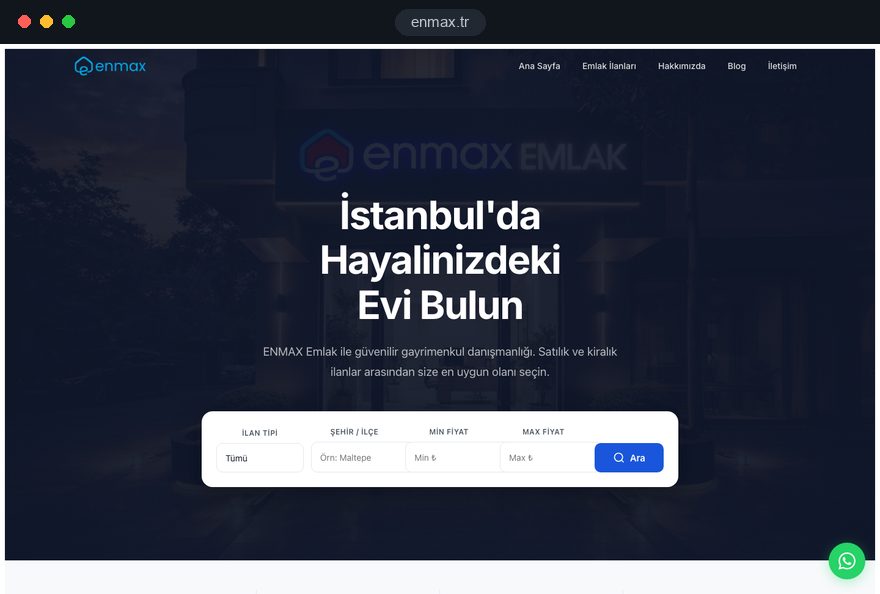
Our SEO consulting page explains how we run the work, and our references include estate agencies in Istanbul where we ran SEO. Fixed scope packages are listed in the SEO pricing section. For an assessment of your agency, send your site address, an approximate listing count and the areas you cover through the contact form; we review the current state and send real estate SEO priorities with a written quote.