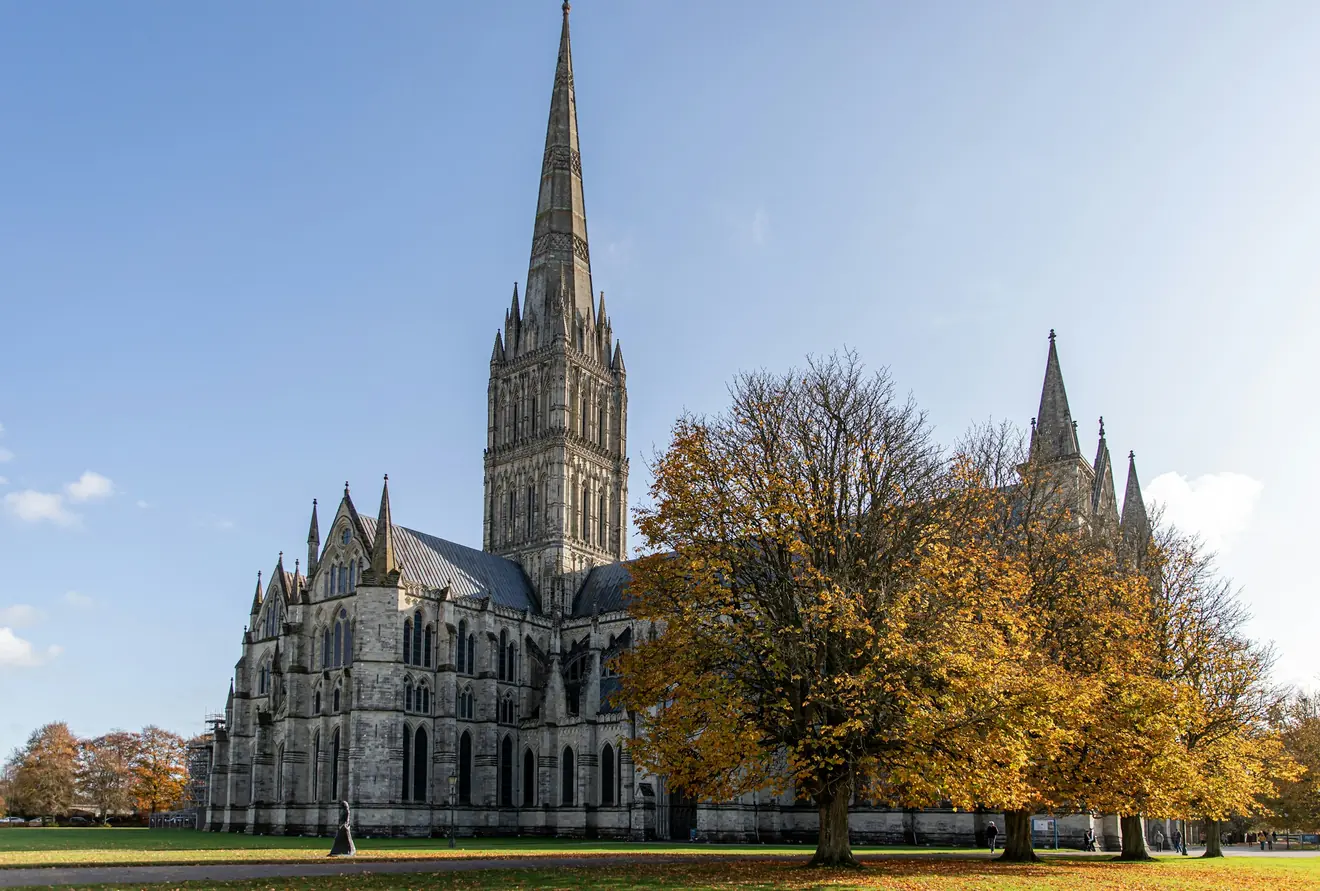
Social media management Salisbury owners can use has to cope with an unusual spread of people. In one week the same account may be seen by someone choosing a bed near the Cathedral Close, a service family who have just arrived on the Plain, a researcher on a lunch break at Porton and a shopper who wants to know what is on the Market Place stalls today.
This guide goes beyond the page above it. It explains how the work is organised when it runs online, which decisions are yours, what a calendar for this city looks like, and which British rules apply. Nothing here promises followers or reach; it describes a method you can check against your own records.
01Who is watching, and what each group wants to know
Start with the person, not the platform. Salisbury accounts are read by four groups who rarely look for the same thing, and a post written for one can leave another cold.
- Visitors: they compare places before they travel. They want a walking cue from the Close, opening hours, a table or room, and how to reach Stonehenge, which English Heritage places about 9 miles north of the city.
- Service families: they arrive from elsewhere after a posting and need a plumber, a childminder or a club. They ask in village groups and judge by how quickly and politely someone answers.
- Porton Science Park staff: the park sits on 10 hectares and houses health, life science and defence technology firms. Staff look for lunch, fitness and after work plans; their employers look for suppliers and recruits.
- Market regulars: they follow what is in today and whether a stall is trading this Saturday.
Write down, for your own business, which of the four brings most of your trade. That single decision shapes your channels, your language and your calendar.
02Choosing platforms that match your customers, not a checklist
Pick two or three channels you can keep up, and say no to the rest. Social media management Salisbury firms can sustain is usually narrower than the plan an agency first draws up: a steady account on two platforms does more for a small business than five that go quiet for a month.
- Instagram: the usual home for guest houses, cafes, shops and studios, because visitors save posts and check profiles before booking.
- Facebook: useful for events, market news and the village and neighbourhood groups where service families ask for recommendations.
- LinkedIn: the right place for a supplier near Porton Science Park, with team profiles, project stories and open roles.
- TikTok and short video: worth it when you have something visual to show, such as a craft, a bake or a transformation, and the time to film it.
- Google Business Profile: not a social network, yet it is where many people see your hours and latest posts when they search from the map.
Platforms that do not suit you are as informative as the ones that do. A trades firm with no spare hour to film does not need TikTok, and a bakery with no business customers has little use for LinkedIn. Decide once, review every quarter, and let the reply times you can really meet set the limit.
The link in your bio should lead to a page that confirms what the post promised, which is the job of web design for Salisbury.
03A calendar that follows the rhythm of the city
Social media management Salisbury style starts from fixed dates and works outwards. The Charter Market trades every Tuesday from 8.30am to 3pm and every Saturday from 8.30am to 4pm, with roots in 1227, and it skips the third Tuesday of October because the Charter Fair takes the square.
Around that sit the arts festival from late May into June, the literary festival in October and Christmas on the Square in Guildhall Square, run by Salisbury City Council from late November. Add school holidays, when families look for things to do, and the quiet weeks between them.
- List every recurring date that touches your trade, including market days and the Charter Fair Tuesday.
- Mark the weeks when visitors plan ahead, which is usually well before the event itself.
- Place one post that explains your offer and one that shows it for each peak.
- Leave room for an unplanned post about something that happened this week.
- Review the calendar monthly and drop dates that brought nothing.
Use an event's name only to say where you are, never to suggest it endorses you. District stories fill the gaps between dates: the morning light on a Harnham street, a regular at the Fisherton Street shops, the first delivery of the day to a Milford shop. Small, true details like these make an account feel local without any claim to a local crew.
04Producing content when the team is online
Because we work from Istanbul and never visit your premises, production is built around a shot list that you or a photographer you choose can follow on a phone. The shot list is written per space, because a guest bedroom, a market stall and a van on a driveway are different problems.
- Guest room or shop interior: one wide shot, three details, one short walk through, filmed in daylight by a window.
- Market stall: the opening setup, a close look at the product, a customer hand reaching in (with permission), and a closing shot of what is left.
- Trade job: the start, the finished result and a sentence on where it was, filmed with the owner's consent.
- Office or lab adjacent firm: a person speaking for twenty seconds about one project, not a staged group photo.
We supply caption and story templates alongside the list. Nothing is posted until you have said yes in the shared calendar, and a photographer you hire receives a written brief rather than a verbal one. We never claim a local crew.
A phone is enough. Ask whoever films to keep the phone horizontal for video that will be cropped, wipe the lens, and shoot near a window instead of under shop lights. One two hour session each month, planned from the list, usually produces material for several weeks when it is cut into short clips, carousels and stories.
05Handling comments and messages without a full time desk
A reply routine matters more than a clever caption. People who ask about a table, a quote or an opening hour usually decide within the hour, so the target is a short, accurate answer in your own voice.
We write a reply guide with you that covers the questions Salisbury accounts actually get: parking near the Close, whether the stall is out in bad weather, whether you cover Tidworth or Amesbury, and whether a room is free this weekend. For each one the guide says who answers, in what words and when to hand over to a phone call or WhatsApp.
- Answer public questions in public, then move personal details to a private message.
- Thank people for kind comments in a sentence, not a template.
- Pass anything about safety, a complaint or a refund to the owner at once.
- Do not argue in the comments; offer a call instead.
In village groups, reply only where the group's rules allow businesses to answer, and read them first.
06Google Business Profile posts and reviews in Salisbury
Your Google profile is the first thing many visitors and newcomers see, so treat it as part of social media management Salisbury accounts depend on. Keep the opening hours, category, services and phone number identical to what your Instagram bio and website say.
Use profile posts for things that change: a stall away for a week, a new service, festive opening hours. Reply to every review, short and calm, naming the issue and offering a way to talk.
Reviews need care. The Digital Markets, Competition and Consumers Act 2024 bans fake reviews and incentivised reviews that hide the reward, and the CMA can now act directly against businesses. That means no writing reviews yourself, no buying them, and no filtering out the critical ones.
- Ask satisfied customers in person or by message to share their experience, and make clear they are free to say anything.
- Send the direct review link so it takes one tap.
- If you ever offer a thank you, say so openly in the request.
- Respond to each review within a few days.
07Which language to use for which reader
English leads in Salisbury, in British spelling, because visitors, neighbours, service families and science park staff all read it. A second language earns its place only when you can name the people who need it.
Turkish captions suit a business whose own customers or community ask for them, for example a Turkish speaking owner whose regulars prefer it. We hold no verified local figure for Turkish speaking residents, so we never assume demand.
German helps a guest house or tour that already hosts visitors from Germany, Austria or Switzerland. A DACH company entering the UK market should write for British customers first and add German only for its own partners.
- One post, one language; do not stack three translations in a caption.
- Have a native reader check every translated post before it goes live.
- Keep key facts such as hours and booking links identical in all languages.
If you are unsure, start with English alone for a month and watch which questions arrive in other languages. Social media management Salisbury visitors respond to is rarely multilingual at the start; it becomes so only when the evidence appears in your messages and bookings.
08Examples for the sectors Salisbury has most of
Different businesses use the same method differently. These sketches are working ideas, not client results, because we have no Salisbury client yet.
- Guest house: a room tour, the walk to the Cathedral, the breakfast table and a note on getting to Stonehenge; the hotel page has the detail.
- Trades firm: a finished job, the villages covered and a reply promise; see renovation firms for the pattern.
- Market baker: the early bake, the stall setup and a Saturday reminder; bakery accounts show how counter content works.
- Science park supplier: a LinkedIn page with named people, a short company story and open roles.
A few more cases follow the same logic. A hairdresser near Fisherton Street can show a cut from start to finish and answer which days are free. A gym or studio in the garrison towns can post a class clip with the time and the village. A small consultancy at the science park can explain one problem it solves in plain words.
Pick the sketch closest to you, then change it until it sounds like your business and nobody else's. Whichever you choose, start from the same three questions: who is the reader, what do they ask, and what proves it.
09Working with local creators and labelling the post
Local creators can introduce your business to people who do not follow it yet, but the labelling rules apply from the first message. According to the ASA, a post is an ad when it is paid for, earns commission, or comes from someone with a tie to the brand, and the label should be Ad or Advert, placed upfront and visible before anyone expands the caption.
The ASA lists labels that do not work, such as Sponsored, Gifted and In association with, and a brand tag on its own is not enough. The CMA's guidance on endorsements points the same way, so the safest approach is to build the label into every brief.
- Write the brief, the deliverables and the label wording before the creator films.
- Check that the creator's real opinion is allowed; you cannot script praise.
- Approve the final post, including where the label sits.
- Keep a note of what was paid or given.
Local ambassadors work the same way: a regular who posts about your cafe in exchange for a free coffee has made it an ad. Choose people whose followers are mostly nearby, ask for their real view and be ready to accept a lukewarm one.
Creator work is handled under influencer marketing, and paid promotion of any post is a separate plan under Meta ads management.
10Consent, privacy and copyright basics
Anyone recognisable in a photo or clip is a person whose data you are handling, and social media management Salisbury businesses do needs a simple habit around that. The ICO says valid consent must be freely given, specific, informed and unambiguous, easy to withdraw, and not a pre ticked box or silence.
In practice, ask before you film a customer, a child or a family home, and make it easy for them to say no. Service families may have reasons to prefer not to be shown, so assume nothing. For staff, get agreement in writing and agree what happens if they leave.
- Do not show anyone's face at an event without asking first.
- Do not post a customer's address or the front of their home.
- Use music from the platform's licensed business library, not a chart track.
- Do not take photos from other websites or from event organisers without permission.
When in doubt, crop, blur or choose another shot. Have your own privacy notice reviewed by a solicitor, because this guide is information and not legal advice.
11Measuring the month without chasing vanity numbers
Measurement should answer a question: did the account help people find you and ask? Likes alone rarely do. Reach, saves, shares, profile visits and link clicks show interest, while messages, calls and booking requests show intent.
We add a tagged link in the bio with a UTM link builder so clicks can be traced in your website analytics, and a code from a QR code generator on the stall or window to show how many people scan it. The numbers you report come from your own records, not from estimates.
- Interest: saves, shares, profile visits.
- Intent: link clicks, directions requests, calls, messages.
- Outcome: bookings, orders, quotes, taken from your own notes.
- Learning: which format to repeat, change or drop.
A useful monthly report fits on one page. It shows the strongest and weakest post, the three questions customers asked most, what the Google profile recorded and a short list of changes for next month. Seasonal accounts should compare a month with the same month a year earlier rather than with the month before, because market weeks and holidays distort the picture.
Each month we talk through the report and set the next calendar. We do not promise follower counts, and we do not buy engagement.
12Six mistakes Salisbury businesses make, and what to do instead
These come up often on small local accounts. None needs a large budget to fix, and most can be corrected in a single afternoon with the right checklist.
- Only tagging the city: a tag on Salisbury is too wide. Name the street, the market or the village you serve.
- Posting hours once: hours change with festival weeks and the Charter Fair Tuesday. Update the Google profile and the bio the same day.
- Treating every visitor as the same: a day tripper and a person staying overnight need different posts. Write for one at a time.
- Ignoring the village groups: newcomers ask there first. Reply helpfully and follow the group rules.
- Copying an event's logo: that implies an endorsement you do not have. Mention the place, not the brand.
- Burning out on daily posts: a rhythm you can keep beats a burst. Batch the filming and use templates.
If you recognise more than two of these, the account probably needs a simpler plan rather than more posts. Start with the Google profile and the bio, then fix the reply routine, and only afterwards think about new formats.
13Choosing a partner and your first 90 days
The right social media management Salisbury partner is the one who is honest about the distance, not the one who claims to be next door. Look for a method rather than invented results, and for accounts that stay in your name.
We work from Istanbul, have no office or team in Salisbury, and say so on every page. Ask any agency who films, who replies, how approval works and what the report contains. Ask also who owns the accounts and what happens to the login details if you part ways.
- Days 1 to 15: audit of your profiles, the audience decision and a first shot list per space.
- Days 16 to 30: first calendar approved, templates set up, Google profile aligned.
- Days 31 to 60: regular posting, reply routine running, first monthly report.
- Days 61 to 90: drop what did not work, add a second language or channel only if the questions justify it.
When you are ready, look at the packages in the pricing section or book a free call, and we will follow with a written scope and quote.