A business account in Mülheim an der Ruhr does not write for one city audience. The same post is seen at lunchtime by an employee who commutes in from Essen, at the weekend by a family that has come down to the river, by a student leaving the campus and by a neighbor who follows in Turkish. This guide does not repeat the summary on the page above; it walks through the decisions of social media management Mülheim in the order they appear on a real account, using details of this city.
Talha Aslan and team do this work fully online from Istanbul. We have no office, representative or staff in Germany. So each section also explains how filming, approvals, replies and reports work from a distance, which lets you see from the start what comes from us and what stays with you.
01Who the Mülheim audience is and what it looks for
Social media management Mülheim starts by splitting the audience into four groups instead of one. According to Destatis, 173,050 people lived in the city at the end of 2024, but the people who look at your account are not limited to that number, and each group wants something different.
- Commuters: Statistik.NRW reports that on 30 June 2024, 45,396 people came to Mülheim to work, while 48,236 residents worked elsewhere. The inbound commuter rate is 56.3 percent, against 51.9 in Oberhausen and 49.4 in Essen. This group looks for a lunchtime offer, hours after work and the walk from the station.
- Day trippers: People who come for the river, the boat, the museum in the water tower and the July fair look for hours, directions and a place to take a break.
- Campus: According to the city, about 5,500 students are enrolled at Hochschule Ruhr West, and the Max Planck institutes add staff. This group looks for short, clear information in English.
- Turkish speaking families: Integrationsmonitoring NRW counts 4,835 Turkish nationals in Mülheim, against 16,860 in Essen and 7,990 in Oberhausen. This group looks for a message written in its own language that builds trust.
To see this on your own account, open the location reports of Instagram and your Google profile and check which cities your followers are in. Before planning, write the purpose of the account in one sentence: "This account reaches people who work in Heißen and look for lunch nearby" or "This account speaks Turkish to families in Saarn". If the sentence will not come, planning is still too early.
02Which platform fits which business
Platform choice depends on where the decision is made. The right number of channels is the number whose messages you can answer, not the number that exist. In Mülheim four channels stand out, and two more are a burden for most businesses.
- Instagram: The main shop window for district businesses, cafes, hairdressers and tradespeople. Reels and Stories show hours, directions and the team.
- Google Business Profile: For commuters who open the map at lunch or after work, it is the part of the account that needs the least upkeep and does the most work.
- LinkedIn: For suppliers, engineering firms and maintenance companies. Buyers and applicants check the team, the site and the certificates there.
- Facebook: Useful for event announcements and neighborhood groups. If your venue hosts events, one event page is enough, and if your audience is not active there, skip the channel.
Pinterest and X add work for most Mülheim businesses: the account gets opened and then nobody looks at it. The rule is simple: open a channel only if you can answer its messages within two working days. TikTok is worth a test only for services around the campus, with one repeatable format, for example a weekly short answer to the same question.
Planning social media management Mülheim around your real capacity is always easier than adding channels later. Paid reach is a separate decision. First see that the organic account runs steadily, then look at the options under Meta ads management.
03Content calendar: the year in the valley and district stories
A good calendar for social media management Mülheim has two layers: the weekly rhythm of the commute and the yearly rhythm of the Ruhr valley. The Weiße Flotte sails daily between the Wasserbahnhof and Kettwig from Easter to October, the Mülheimer Theatertage start in May, the Mölmsche Kirmes stands around the Stadthalle in July, and the Aquarius is open Tuesday to Sunday. Dates change every year, so we check the official calendar and prepare content weeks ahead.
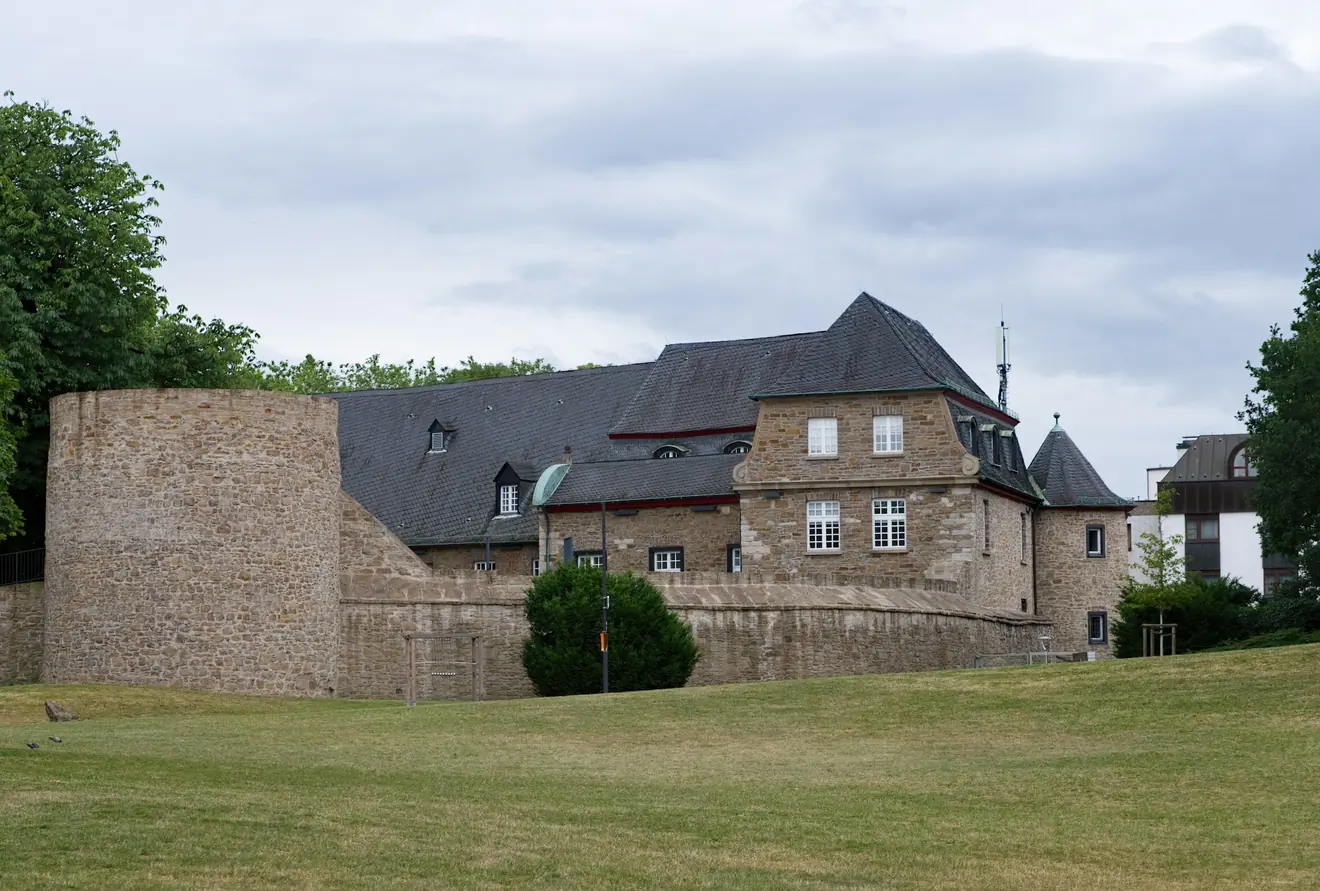
Districts are story material. According to the city's own description, Broich has Schloss Broich, Styrum has the Aquarius in its water tower, Heißen has the city's largest shopping center, Eppinghofen is described as international, and Saarn, Selbeck and Mintard are rural with half timbered houses. Mention only the districts where you really work; an empty district tag earns no trust.
- Write down the weekly rhythm: Monday morning, lunch break, Friday afternoon.
- Put four or five fixed dates of the year into the calendar and start preparing weeks before.
- Pick one district story per month: a shop, a street or a team member.
- Keep a rainy day backup post for weather dependent businesses.
- Lighten the rhythm after the season ends, but do not leave the account silent.
04Production from a distance: shot lists, templates, approvals
When the team sits in Istanbul, it must be clear from the start who films: in Mülheim you, your team or a photographer you choose do the shooting. Our job is to make shooting easy. For each shooting day we prepare a written list with the frame, the length, the line to be said and a note on light.
The shot list always has four lines: what is filmed, from which angle, for how many seconds and what sentence appears on screen. For a cafe in Styrum it might read: the door opening, the first filter coffee, the team behind the counter, a terrace table and the dessert of the day. Those frames are split into three posts over a week.
- In the video call we set three themes for the month.
- The shot list and the template file reach you in writing.
- The shoot happens, and raw files go into a shared folder.
- We edit, write draft copy and send an approval link.
- You approve or write your notes; only then is publishing scheduled.
Nothing goes out without your approval. You choose the photographer; we give only technical and visual guidance, the contract is between you and the photographer, and we advise settling usage rights in that contract.
05Comments, messages and the handoff to phone or WhatsApp
In Mülheim the speed of a reply often decides whether a visitor comes. A day tripper or a commuter writes at lunch, and without an answer in a reasonable time they go elsewhere. So we agree reply windows in writing at the start.
Istanbul is one hour ahead of Mülheim in summer and two hours ahead in winter, so we place the morning and afternoon windows to match your opening hours. The reply guide we write together contains:
- Frequent questions: ready but adaptable answers on hours, directions, parking and appointments.
- Handoff: sentences that move a person to WhatsApp or the phone for appointments, quotes or complaints.
- Escalation: when we see an angry comment or a sign of a crisis, we tell you first and write the reply afterward.
- Language: a reply in the language the message came in; quotes and appointment details go out in writing only after your approval.
If replies will be slower on weekends or holidays, a short note in the profile sets expectations and prevents needless complaints. Hiding or reporting abusive comments is your decision as the account owner; we recommend and carry it out. The appointment or order is always confirmed by your business, we only open the door.
A good first reply has three parts: a greeting, the short answer, the next step. "Hello, we are open until six on Saturday and there is parking in the back street. If you would like a table, message this number." That informs and moves the person to the phone. We adapt the patterns in the guide to the name and the question instead of copying them.
06Google Business Profile posts and local reviews
In Mülheim, people who look for a nearby service usually open the map first. So your Google Business Profile should behave like a twin of your social account: the same hours, the same phone number, the same address. A visitor who finds different details in one place usually writes it in a review.
We use profile posts as a short adaptation of the daily offer shared on Instagram. Our approach to reviews:
- Every review gets a personal, short and polite reply; the same sentence is never pasted everywhere.
- For a negative review we thank first, acknowledge the problem and offer a phone call or e-mail for the solution.
- The reply is written in the language of the reviewer: German, English or Turkish.
- Asking customers for a review is fine, but asking only selected customers, offering a reward or using bought reviews is not.
The business name must match your real name under Google's guidelines; adding keywords can lead to a suspension. The most natural time to ask for a review is right after the service: a profile link at the checkout or at the end of the appointment message is enough. We also suggest that German directories such as Gelbe Seiten and Das Örtliche carry the same details.
07Languages: when German, English or Turkish
For most Mülheim businesses the main language is German; English and Turkish are added only if your audience includes them. Each language is a separate writing line, not a translation. The same announcement written natively in three languages does not look alike, because each audience expects a different tone, detail and set of questions.
- German: district customers, commuters and the supply chain. Official details such as the Impressum and opening hours are always available in German as well.
- English: international staff of the campus, the institutes and large employers such as Siemens Energy. A short summary, clear hours and a way to book are enough.
- Turkish: 4,835 Turkish nationals live in Mülheim, and there are German citizens who follow in Turkish. Describing a product or service in their own language, with warmth, builds trust.
A practical rule: write the German text first, keep the English and Turkish versions short and make each one complete in itself; saying "details on the German page" loses the reader. Machine translation should be read by a native speaker before it goes out. We do not promise hashtag numbers or followers per language.
08Sector examples from Mülheim
The same method works with a different weight in each sector, and three examples show the difference. For a district business, what counts is what people see before they walk in; for an industrial supplier, it is the team and the certificate that convince the buyer.
- Cafe and restaurant: A venue near the Ruhrpromenade and the Wasserbahnhof shows its daily offer, terrace information that depends on the weather and its opening time. A sample setup is on the page about restaurant social media management.
- Hairdresser and tradesperson: In Saarn, Speldorf or Dümpten, the before and after of the work, the team and the hours. Details are on the page about hairdresser social media management.
- Supplier: A company around turbine and energy technology tells the story of its team, its site and its open positions on LinkedIn. Details are on the page about industrial company social media management.
- Courses and services: For students and researchers who are new to Mülheim, short English posts, clear hours and a way to sign up come before everything else.
Professions with their own rules, such as health, law and tax advice, have separate limits. For them, first read the advertising rules of your professional chamber; where we have not verified a rule, we do not speak about it.
09Collaborations with local creators and ad labeling
In Germany, if a creator receives money, goods or tickets for a post, the commercial purpose must be recognizable; that is the gist of § 5a para. 4 UWG. The Medienanstalten publish a guide to labeling advertising in online media that covers social media accounts such as Instagram, YouTube and TikTok.
Three rules make our work easier in practice:
- The label sits inside the post and is visible; it is not hidden in a hashtag.
- In German posts the word "Werbung" is used.
- Every collaboration has a short written brief: what may be said, what may not, and the publishing date.
We plan the collaboration itself under influencer marketing; on the account side we handle the brief, the label and the check of the post. Before you approach a creator, look at whether the followers resemble your real customers: a creator who lives in the Ruhr area is often more useful than a large audience from another country.
These questions help when choosing: In which city do most followers live? Has the creator presented a venue or service honestly before? Are real people writing in the comments? Put the agreement in writing, too, with payment or product, publishing date, your right to reuse the content and the labeling requirement. In social media management Mülheim this step looks small, but it protects your reputation.
10Privacy, image consent and copyright
In Germany, an image of a person may as a rule be distributed only with that person's consent; that is the core sentence of § 22 KUG. Before we film a guest on the terrace, a customer in the shop or an employee, we get consent; if we cannot, we show only the room, hands and product.
- Customers and guests: a short consent in writing or by message; in crowd shots, an angle in which faces cannot be recognized.
- Employees: written consent and a way to withdraw it.
- Children: no filming without parental consent. This matters especially in districts with many families, such as Eppinghofen.
- Music and images: for Reels, use the music library the platform offers for business accounts; a song playing in the venue is not copied into a video.
For every commercially used profile, easily reachable provider details are expected under § 5 DDG; we solve this with an Impressum link in the bio. For your personal legal situation, ask your legal adviser; we do not give legal opinions.
11Measurement and the monthly report
In social media management Mülheim, measurement asks not how many likes an account has, but how much interest turns into calls, visits and messages. In Mülheim commuters look at lunchtime and day trippers look at the weekend, so the report includes the distribution by day and hour.
- Interest: reach, saves, shares and profile visits.
- Direction: a UTM link for the link in the bio, with directions and calls from the Google profile counted separately.
- Conversation: the number of messages moved to the phone or WhatsApp and how many became real inquiries, taken from your own records.
- Decision: which format stays, which one goes, and what gets the weight next month.
We do not invent numbers; we read only from your records and the platforms. Instead of comparing Mülheim with Essen or Oberhausen, we compare your account with your own previous month. We promise no follower numbers, reach or full tables; what we promise is steady production and open measurement.
The monthly report should not run longer than one page. It has four parts: the three most saved posts of the month, the visits from the link, the path from messages to inquiries and one decision for next month. In the meeting we read that page together, drop the format that does not work and repeat the one that does.
12Common mistakes of businesses in Mülheim
Six mistakes come up again and again, and each one has a simple alternative.
- Writing only for the district audience: more than half of the commuters who work in Mülheim come from outside. Add hours and directions to every post, and say how long the walk from the station takes.
- Opening an account on every network: five accounts nobody watches do more harm than one good account, because a visitor finds old hours on an old page. Start with two channels and add a third when the routine holds.
- Writing only in German or only in Turkish: the audience is mixed, and each group expects an invitation in its own language. Build a separate writing line for each language instead of settling for translation.
- Forgetting the Google profile: when the hours do not match, negative reviews follow and trust on the map drops. Keep the same details everywhere and enter special days ahead of time.
- Missing the season: in weeks such as the boat season, the Theatertage or the fair, the account stays quiet while visitors decide. Build the calendar weeks ahead.
- Buying followers or reviews: it breaks platform rules and brings no real customers. Use content, replies and, where it makes sense, ads.
Most of these mistakes come from habit, not from a plan. Social media management Mülheim gets easier once the habit becomes a written routine.
13Choosing a partner and the first 90 days
The right partner is not the one with an office in Mülheim but the one who runs the work in writing and in a traceable way. The questions are plain: who keeps the accounts, how does approval work, who films, what does the report contain, how does the contract end. If the answers do not come in writing, do not go ahead.
- Account ownership: The accounts stay in your name, and the partner works only with role permissions.
- Approval: No post goes live without your approval.
- Measurement: The report starts with visits and inquiries, not likes.
- Honesty: Turn down offers that promise followers, reach or full tables.
For the first 90 days we suggest this flow:
- Month one: profile and audience analysis, choice of languages and channels, matching the Google profile.
- Month two: the first shooting day, the first calendar, the reply guide and the format of the monthly report.
- Month three: measurement, simplification and, if needed, the decision on paid reach.
For the page that receives the visitors your account brings, see web design for Mülheim; for a similar setup in the neighboring city, see social media management for Essen. The cost items are under pricing, and for a first call you only need to write on the contact page.