Social media management Hamburg businesses can rely on has to serve five audiences at once: neighbors in the district, guests who arrive by ship or train, students, professionals in town for a trade fair, and a community that moves between German and Turkish. This guide goes beyond the summary at the top of the page and describes the daily routine behind it.
All figures come from official sources. Destatis counted 1,862,565 residents at the end of 2024, and the Federal Statistical Office reported about 16.1 million overnight stays in Hamburg for the same year. We do not promise follower or reach numbers; what follows is method, calendar and rules.
01Who Hamburg's social media audience is and what they look for
The same profile gets opened in one week by people with very different intentions. Planning content before separating them produces a feed that speaks to everyone a little and to no one enough. In every first call we match these five groups to your business.
- Neighbors in the district: They look for the cafe, barber or repair shop around the corner and expect current hours, directions and a quick answer.
- Visitors: According to the Hamburg economic authority, 1.3 million cruise passengers arrived in 2024. A guest like this compares outings, meals and places to stay in advance and often reads English.
- Students: The Federal Statistical Office counted 122,428 students in the current winter semester; they discover places in short videos and save them on the map.
- Professionals: Fairs such as OMR bring visitors from the online marketing world into the city, and they want to see the team and the work.
- The Turkish speaking community: Statistikamt Nord counted 99,619 people with Turkey as reference country on 31 December 2024.
Your account does not have to speak to every group in the same sentence, but it has to know which post is written for whom. Writing the target group next to each line of the plan keeps the feed from drifting weeks later.
02Which platforms fit which businesses, and which do not
Platform choice follows the moment when your customer decides; being everywhere is not required. In Hamburg we see four typical pictures, and each has a different main channel.
For district businesses Instagram is the main channel: the highlights hold the menu or service list, the hours and the directions. TikTok can help with discovery through short video, but it is not a must for every business. Facebook is useful for neighborhood groups and event announcements.
For freight forwarders, suppliers, consultancies and agencies with business clients, LinkedIn leads; team, process and job posts live there. Hotels and tour providers care about the Google Business Profile as much as Instagram, because a guest on the move looks at the map.
YouTube only makes sense for businesses with a team that will produce video regularly; a half finished channel does not build trust. For every platform we write down one purpose: discovery, trust or inquiry. We do not open an account without a purpose, and we suggest closing an account nobody looks at.
Social media management Hamburg owners ask us about is also a workload decision, because every extra channel is another inbox. Two channels run well beat five run occasionally, so in the first three months we recommend two at most and add a third only when the audience or product calls for it.
03A local content calendar: seasons, recurring occasions, district stories
Hamburg is divided into seven boroughs, and people usually tag places by district: Ottensen, Sternschanze, Eppendorf, Winterhude, Barmbek or Blankenese. The content calendar is therefore built on district and season. We take the dates that return every year from the official calendars and prepare posts a few weeks ahead. Exact days change, so we give none here.
- March: Internorga, the hospitality and catering fair; supplier and team content for cafes and restaurants.
- May: OMR and the Hafengeburtstag, the port birthday; the city fills with professionals and visitors, so hours and directions come first.
- Three times a year: the Hamburger DOM on the Heiligengeistfeld in spring, summer and winter; a time for short, practical posts from nearby businesses.
- The warmer months: the cruise season; short English texts and the booking route.
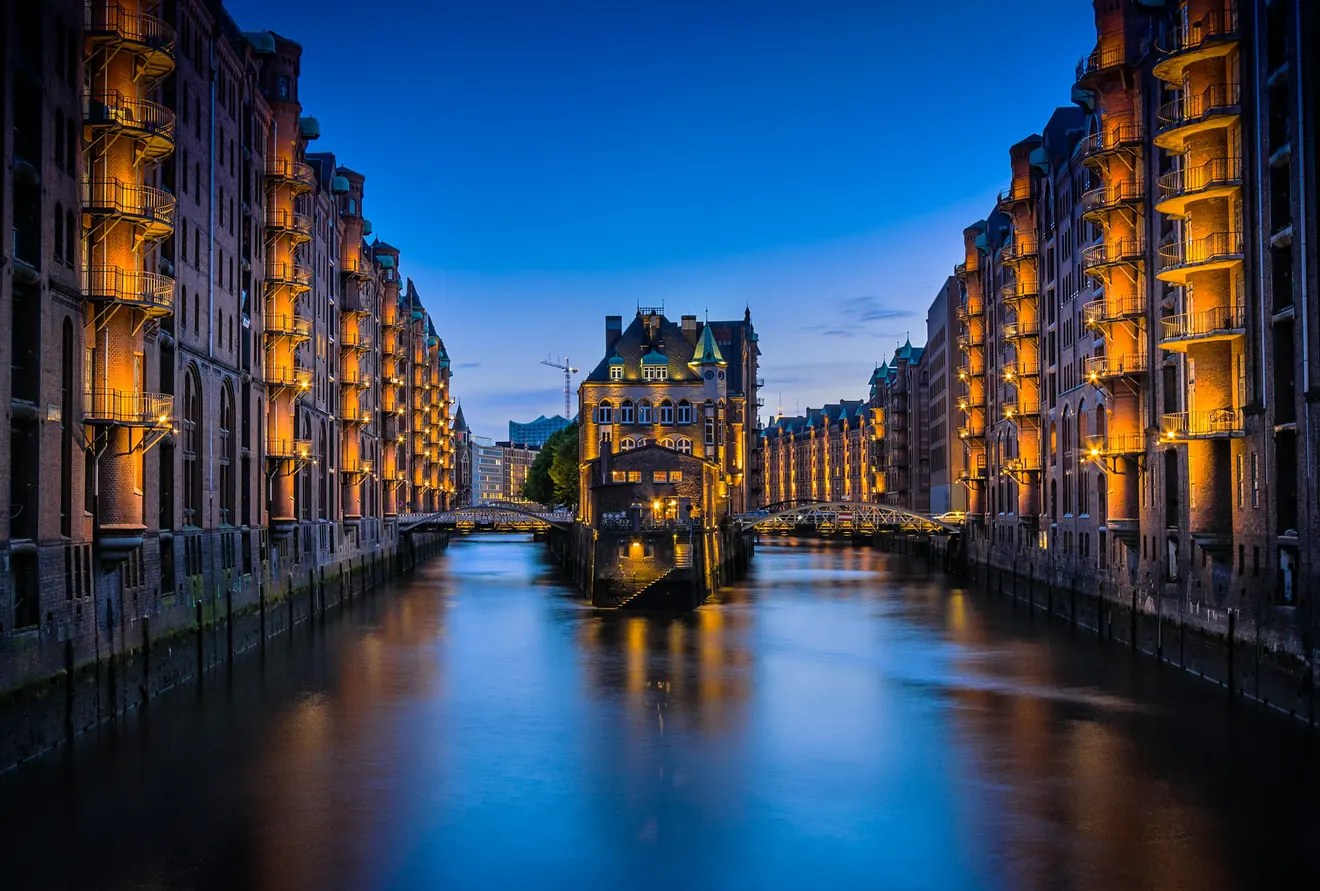
For district stories, showing a workshop in Ottensen, a bakery in Eppendorf or a garage in Harburg together with its street leaves a more trustworthy impression than generic harbor photos.
The calendar has three layers: fixed yearly dates, monthly moments of your business such as a new menu, a new service or a team introduction, and light weekly everyday content.
04Producing content when the team works online
We have no office, representative or shooting crew in Hamburg; the work runs fully online. That means the shoot happens on your side: you take the photos, or a Hamburg photographer you choose does. We never claim a local crew.
What we do is make the shoot easy. The routine looks like this:
- In a video call we map out the business day, your strongest hours and the corners worth showing.
- For every shooting day we write a shot list: which frame, which size, how many seconds of video.
- You or your photographer shoot and upload the files to a shared folder.
- We select, edit, draft the captions and place everything in the calendar.
- You approve every post in writing before it goes live.
Templates let us prepare new content on the same day when a menu, hours or an announcement changes. Getting many posts out of one shooting day keeps production sustainable, and we place the shoot in quiet hours so a kitchen or workshop is not disturbed at its busiest.
Before each shooting day we also send a short briefing note: what has to be tidy, which product or service will be shown, and who wants to be on camera. No team member appears without written consent.
05Community management: comments, DMs and the handoff to WhatsApp or phone
Social media management Hamburg customers expect is not only publishing; every comment and message is a sale or a complaint waiting to happen. We write the reply guide together with you and answer comments and messages at the agreed times.
The guide holds short answers to frequent questions, a rule for which questions move to WhatsApp or the phone, immediate notice to you when a complaint arrives, and tone examples for replies in German, English or Turkish. The business itself always confirms a reservation, appointment or order.
The time difference between Hamburg and Turkey is one hour in summer and two in winter. We therefore write reply hours down to match your business hours, and we record in advance who can be reached how in an urgent case.
Negative comments get a short, concrete answer without defensiveness. To manage your accounts we use the official access areas of the platforms; the accounts stay yours, and you can close our access at any time.
Busy periods are known in advance: fair weeks, the DOM periods and the cruise season. In those weeks reply templates, hours and directions are ready. The aim is not to answer every message instantly but to move the right person to the right channel at the right time.
06Google Business Profile posts and local reviews in Hamburg
Someone on the road reads hours, photos and stars on the map first, which makes the Google Business Profile the second shop window of your social account. We run three tasks together.
The first is matching details: if the hours on Instagram differ from the hours on Google, the guest turned away at the door writes it into a review. The second is posting important updates into the profile too, such as a new menu, a seasonal notice or fair week hours. The third is replying to reviews.
- Each review gets a personal reply in the guest's language.
- A negative review is thanked first, the problem is addressed concretely, and details continue by message.
- When customers are asked for a review, the ask is fair and nothing is offered in exchange.
- Bought or fake reviews are never used.
With so many visitors, Hamburg reviews pile up quickly, and the reply routine has to keep pace. A short weekly check stops pending reviews from sitting open for days.
Photos in the profile should stay current: when the season changes, the entrance, window or menu photo is renewed. Filling the question and answer section in advance also cuts the number of identical messages.
07Languages: when to post in German, English or Turkish
For most Hamburg businesses German is the main language; neighbors, authorities and most customers search in German. We decide the language by audience, not for decoration.
- German: the base line for district businesses and business clients.
- English: a short extra text for guests from ships, hotels and fairs. Statistikamt Nord reports that in July 2024 foreign guests came mainly from Denmark, Switzerland, the United States, Sweden and Austria; guests from Switzerland and Austria read German, and for the others a short English text helps.
- Turkish: a separate line for the Turkish speaking community.
The Turkish line should not be a translation of the same text. A business's German post can be an announcement for the neighbor, while its Turkish post is a story for the community. We therefore rewrite the text for every language and never translate sentence by sentence.
In the profile description we avoid language mixing: the bio has the German line first, then a short English line, and the Turkish line runs under its own label and its own posts. We keep a separate reply template per language, because an answer to a German complaint and an answer to a Turkish greeting are not written in the same tone.
Managing three languages is not needed for every business. We decide what is needed in the first call by looking at who the audience is, and we discuss early that every added language adds reply workload.
08Sector examples specific to Hamburg
Hamburg's economy decides what the content is about. Four areas stand out.
In port and logistics, decision makers sit in purchasing and human resources. A fleet, a warehouse and a team at work make a credible impression on LinkedIn and Instagram; see social media for logistics companies for details.
In accommodation, the Hamburg economic authority reports a hotel room occupancy of 77 percent in 2024. When occupancy is high, content capacity is limited, which is why templates and a shooting day plan matter. Social media for hotels is a good starting point for the flow.
For cafes, restaurants and patisseries, kitchen and team videos work together with matching hours and menu. For agencies and startups, work samples and process count for more than slogans, because the viewers are people from the field themselves.
Whatever the sector, one rule is shared: we show the work first and explain it afterwards. For a firm near the port that may be the morning loading; for a tour provider the first welcome on deck; for a cafe the first coffee being made. A hundred photos of the work build more trust than a slogan, so social media management Hamburg companies use takes the sector knowledge from you and turns it into form.
09Collaborations with local creators and the labeling rules in Germany
Working with a Hamburg creator can give you a voice close to the audience. The rule has to be known from the start: a post made for payment, products or another benefit must be recognizable as advertising in Germany. The basis is section 5a of the UWG, the act against unfair commercial practices.
How labeling works on Instagram, TikTok and YouTube is explained by the guide of the German media authorities, and Medienanstalt Hamburg Schleswig-Holstein, the authority responsible for Hamburg, offers it on its site. The collaboration itself belongs to influencer marketing; on the account side we take over the briefing text, the labeling and the post check.
- A collaboration starts with a written brief.
- The label is visible in the post and in every story frame.
- The post is checked before it goes live.
- Even when the return is a gift or a free service, the label is applied.
When choosing a creator we look at who makes up the audience before we look at follower counts. For a district business a small account from the district can suit better than a wide but scattered one. The brief states what is shown, what is not said and the publishing date, and we make sure no firm promise of results comes out of the creator's mouth. German law applies here, so for details please ask a lawyer.
10Privacy, consent and copyright basics in Germany
Privacy problems usually grow from a small detail. For social media management Hamburg clients commission, we put three areas on a written checklist.
The first is the image of recognizable people: a guest, an employee or a child needs clear consent, and the GDPR and the right to one's own image are weighed together. The second is business information: under section 5 of the DDG, commercial offers in Germany are expected to have an easily reachable imprint, the Impressum, and usually the bio links to the imprint page of your website.
The third is music and image copyright. For Reels and stories we choose music according to Meta's music guidelines and the terms for business accounts, and we never copy the song playing in the room into a video.
In 2018 the EU Court of Justice also held that operators of a Facebook fan page can share responsibility for processing visitor data.
Three small habits help in practice. Put an information note at the entrance on shooting day, keep written consents in one folder, and decide in advance how a person who withdraws consent can have a post removed. None of this replaces legal advice, but it keeps daily work calm.
11Measurement and monthly reporting without result promises
A like count is not enough to decide anything. We look at signs that interest found an answer: reach, saves, shares, profile visits, link clicks and inquiries from messages.
A UTM parameter on the bio link shows which content brought traffic to the website, and the UTM link builder does the job. Route requests and calls from the Google profile are counted separately. Inquiries from messages are logged with you in a simple record; the numbers come from your records, and we do not make them up.
The monthly report covers what was published this month, which format was saved and shared, which messages turned into inquiries and what changes next month. It also contains the decision to drop a format that does not work.
At the end of a quarter we ask ourselves two questions: which type of content brought inquiries, and which only collected likes? We do more of the first and less of the second. In a city with seasonal crowds, comparing month to month can mislead, so where possible the report compares the same period and we do not decide on a single month's swing.
We do not predict how many guests or customers will come; no one can do that honestly. What we promise is regular production, open measurement and a simple decision process.
12Common mistakes of businesses in Hamburg on social media
The mistakes below are not unique to Hamburg, but they cost more under this city's conditions. Next to each we wrote an alternative.
- German only, local only: a guest off a ship cannot read the profile. Alternative: short English lines next to the German.
- Being unprepared in fair week: hours and directions stay outdated. Alternative: templates ready a few weeks before.
- Contradiction between Google and Instagram: the guest turned away at the door writes a bad review. Alternative: update from one source.
- Writing the Turkish line as a translation: the community feels a copy. Alternative: a separate story.
- Buying followers or reviews: it breaks platform rules, it is an unfair commercial practice and it brings no real customers. Alternative: content, community and, where it fits, advertising.
- Collaboration without a label: it creates legal risk. Alternative: a visible label.
Wrong expectations are mistakes too. Expecting one video to make the whole city aware, giving up within weeks when the account looks weak, or measuring results by follower count alone quietly ends accounts. The healthier path is to produce at the same rhythm for three months, read the report every month and multiply only what works. Social media management Hamburg style is a habit, not a campaign.
Another frequent mistake is that nobody owns the account. An inbox that three people look at and nobody answers leaves a worse impression than one nobody looks at. We therefore write down the person who replies and the backup by name.
13Choosing a partner and the first 90 days
When you choose a partner, ask these questions: who keeps the accounts, who does the shooting, are the reply hours in writing, which numbers does measurement rest on and what does the fee depend on?
With us the accounts stay with you, the shots come from you or your photographer, and the reply hours and the urgent route are written down. The fee depends on the number of platforms, the monthly content volume, the number of languages, the share of video and the message volume; current packages are in the pricing section, and ad budget is not part of them.
Do not look for a perfect plan at the start; look for a steady rhythm. In the first three months you learn most about which language, which hour and which format your audience answers to. We write that into the report every month and simplify the plan accordingly.
The first 90 days run like this:
- Week one: video call, account and audience review, written scope.
- Weeks two and three: content lines, shot list, reply guide and matching the Google profile.
- Month one: the first calendar goes live, first report.
- Month two: strengthen the formats that work, add the fair and season calendar.
- Month three: review the language lines and, if needed, decide on paid boosting with Meta ads management.
If you also want to renew your website, see web design for Hamburg; for the other Hanseatic city in the north there is social media management in Bremen. For the next step write to us; in a free 15 minute call we talk about your business and prepare a written scope and quote. The whole process runs online.