Derby is a city where an aero engine supplier, a market stallholder and a student landlord can all be followed by the same people, and each of them needs a different account. This guide is for owners and managers who want one steady, honest presence for their own corner of Derby, without a daily posting treadmill.
We are Talha Aslan and team, and our work for accounts here runs fully online. That shapes every section: you, or a photographer you choose, do the filming while we plan, write, reply and report. Treat each part as a decision you can take with or without us, because social media management Derby businesses can keep up is built from decisions, not volume.
01Who Follows Derby Businesses, and Why
Derby's audience is mostly people in their working years, spread across suburbs that behave like separate towns. The ONS mid 2025 estimate counts 275,344 residents, and 79,694 of them are aged 25 to 44, or 28.9 per cent. The same table shows 86,553 people of that age in Nottingham and 111,632 in Leicester, so Derby is the smallest of the three and its feeds feel more like a network of neighbours than a mass market.
- Ward households: Derby City Council profiles 18 wards, from Allestree and Mickleover to Chaddesden, Alvaston and Spondon, and each has its own groups, habits and favourite local spots.
- Students: the University of Derby calls Kedleston Road its biggest site and main student hub, and newcomers there ask where to eat, cut their hair and rent a room.
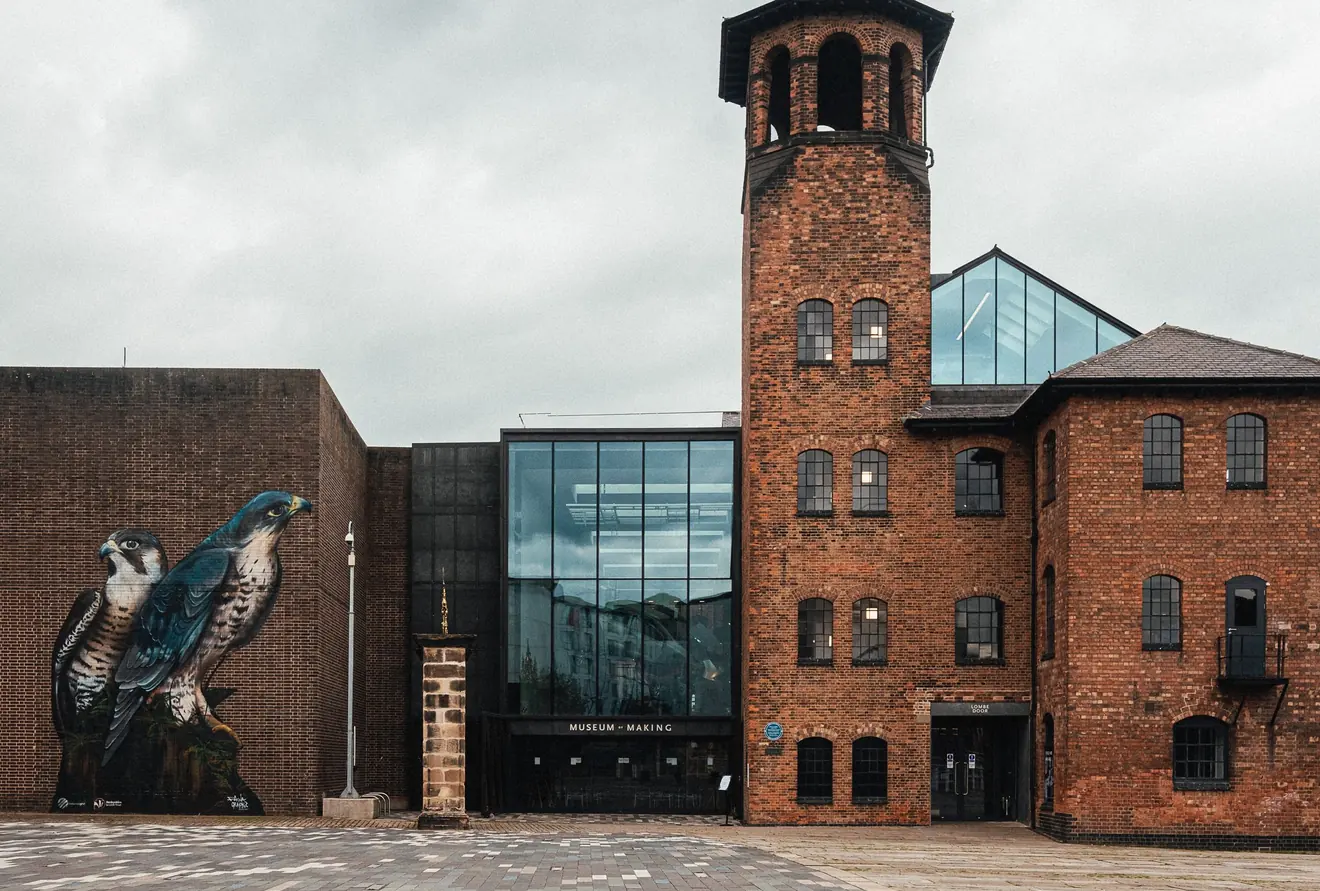
- Centre visitors: shoppers and day visitors come for the Cathedral Quarter, the Market Hall, the Museum of Making and the Arboretum.
- Engineering people: buyers, applicants and families of staff at the aerospace and rail employers, who look suppliers up before they call.
Rank these four by the income they bring you. That ranking, not a competitor's last post, decides what your first month of content shows, and it explains why a nursery in Littleover and a machining shop in Sinfin should never share a content plan.
02Platforms That Suit Derby, and Ones to Skip
Pick the two or three platforms where your top group already looks, and answer there on time. Spreading across everything leaves accounts that go quiet, and a quiet account tells a Derby customer that nobody is home. A shorter list that you can maintain beats a long list you abandon by November, which is the honest basis of social media management Derby owners can afford to run.
- Facebook: suburb groups and event pages; a pinned post with hours and a contact route does a lot of work for a nursery, tutor or tradesperson.
- Instagram: the window for food, hair, beauty, shops and venues, with highlights for hours, directions and common questions.
- TikTok: where newcomers to the city discover places, so short clips of a counter or a chair in use travel further than polished photos.
- LinkedIn: the home of suppliers, recruiters and professional firms that talk to buyers and applicants.
- Google Business Profile posts: they reach people searching the map, and a later section covers them.
Skip a platform if you cannot write one sentence about its job for you. A live stream nobody hosts, or an inbox nobody opens, costs more trust than it earns. Be equally cautious about copying the channel mix of a large chain; its budget and staff are not yours.
03A Calendar Built Around Derby's Recurring Moments
Plan around occasions that come back every year, so quiet weeks never look empty. Derby Festé fills the city centre with free outdoor arts in September, Derby Book Festival runs in June and November with sessions at QUAD, Derby Theatre and the Market Hall, and Visit Derby lists a winter ice rink and the Christmas lights switch on at Market Place. Students return every autumn, and Derby County play home matches at Pride Park.
- List the four or five dates that matter to your customers, not to the city as a whole.
- Work back about a month from each and draft one post for before, one for during and one for after.
- Add a weekly rhythm in between: one place or product post, one person or process post, one answer to a real customer question.
- Review the grid each month and drop whatever drew no saves or messages.
Never present an event's name or logo as if its organiser were your partner. Say that you are nearby, and let the audience draw the link. Add district stories too: a month for the Cathedral Quarter, a month for the suburbs you serve, a month for the people behind the counter. A trader on Sadler Gate can show the Strand Arcade shortcut; a salon in Chaddesden can show the street it sits on, because people search and tag by place.
04Producing Content When the Team Is Online
Because nobody from our side will stand in your shop, production rests on a shot list you can follow in one sitting. A hairdresser films the chair, the colour table and a client reaction with permission; a machining shop films a finished part, a gauge and an apprentice at work; a market trader films the opening of the stall and the first customer of the morning.
- Shot list: twelve to twenty frames named by subject, each with a note on light and framing.
- Templates: caption and story frames in your fonts and colours, so that posts look related without a designer each week.
- Approval step: you read every post before it goes out, and a second person at your business approves anything that shows a person.
- Photographer option: if you hire one yourself, we send a brief and the shot list; we never claim a local crew.
Calls land in your morning. Istanbul keeps UTC+3 all year, so it is two hours ahead of Derby on British Summer Time and three hours ahead once the clocks go back. A monthly shoot of one or two hours, reused through the month, is usually kinder to a working business than weekly improvisation.
05Running Comments and Messages Without Losing Evenings
Agree a reply routine before the first post, not after the first complaint. Customers in the wards often ask about availability, parking and how to book in a message rather than a phone call, and they expect an answer inside the working day. Without a routine, those messages pile up exactly when you are busiest, and the social media management Derby customers notice most is simply a fast, courteous reply.
- Quick answers: opening hours, address, how to book, what to bring; written once and reused.
- Handoff: anything that needs a decision moves to a call or WhatsApp, with a note of who has it.
- Escalation: a complaint, a safety remark or a legal threat goes to the owner the same day.
- Tone: plain, warm and local; use the ward or the street name rather than a slogan.
Decide the hours when messages are read and say them in your bio. A stated window of reply is kinder than an unstated one, and it protects the owner's evenings. When a comment is critical, answer once, politely, with the fact, and invite the person to continue by phone; never argue in public.
06Google Business Profile Posts and Reviews in Derby
Your Google listing is often the first thing a Derby customer sees, so keep it consistent with your social profiles. Google's guidelines say the business name should match the one used in the real world, without added keywords, so avoid stuffing a place name into it unless it truly belongs there.
Post short updates: a changed opening time, a term timetable, a seasonal service. Reply to every review in a calm voice, naming the problem if there was one and offering a way to continue by phone.
- Ask real customers: a card at the counter or a message after a visit, with a plain link.
- Never reward in secret: UK law bans fake reviews and concealed incentivised ones, a point the CMA guidance makes clear.
- Keep details aligned: hours, phone number and DE postcode area match your Instagram and Facebook.
- Use the ward: a post that names Chellaston or Spondon tells a nearby searcher it is meant for them.
Review replies are public, so write them for the next reader, who is deciding whether to trust you. Social media management Derby shops and clinics can be proud of treats the listing and the feed as one shopfront.
07Languages for Derby Readers
English is the default for almost every Derby account, because it works across the wards, the campus and the engineering employers. Add another language only where you can name the person who will read it, and check that you can answer a message in that language too.
Turkish makes sense for a shop, barber or restaurant whose customers prefer it, usually as a caption line or a second post rather than a duplicate feed. German makes sense for a supplier that writes to buyers in Germany, Austria or Switzerland, for example on LinkedIn. We do not suggest other languages, and each translation is read by a fluent speaker before it goes live.
- One language per post, so nobody scrolls through a wall of text.
- A pinned post in each extra language that explains who you serve and how to reach you.
- Replies in the language of the question, with a handoff to a phone call when needed.
Keep names and addresses spelled the same in every language, because that is what the map and search match against.
08Sector Examples From Across the City
Sector decides the content lines more than the city does. A hairdresser in Littleover builds trust with the people behind the chairs, tidy highlights and a booking route that works in a message. A children's club shows timetables and age groups, and keeps pictures of children for cases with written parental consent.
- Cafes and market food: a close up of the counter and a pinned note about the nearest entrance.
- Letting agents and driving schools: short walk throughs and honest availability in September.
- Engineering suppliers: named people, accreditations they hold and apprentice stories; see social media for manufacturers.
- Recruiters: job posts that name the work, the site and the route in; see social media for recruiters.
Customer names appear only where a contract allows it, and logos of other firms are never borrowed to suggest a relationship. A supplier that wants to show pride in its work can describe the process and the skills instead.
09Working With Local Creators and the Labelling Rules
A creator post that you pay for or gift is advertising, and in the UK it has to be recognisable as such. The ASA and CAP guidance expects a plain label such as Ad at the start, and the CMA looks at endorsements and hidden incentives in the same way.
- Write a short brief: what is offered, what must be shown, what must not be claimed.
- Put the label in the brief, not in the creator's head.
- Read the draft before it goes live, and check the label stays visible on every format.
- Keep a note of what was given and when.
Choose creators whose followers resemble your customers, not simply the biggest following. Derby is compact enough that a micro creator from a particular ward can reach exactly the households you want. Wider planning for social media management Derby brands that want creators sits under influencer marketing, and paid boosting of a post is a separate Meta ads job.
10Privacy, Consent and Copyright Basics
Photos of identifiable people are personal data, so ask first. The ICO defines valid consent as freely given, specific, informed and unambiguous, and for a child a parent or carer has to give it. Keep the consent in writing, name the use, and let the person withdraw.
- Customers at a counter: ask before filming and note the yes; a sign on the wall is not a substitute for asking.
- Staff: written agreement, and a plan for removing posts when someone leaves.
- Music: Meta's music guidelines leave licensing with the account holder, so do not lift the track playing in the room.
- Images from others: ask the photographer or event for permission and credit them.
This is general information, not legal advice. Have a solicitor read your consent wording before you rely on it, and keep a simple folder of signed forms that you can find in a minute when someone asks. If a person asks you to take a post down, do it the same day and tell them it is done.
11Measuring Without Making Promises
Measure what leads to a customer, not what looks good. Reach, saves, shares and profile visits show interest, link clicks show intent, and enquiries you log yourself show business. A UTM tag on the bio link, built with a free UTM tool, tells you which post sent a visitor.
- Monthly: saves, shares, profile visits, link clicks, calls and direction requests from the Google listing.
- Enquiry log: a simple sheet where the team notes how each new customer found you.
- Decision list: what to repeat, what to stop, what to test next month.
We do not promise follower counts, reach or sales. What we promise is a steady routine, a report you can read in ten minutes and an honest note when something is not working. A month with few enquiries during the summer break is not a failure; compare like with like, term against term.
When you review a month, read the numbers against the calendar. A rise in profile visits in the week of Derby Festé says the occasion worked, while a rise in saves after a walk through video says the format is worth repeating. Reporting for social media management Derby accounts should always end with three lines: what we saw, what we think it means and what we will change.
12Common Mistakes in Derby Accounts
Most weak accounts fail from the same few habits, each with a simple fix.
- Naming the wrong place: tagging the whole city when you serve two wards; name the ward you really cover and add Derbyshire to the bio.
- Using a sponsor or event logo: it implies a partnership; say you are nearby instead.
- Posting in bursts: a heavy week then silence; plan a light weekly rhythm that you can carry.
- Letting messages sit: state reply hours and keep to them.
- Chasing reviews with a reward: ask honestly and reply to each one.
- Treating the feed as the website: link to a Derby website that answers prices, hours and contact.
If you recognise three or more of these, begin with the reply routine and the shot list; they fix more than a new logo does.
One further pattern is worth naming: copying the voice of a national brand. A Derby barber who writes like a retail chain loses the single advantage a local business has, which is that customers recognise the people and the street. Write the way you talk across the counter, and let the photos show real hands, real tools and real queues.
13Choosing a Partner and Your First 90 Days
Choose a partner who tells you what they will not do. Ask how filming works when nobody is in your shop, who replies to messages, how consent is handled and what the monthly report contains. Be wary of anyone who promises followers, reach or sales.
- Days 1 to 15: audit of your profiles, a decision on platforms and the reply routine.
- Days 16 to 45: first shoot from the shot list, templates and the first calendar, with your approvals.
- Days 46 to 75: community handling in full flow, Google listing posts, the first report call.
- Days 76 to 90: review, drop what did not work, plan the next season.
Whoever you choose, ask to see a sample monthly report and a sample reply guide before you sign anything, and check who holds the logins: the accounts stay in your name and you add the partner as a user. A partner for social media management Derby firms rely on should be easy to remove as well as easy to add.
Prices depend on platforms, content volume, video, filming and messages, and they do not change with your postcode. See the pricing section for packages, and book a free call when you want a written scope and quote.