Anyone setting up a business account in Bremerhaven writes for three different people at once: a visitor who steps ashore for a few hours, a buyer from the port or the seafood industry, and a neighbor who lives in one of the districts. All three look at the same post, but each one asks a different question. This guide does not repeat the summary on the page above it; it puts the decisions in order: whom you address, in which language, on which platform, under which rules and with which measure.
Talha Aslan and team run social media management Bremerhaven businesses can order entirely online; there is no team, office or representative in the city. For that reason every section also explains how shooting, approval, replies and review work from a distance. We do not pretend to know the city by walking its quays, and we build the work around that fact.
01Who the Bremerhaven audience is and what it looks for
The people who see your account are four separate groups, not one community, and each has its own question. Destatis recorded 118,610 residents on 31 December 2024, yet the circle that reaches your account is much wider than that number.
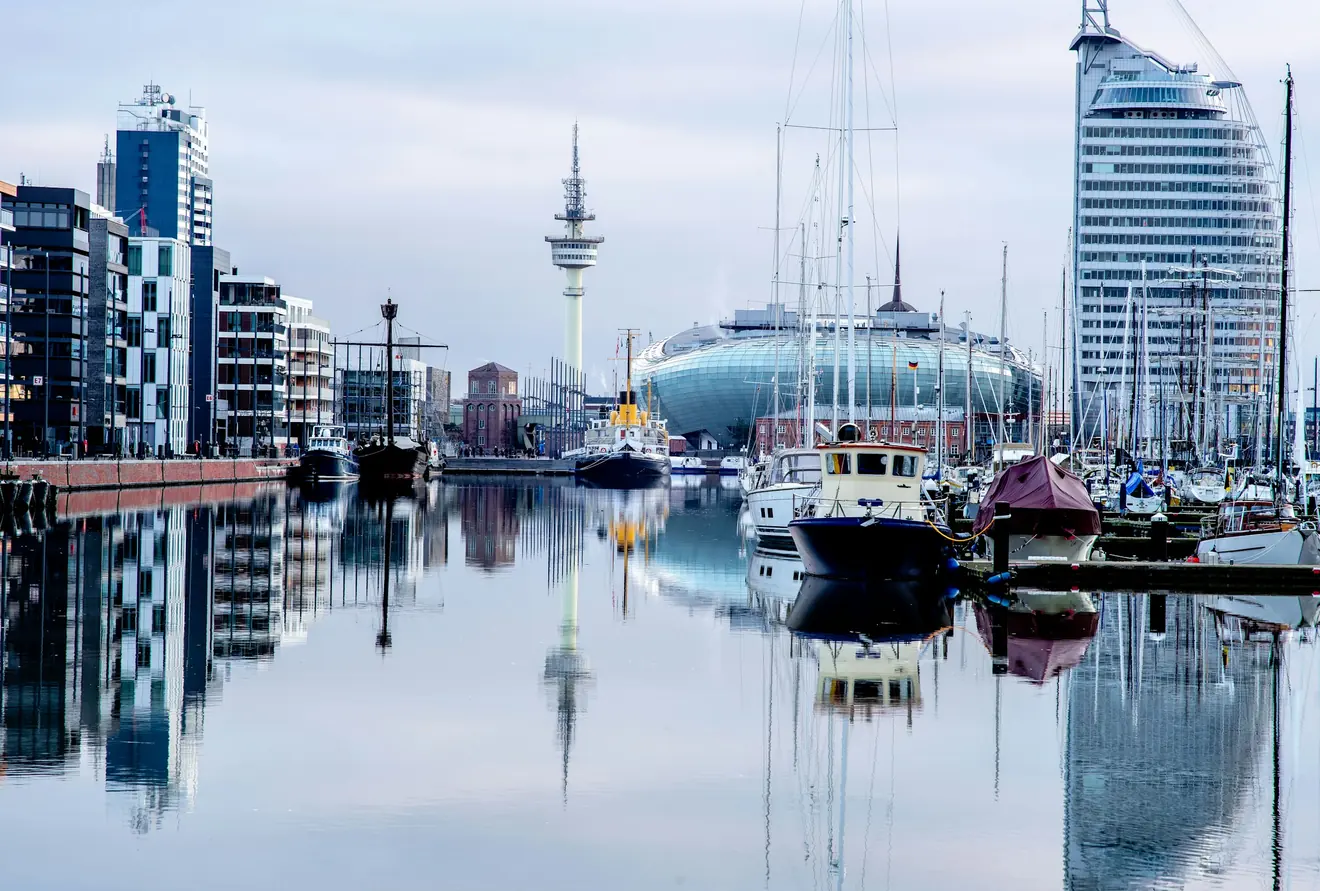
- Day and overnight guests: Erlebnis Bremerhaven reports about 4.9 million day visitors for 2024 and 231,024 guest arrivals with an overnight stay, 21,477 of them from abroad. The cruise terminal welcomed close to 300,000 passengers.
- Port and seafood professionals: about 4.4 million TEU, 1.25 million vehicles and more than 4,000 people working in the fishing harbor; buyers and applicants look a company up before they call.
- Students: Hochschule Bremerhaven welcomed 612 new students in autumn 2024; a newcomer asks about cafes, hairdressers and gyms.
- Neighbors in the districts: people from 131 nations live in the city, and 2,859 held Turkish nationality at the end of June 2022, not counting naturalized citizens.
Before you plan anything, draw your own map: which district is your shop in, how many minutes on foot from the quay or the terminal, and what is your customer's first question? Those three answers set the language, the posting hour and the platform. Writing down where your last ten customers came from, in which language they wrote and how they found you is a sturdier start than an assumption. We ask for it in the first call.
02Which platform fits which business, and which does not
The right platform is the one where your audience decides, not the one with the most users. In Bremerhaven the practical pairing looks like this, and each line assumes its own type of business.
- Instagram: the main shop window for cafes, fish shops, holiday apartments and tour businesses. Reels serve discovery, stories carry the daily information and highlights hold the fixed facts.
- Google Business Profile: the first place a guest looks when searching the map for something nearby; for someone leaving the terminal it often comes before Instagram.
- LinkedIn: for freight forwarders, customs agents, fish processors, suppliers and the partners around the research institutes; team, certificates and job posts belong here.
- Facebook: for district groups, event notices and older neighbors; useful for hairdressers, repair shops and practices.
- TikTok: for businesses that can show a fillet being cut, a cake being finished or a shipment being prepared in a short clip; craft footage earns attention here.
There are mismatches too. LinkedIn is mostly wasted effort for a car repair shop or a barber, and a constant stream of food clips sent to buyers at a customs agency reaches the wrong audience. Being steady on two platforms is healthier than being weak on five. Which two you choose depends on where your customer makes the decision.
03A local content calendar for a port city
Social media management Bremerhaven follows the rhythm of seasons and events, and putting that on a yearly calendar makes content easier to prepare and cuts down last minute posting. According to the city's event calendars the year runs roughly like this.
- January: winter events; indoor scenes, team and warm drinks come forward.
- April: the Fischparty opens at the Schaufenster Fischereihafen, and the farmers markets and Sunday events begin.
- June and July: Musiksommer concerts and the Matjestage; outdoor, fish and waterside content.
- August: the Maritime Tage around the Neuer Hafen; ships, crowds and short English captions.
- October and November: Goldener Oktober, the Laternenfest and the Christmas market.
Dates change every year, so we read the official event calendars and prepare content a few weeks ahead. The weeks between events are filled with district stories: a shopkeeper's morning in Lehe, how a service works in Geestemünde, a seasonal note from Wulsdorf. That way the account stays alive on big days and quiet weeks alike, and followers do not see an account that only remembers them when it is crowded.
We keep the calendar in three layers: fixed days (events, ship days, holidays), recurring themes (the product of the week, a person from the team, a process) and flexible gaps for last minute news. The coast changes weather quickly, so an outdoor shoot always gets an indoor backup.
04Producing content when the team is remote
Remote social media management Bremerhaven stands on turning the shoot into a plan. We do not hold the camera; you or a photographer you choose does. We prepare the shot list, formats and templates, cut the chosen clips, write draft captions and place everything on the calendar.
- In a video call we clarify the business, the district and the audience.
- We hand over a month of content lines and the shot list in writing.
- You set the shoot for a quiet hour; vertical and horizontal frames are taken on a phone.
- You upload the material; we cut it, write the draft text and schedule it.
- Every post goes through your approval before it is published.
If you want to work with a photographer from the city, the choice is yours, and we write the brief and format list for that person. Three pieces of format are enough: a vertical short clip, a carousel and a story sequence, all from the same shoot. A fish shop can capture the morning delivery, the counter and a team member in one hour and spread them over weeks.
Templates keep color and typeface fixed, so the work looks like one hand made it even from far away. Port areas and company grounds have their own filming rules; ask the operator beforehand, because we cannot obtain that permission on your behalf.
05Comments and messages: reply speed and handoff
In social media management Bremerhaven guests are won or lost in the message inbox, because the value of a message lies in the moment of the reply; an answer that waits until the next day is often a guest who has gone elsewhere. Three kinds of message stand out in the city, and each needs its own path.
- Day guests: short questions such as whether you are open today or how many minutes it is on foot from the ship; a brief English reply with the hours is enough.
- Business inquiries: a message asking for a forwarding or supply quote; we move it from the account to e-mail or the phone without drawing it out.
- Neighbor questions: appointments, hours, parking; German and, where useful, Turkish, short and plain.
In the reply guide we write who answers which question, at which hour and in which sentence, and when a conversation moves to the phone or WhatsApp. In a negative comment we do not argue; we write a short reply that acknowledges the situation, offers a solution and takes the detail to a private channel. Who can be reached in an urgent case is settled in writing at the start, because the biggest risk of a remote team is unclear responsibility.
06Google Business Profile and local reviews
For someone searching from the terminal or the fishing harbor the map profile is often the first contact. Your social account tells a story, while the profile is the orderly side of the facts, and the same facts must stand everywhere.
- Name, address and hours: identical on the account, the website and the profile; hours that change on cruise or event days are entered in advance.
- Photos: the exterior, the entrance and the product; one frame showing the way from the quay to your door is often the most useful.
- News: a menu or event notice shared on Instagram is added to the profile as well.
- District of Cuxhaven: if customers also come from the neighboring district, we say so in the profile.
Category choice looks minor but decides who sees the listing. The real business name is used without added keywords, and if you serve several districts only those you truly reach are listed. When the products and services section follows the same order as your Instagram highlights, a guest does not read two different facts in two places.
We answer reviews in the guest's language, German to German and English to English. We do not buy reviews or ask for them in return for a discount or gift; a polite link to the profile for a satisfied customer is enough. A negative review is often where the next customer watches how you handle things, and a calm, concrete reply is read more than the review itself.
07Languages: when German, English or Turkish
German is the main language, while English and Turkish are added as separate lines, not as translations. In Bremerhaven the choice follows the moment your audience decides, not the taste of the business.
- German: neighbors in the districts, authorities, the legal notice and legal pages; the base language of the account.
- English: cruise guests, foreign visitors, partners around the research institutes and international buyers; short texts.
- Turkish: for the Turkish speaking neighborhood; a second line that builds trust for groceries, barbers, restaurants and repair shops.
Instead of stacking three languages into one post, we write each audience its own post. For a fish shop, a German preparation note, an English opening hours card and a Turkish story about the product of the day do different jobs. We do not publish machine translation; a person who knows the language reads every text. A language slip costs trust quietly, especially in a message to a specialist buyer around the port.
08Sector examples specific to Bremerhaven
The city's economy shows which businesses need social media most. Each sector has its own page with detail; here we summarize what is particular to Bremerhaven.
- Fish processors, delicatessens and suppliers: freshness, craft and origin come forward; staff are not filmed unasked. LinkedIn carries team and job posts.
- Cafes and restaurants: the dish of the day and the table by the water; the structure is on the page for restaurant social media management.
- Accommodation and tours: businesses searched before arrival; the flow is shown on the page for hotel social media management.
- Freight forwarding and port services: LinkedIn is read like a business card; details are on the page for logistics social media management.
For district shops, such as a hairdresser in Lehe or a repair shop in Geestemünde, the same method shrinks: the district name, a real street view, opening hours and a short path from message to phone. For the page that receives visitors arriving from social networks, see web design for Bremerhaven; the account and the site must give the same facts.
09Working with local creators and the advertising label
A post you give payment, products or another benefit for must be clearly recognizable as advertising in Germany. The rule rests on the provision of § 5a UWG that treats hiding a commercial purpose as misleading, and on the labeling guide of the media authorities.
- Label placement: visible in the post itself and in every story frame; a mention in the profile description alone is not enough.
- Compensation: a free meal, stay or product is also a benefit; a label may be needed even when no money changes hands.
- Written agreement: scope, dates, usage rights and the form of the label are put in writing.
- Selection: accounts close to your regional audience with real engagement; follower count is not the only measure.
When picking a creator, two questions come first: is the audience really your customer, and can the content be reused on your account? Someone known in the district who talks with followers often works better than a large account. Usage rights should say whether the post stays on their account, whether it may be republished on yours, whether it may be used as an ad, and for how long.
We take no part in bought follower packages, engagement groups or fake reviews; they break platform rules and do not bring real customers. Selection, briefing and measurement of the collaboration belong to influencer marketing; before publishing, we check on our list that the label is in place. If a post looks like both advertising and a recommendation, adding the label is always the safer way.
10Privacy, consent, legal notice and copyright
The legal ground of a business account falls into four headings, and each is checked before publishing. Legal details are for your lawyer; we apply a checklist and do not give legal opinions.
- Legal notice: for accounts used in business, § 5 DDG expects an easily reachable Impressum; the bio usually links to the page on your website.
- Images of people: under § 22 KUG, images of people are shared only with their consent; we use written consent for your team and guests.
- Music: Meta's music guidelines limit which music a business account may use; we never put the song playing in the room into a video.
- Personal data in messages: covered by the GDPR (DSGVO); information in messages is kept only for the necessary purpose and time.
Port facilities and company grounds have house rules of their own, so ask the operator before filming. Where children, students or patients appear, the consent process is stricter, and we put it in writing from day one. The right to use the photos, typefaces and templates you publish must also be yours, and stock visuals are filed together with their license terms.
We run the checklist at three moments: before the shoot (consent and site rules), at the draft (music, image rights, labels) and just before publishing (legal notice link, location, tagged people). The list is filed, so if a complaint arrives it is clear what was checked and when. If a legal warning or demand arrives, your lawyer prepares the answer and we make the technical correction.
11Measurement and monthly reporting without promises
Measurement shows not how much a post was liked but what happened after it. We do not predict how an account will grow; we track real movement tied to your own records.
- Discovery signals: reach, saves and shares; when a fish video is saved, someone is noting the place for later.
- Profile actions: profile visits, route requests, calls and website clicks.
- Link tracking: with a UTM link builder we tag bio and story links so we can separate which content led to the site.
- Message log: how many messages turned into a call, a booking or a quote comes from your own records.
On cruise days we note separately whether English requests came in, so we can see whether the English content works. At month end we talk through which format worked, what to drop and next month's plan. Requests brought in by a window QR code or a business card link go into the report as well, so movement away from the screen becomes visible.
The report is a single page: three indicators at the top, the three most saved posts in the middle and three decisions for next month at the bottom. We do not dress up the numbers, and if there is a drop we say why. Guest numbers change with the season, and mistaking a seasonal dip for failing content is the most common misreading. So we compare the same months across years, not consecutive months. The aim of a social media management Bremerhaven report is to know what changes next month.
12Common mistakes of Bremerhaven businesses
In social media management Bremerhaven the six mistakes below are common, and each has a healthier alternative. Reading your account against this list is one of the quickest ways to save time in the first week.
- Writing only in English: local neighbors feel left out. Write German first and add English as a short extra.
- Never naming the district: the account looks like a brand without a place. Use the district name and a real street view.
- Leaving the ship day to the last minute: the information does not arrive before the guest walks off. Prepare the text days ahead.
- Using stock harbor photos: it lowers trust. Show your own shop and your own team.
- Leaving winter empty: the account goes quiet for months. Prepare indoor, team and off season service content.
- Posting the same text on every platform: LinkedIn and Instagram want different language. Write a separate text for each.
What these mistakes share is treating the account as a shop window cut off from the city. Fixing them needs no large investment: a week of review, a decision on district and language, one shot list and a fixed reply guide close most of them. When choosing which to fix first, start where the most customers are lost, usually unanswered messages.
13Choosing a partner and the first 90 days
For social media management Bremerhaven businesses, the right partner is not the one who claims to be in the city but the one who shows in writing how the work runs from a distance. The questions are simple: who shoots, who approves, who answers messages and what do they report at month end?
A short checklist you can use when comparing offers:
- Written scope: are platforms, languages, formats and reports spelled out in the offer?
- Account ownership: do the accounts stay in your name, with access granted through official permissions?
- Approval flow: do you see every post before it goes live?
- Promises: be careful if a set follower or reach figure is named; no team can know that in advance.
The first 90 days run as follows: in month one the account review, audience and language decisions and the first shot list; in month two regular posting, the reply guide going live and the Google profile aligned; in month three the first measurement review and dropping the formats that do nothing. If paid reach becomes necessary, Meta ads are planned separately and the budget is never part of a package.
The general frame of the service is on the social media management page, and packages are in the pricing section. To describe your business, district and languages, write to us; we look at your current account together and send the scope and quote in writing.